
US Imposes Sanctions on Iran-Backed Leaders to Prevent Militia-Dominated Government in Iraq
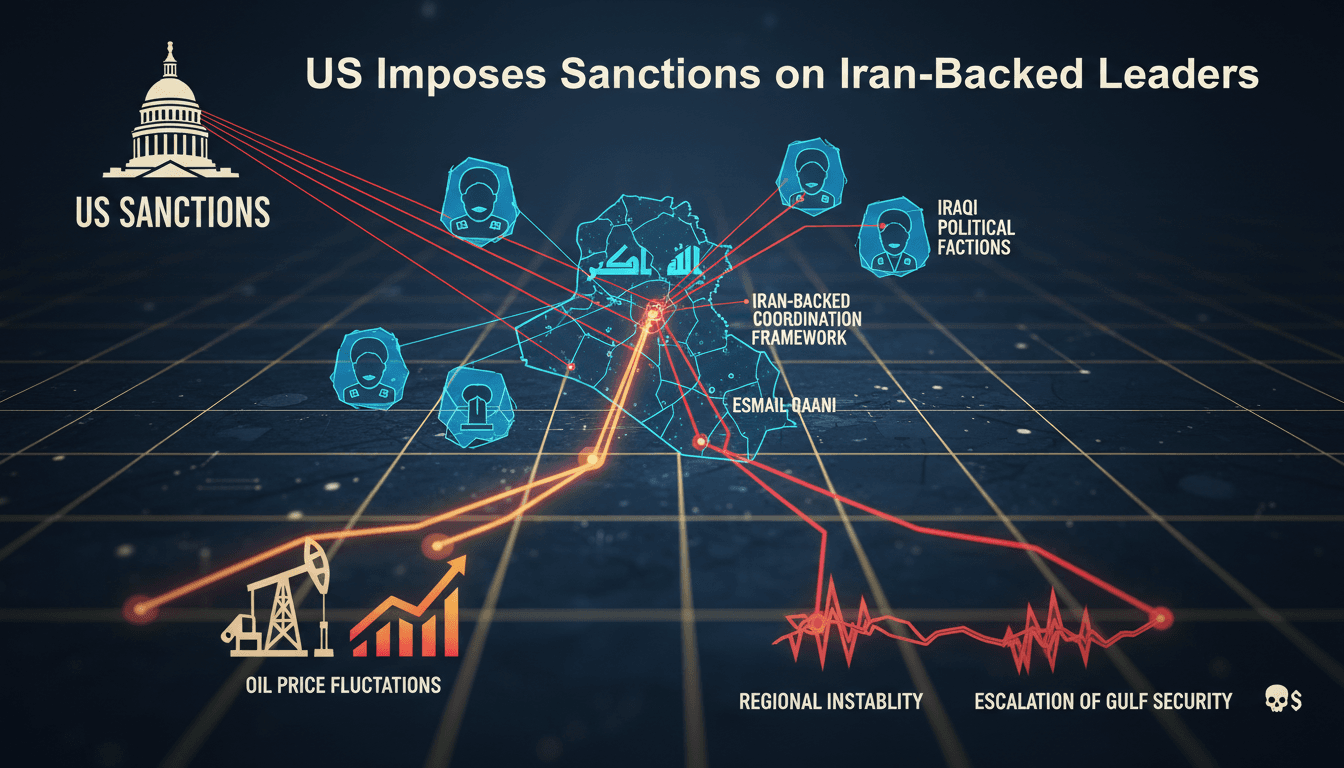
Here's what it means for you.
If you’re involved in global markets, especially oil and security sectors, this situation could impact your operations and risk assessments.
Why it matters
The US's rejection of a militia-dominated government in Iraq could destabilize the region, affecting oil prices and security dynamics.
What happened (in 30 seconds)
- On April 19, 2026, the US imposed sanctions on seven leaders of Iran-backed militias amid ongoing negotiations for a new Iraqi prime minister.
- Iran's Quds Force commander Esmail Qaani visited Baghdad during this period, emphasizing Iran's influence in Iraqi politics.
- The Shiite Coordination Framework is struggling to form a government, facing internal divisions and external pressures from the US.
The context you actually need
- Iraq's political deadlock stems from the late 2025 parliamentary elections, where the Shiite Coordination Framework has been unable to nominate a prime minister due to factional disputes.
- US sanctions target commanders from groups like Kata'ib Hezbollah and Asa'ib Ahl al-Haq, which have been linked to attacks on US personnel, reflecting ongoing tensions between the US and Iran.
- The broader Gulf region, particularly the UAE, is increasingly concerned about militia threats, which could disrupt trade and aviation routes.
What's really happening
The US's recent sanctions on seven commanders from Iran-aligned militias are part of a broader strategy to curb Iranian influence in Iraq. This move comes as the Shiite Coordination Framework, the largest political bloc in Iraq, grapples with internal divisions while trying to nominate a new prime minister. The US Department of the Treasury's actions are not merely punitive; they are designed to disrupt the financial networks that support these militias, which have been implicated in attacks against US interests.
The sanctions were announced concurrently with Iranian Quds Force commander Esmail Qaani's visit to Baghdad, underscoring the delicate balance of power in Iraqi politics. Qaani's presence highlights Iran's ongoing efforts to maintain its influence in the region, asserting that the formation of a government is an Iraqi sovereign right. This assertion directly challenges US efforts to shape Iraq's political landscape, revealing a complex interplay of local and foreign interests.
The Shiite Coordination Framework's struggle to unify around a prime minister candidate reflects deeper issues within Iraqi politics, where factionalism often leads to paralysis. The US has consistently opposed the integration of Popular Mobilization Forces (PMF) militias into the government, viewing them as proxies for Iranian influence. This stance has been reinforced by recent US airstrikes targeting PMF positions, which have escalated tensions and prompted retaliatory actions from these groups.
As negotiations for a new government continue, the US has signaled that it may impose further sanctions on entities facilitating financial transactions with Iran. This could lead to a tightening of economic conditions in Iraq, impacting not only political stability but also the broader regional economy. The potential for increased violence and instability poses risks to oil markets, with Brent crude prices already reacting to geopolitical tensions.
In summary, the US's rejection of a militia-dominated government and the imposition of sanctions are part of a strategic effort to limit Iranian influence in Iraq. However, this approach risks exacerbating internal divisions and could lead to further instability in the region.
Who feels it first (and how)
- Iraqi political leaders: They face pressure to navigate between US demands and Iranian influence.
- Oil market traders: Fluctuations in oil prices due to geopolitical instability will directly impact their operations.
- Regional businesses: Companies in the UAE and Gulf states may experience disruptions in trade and security concerns.
- US military personnel: Increased risks from militia attacks could affect their safety and operational strategies.
What to watch next
- Further US sanctions: Watch for additional sanctions targeting financial networks supporting Iranian militias, which could escalate tensions.
- Iraqi government formation: The outcome of negotiations within the Shiite Coordination Framework will be crucial in determining Iraq's political stability.
- Oil price fluctuations: Monitor Brent crude prices as they may react to developments in Iraq and US-Iran relations.
The US has imposed sanctions on seven militia leaders.
Continued US pressure on Iraq to limit Iranian influence will persist.
The long-term impact on Iraq's political stability and regional security remains uncertain.
Frequently Asked Questions
- Why it matters?
- The US's rejection of a militia-dominated government in Iraq could destabilize the region, affecting oil prices and security dynamics.
- What happened (in 30 seconds)?
- On April 19, 2026, the US imposed sanctions on seven leaders of Iran-backed militias amid ongoing negotiations for a new Iraqi prime minister. Iran's Quds Force commander Esmail Qaani visited Baghdad during this period, emphasizing Iran's influence in Iraqi politics. The Shiite Coordination Framework is struggling to form a government, facing internal divisions and external pressures from the US.
- What's really happening?
- The US's recent sanctions on seven commanders from Iran-aligned militias are part of a broader strategy to curb Iranian influence in Iraq. This move comes as the Shiite Coordination Framework, the largest political bloc in Iraq, grapples with internal divisions while trying to nominate a new prime minister. The US Department of the Treasury's actions are not merely punitive; they are designed to disrupt the financial networks that support these militias, which have been implicated in attacks aga
- Who feels it first (and how)?
- Iraqi political leaders: They face pressure to navigate between US demands and Iranian influence. Oil market traders: Fluctuations in oil prices due to geopolitical instability will directly impact their operations. Regional businesses: Companies in the UAE and Gulf states may experience disruptions in trade and security concerns. US military personnel: Increased risks from militia attacks could affect their safety and operational strategies.
- What to watch next?
- Further US sanctions: Watch for additional sanctions targeting financial networks supporting Iranian militias, which could escalate tensions. Iraqi government formation: The outcome of negotiations within the Shiite Coordination Framework will be crucial in determining Iraq's political stability. Oil price fluctuations: Monitor Brent crude prices as they may react to developments in Iraq and US-Iran relations.
Pan-Arab news coverage spanning politics, business, sports, and regional affairs.
"Asharq Al-Awsat reflects a broad Arab editorial perspective with strong attention to regional geopolitics."
— A47 Editor
رفض أميركي لـ«حكومة فصائل» في العراق
Washington has rejected the formation of a 'factional government' in Iraq, coinciding with the U.S. Treasury Department imposing sanctions on seven militia leaders, complicating negotiations among political forces.
Arabic-language coverage of Saudi, regional, and international affairs.
"Al Bilad offers mainstream Saudi newspaper coverage across domestic and broader Arab topics."
— A47 Editor
عقوبات على 7 قادة فصائل عراقية موالية لطهران
The U.S. Department of the Treasury announced on Saturday the imposition of sanctions on seven leaders of Iraqi armed factions, citing their involvement in planning and executing attacks targeting American interests and individuals in Iraq. This acti...
Arabic-language coverage of international news and geopolitics.
"RT Arabic is a Russian state-funded outlet often criticized for promoting Kremlin-aligned narratives."
— A47 Editor
عقوبات أمريكية على قيادات فصائل عراقية
The U.S. Department of the Treasury has imposed sanctions on the financial assets of leaders of certain Iraqi factions within the United States, prohibiting any American entities from engaging with them.