
StarkWare Proposes Quantum-Safe Bitcoin Transactions Without Network Upgrades
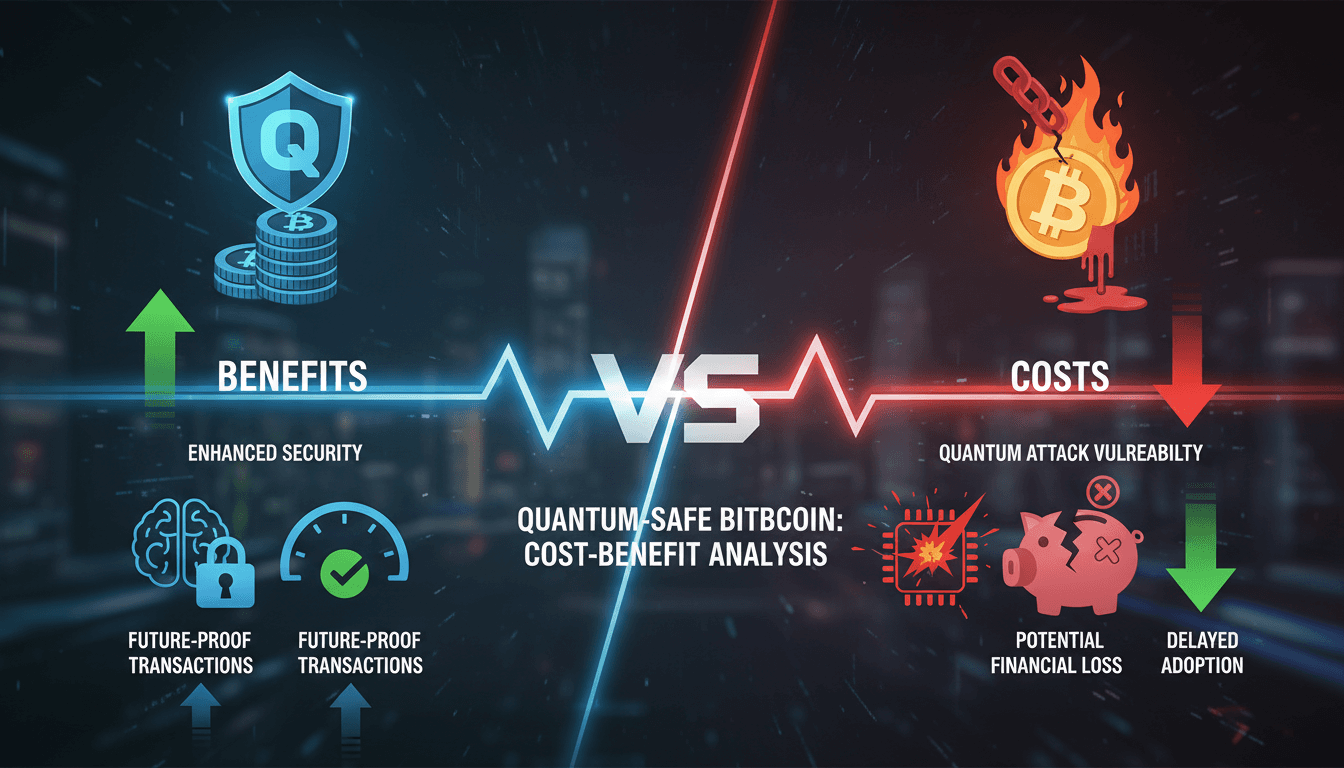
Here's what it means for you.
As quantum computing advances, understanding how Bitcoin transactions can remain secure is crucial for anyone involved in cryptocurrency.
Why it matters
The introduction of quantum-safe Bitcoin transactions addresses a critical vulnerability in Bitcoin's security framework, potentially safeguarding billions in assets.
What happened (in 30 seconds)
- On April 10, 2026, StarkWare's CPO Avihu Levy proposed a new scheme called Quantum Safe Bitcoin (QSB) to protect Bitcoin transactions from quantum computing threats.
- The QSB method allows for quantum-resistant transactions without requiring a network upgrade, maintaining existing consensus rules.
- Transaction costs for QSB are estimated to range from $75 to $200, reflecting the increased data overhead involved.
The context you actually need
- Bitcoin's current security relies on the elliptic curve digital signature algorithm (ECDSA), which is vulnerable to quantum attacks as demonstrated by recent research from Google Quantum AI.
- Previous attempts at creating quantum-safe solutions included testnet forks and proposals for voluntary migration, highlighting the urgency for effective non-consensus solutions.
- Levy's proposal positions QSB as a stopgap measure until broader consensus changes, like BIP-360, can be implemented, ensuring Bitcoin's longevity in a post-quantum world.
What's really happening
The Quantum Safe Bitcoin (QSB) proposal represents a significant shift in how Bitcoin transactions can be secured against future quantum threats. With the rapid advancements in quantum computing, particularly highlighted by Google's recent research showing the potential to break ECDSA signatures in under nine minutes, the urgency for a robust solution has never been clearer. Levy's approach replaces the reliance on ECDSA with hash-based security assumptions, which are believed to be more resilient against quantum attacks.
The QSB scheme operates within Bitcoin's existing consensus rules, meaning it does not require a soft fork or any major changes to the network. This is a critical advantage, as the Bitcoin community has historically been slow to adopt changes due to the need for consensus among miners and node operators. By sidestepping the need for a network upgrade, QSB offers a practical solution that can be implemented immediately, albeit at a higher transaction cost.
The estimated transaction fees of $75 to $200 reflect the additional data overhead required to implement hash chains and Merkle proofs for transaction verification. While this cost may seem steep, it is a small price to pay for enhanced security, especially for high-value transactions that could be targeted by quantum attacks. The open-source nature of the prototype, released on GitHub, allows developers and researchers to explore and refine the technology further, potentially leading to broader adoption and optimization.
As the proposal gains traction, it has already sparked discussions across crypto platforms, with many highlighting its no-fork advantage. This could lead to a paradigm shift in how Bitcoin transactions are perceived and executed, especially as the threat of quantum computing looms larger. The QSB scheme not only addresses immediate security concerns but also sets the stage for future innovations in cryptocurrency security.
Who feels it first (and how)
- Cryptocurrency investors: High-value Bitcoin holders will prioritize security and may opt for QSB transactions to protect their assets.
- Developers and tech firms: Those involved in blockchain technology will need to adapt to new protocols and potentially invest in quantum-safe solutions.
- Regulatory bodies: Governments and financial institutions will monitor developments closely, as the implications of quantum-safe transactions could influence regulatory frameworks.
What to watch next
- Adoption rates of QSB: Monitoring how quickly users begin to utilize quantum-safe transactions will indicate the perceived urgency of quantum threats.
- Development of complementary technologies: Innovations that enhance or reduce the costs associated with QSB transactions will be critical for broader acceptance.
- Regulatory responses: Watch for how governments react to the introduction of quantum-safe protocols, as this could shape future cryptocurrency regulations.
The QSB proposal has been released and is currently in the research stage, with a prototype available on GitHub.
Increased transaction costs will lead to a gradual adoption of quantum-safe transactions among high-value Bitcoin users.
The long-term impact of QSB on Bitcoin's overall market dynamics and governance processes remains to be seen.
Frequently Asked Questions
- Why it matters?
- The introduction of quantum-safe Bitcoin transactions addresses a critical vulnerability in Bitcoin's security framework, potentially safeguarding billions in assets.
- What happened (in 30 seconds)?
- On April 10, 2026, StarkWare's CPO Avihu Levy proposed a new scheme called Quantum Safe Bitcoin (QSB) to protect Bitcoin transactions from quantum computing threats. The QSB method allows for quantum-resistant transactions without requiring a network upgrade, maintaining existing consensus rules. Transaction costs for QSB are estimated to range from $75 to $200, reflecting the increased data overhead involved.
- What's really happening?
- The Quantum Safe Bitcoin (QSB) proposal represents a significant shift in how Bitcoin transactions can be secured against future quantum threats. With the rapid advancements in quantum computing, particularly highlighted by Google's recent research showing the potential to break ECDSA signatures in under nine minutes, the urgency for a robust solution has never been clearer. Levy's approach replaces the reliance on ECDSA with hash-based security assumptions, which are believed to be more resilie
- Who feels it first (and how)?
- Cryptocurrency investors: High-value Bitcoin holders will prioritize security and may opt for QSB transactions to protect their assets. Developers and tech firms: Those involved in blockchain technology will need to adapt to new protocols and potentially invest in quantum-safe solutions. Regulatory bodies: Governments and financial institutions will monitor developments closely, as the implications of quantum-safe transactions could influence regulatory frameworks.
- What to watch next?
- Adoption rates of QSB: Monitoring how quickly users begin to utilize quantum-safe transactions will indicate the perceived urgency of quantum threats. Development of complementary technologies: Innovations that enhance or reduce the costs associated with QSB transactions will be critical for broader acceptance. Regulatory responses: Watch for how governments react to the introduction of quantum-safe protocols, as this could shape future cryptocurrency regulations.
News and analysis on Bitcoin, altcoins, and blockchain innovation.
"Bitcoinist delivers news and analysis on Bitcoin, altcoins, and blockchain innovation with a focus on market trends and industry updates."
— A47 Editor
Bitcoin May Avoid Immediate Quantum Upgrade With New Workaround: Study
A new proposal by StarkWare's Chief Product Officer, Avihu Levy, suggests a method called Quantum Safe Bitcoin (QSB) that could enhance Bitcoin's resistance to quantum computing threats without necessitating a soft fork. This approach allows for Bitc...
Covers blockchain, cryptocurrency news, project analysis, and market insights.
"CoinDesk is a well-established cryptocurrency and blockchain news provider, offering comprehensive insights, market data, and industry research."
— A47 Editor
Quantum-safe bitcoin now possible without a soft fork, but costs $200 a pop, new research shows
New research from a StarkWare researcher indicates that quantum-safe bitcoin can now be achieved without requiring a soft fork, with each implementation costing approximately $200. This development provides an emergency fallback while the Bitcoin Imp...
Covers blockchain, cryptocurrency news, project analysis, and market insights.
"Cointelegraph is a leading crypto-focused media outlet known for timely news, analysis, and educational content related to blockchain and digital assets."
— A47 Editor
Bitcoin can be made quantum-safe without protocol upgrade: Researcher
A recent proposal suggests that Bitcoin transactions can be made quantum-resistant without requiring a protocol upgrade, addressing concerns about the potential risks posed by quantum computing. This workaround, presented by StarkWare's Chief Product...