
Iranian Women's Football Players Thank Australia for Humanitarian Protection After Asian Cup Asylum
Here's what it means for you.
The defection of Iranian athletes highlights the intersection of sports, human rights, and international relations, impacting how organizations approach athlete welfare.
Why it matters
This event underscores the growing importance of humanitarian protections in sports, influencing policies and perceptions globally.
What happened (in 30 seconds)
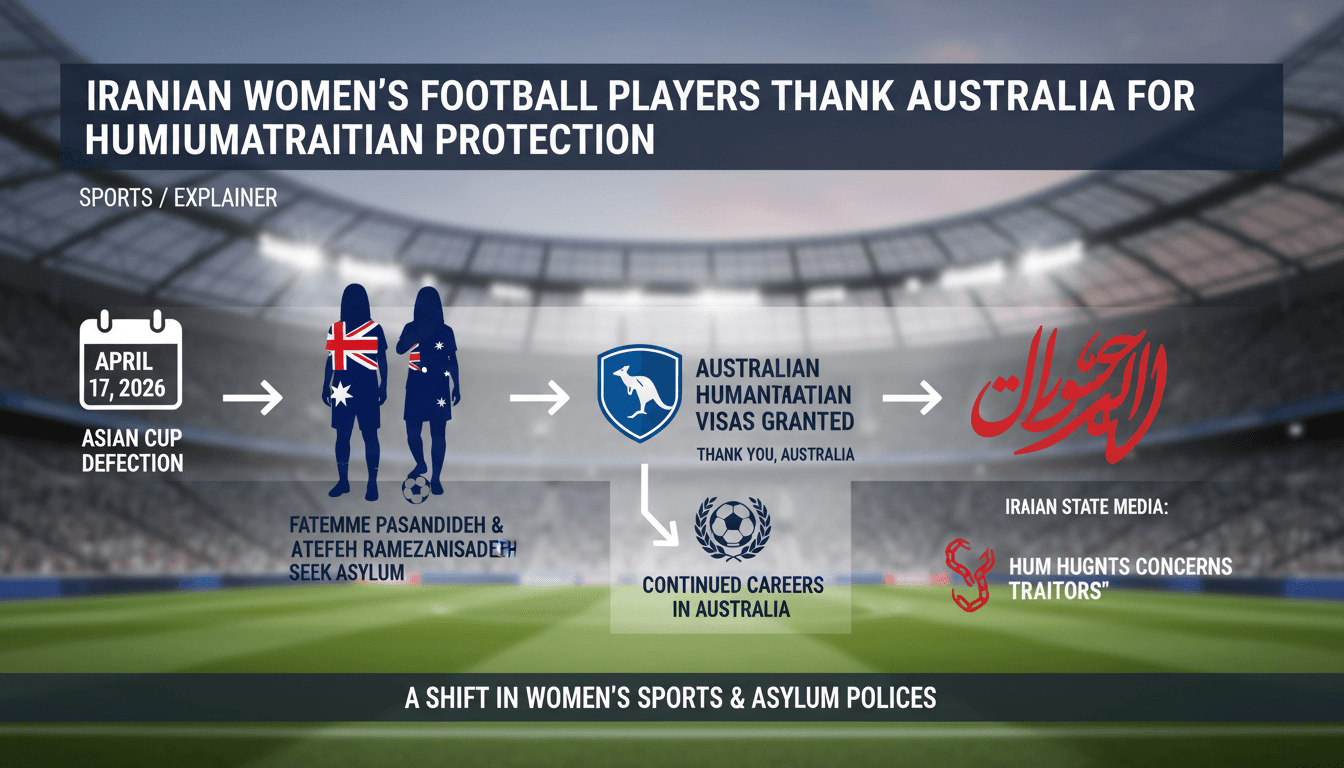
- On April 17, 2026, Iranian football players Fatemeh Pasandideh and Atefeh Ramezanisadeh thanked the Australian government for granting them humanitarian visas after seeking asylum during the AFC Women's Asian Cup.
- Seven players initially sought refuge amid fears for their safety following accusations of being 'wartime traitors' by Iranian state media.
- The athletes are now training with Brisbane Roar, aiming to resume their professional careers in a supportive environment.
The context you actually need
- The 2026 AFC Women's Asian Cup took place in Australia amid heightened tensions due to the ongoing Iran war, which began with US and Israeli airstrikes.
- Iranian players faced severe backlash for refusing to sing the national anthem, leading to threats of prosecution and a climate of fear.
- Australia's response involved granting humanitarian visas, showcasing a commitment to athlete safety and human rights amidst geopolitical tensions.
What's really happening
The defection of Iranian women's football players during the 2026 AFC Women's Asian Cup is a significant event that reflects broader issues of human rights, safety, and the role of sports in political contexts. The athletes, Fatemeh Pasandideh and Atefeh Ramezanisadeh, sought asylum in Australia after facing threats from Iranian state media, which labeled them as 'wartime traitors' for their refusal to sing the national anthem. This act of defiance was not just a personal choice but a statement against the oppressive regime they represent.
The Australian government’s swift action to grant humanitarian visas highlights a growing trend where nations are increasingly willing to provide refuge to athletes facing persecution. This decision not only protects the individuals involved but also sends a strong message about the importance of human rights in sports. The athletes are now training with Brisbane Roar, a professional club, which allows them to continue their careers in a supportive environment, free from the threats they faced in Iran.
This situation also raises questions about the responsibilities of sports organizations and governments in protecting athletes. As more athletes speak out against oppressive regimes, the need for protective measures becomes more pressing. The Australian government's actions may encourage other nations to adopt similar policies, potentially reshaping how international sports events are conducted and how athletes are treated.
Moreover, the Iranian government's reaction to the defection—accusing Australia of 'kidnapping'—illustrates the geopolitical tensions at play. While Iran has welcomed the return of some players, the threat of prosecution remains, indicating that the regime is still willing to exert control over its athletes. This dynamic creates a complex environment where sports, politics, and human rights intersect, influencing how athletes navigate their careers and personal safety.
The implications of this defection extend beyond the immediate context of women's football. It reflects a cultural shift towards greater awareness of human rights issues in sports and the potential for athletes to become symbols of resistance against oppressive regimes. As more athletes seek asylum or speak out against injustices, the global sports community may need to reevaluate its stance on athlete welfare and protection.
Who feels it first (and how)
- Athletes: Those in oppressive regimes may feel empowered to seek asylum or speak out, knowing there are supportive nations willing to protect them.
- Sports Organizations: Teams and leagues may need to implement new policies regarding athlete welfare and safety, especially during international events.
- Governments: Nations may face pressure to respond to human rights violations in sports, influencing foreign policy and international relations.
What to watch next
- Increased asylum requests: Monitor the number of athletes seeking asylum in countries with supportive policies, as this may indicate a growing trend.
- Policy changes in sports organizations: Watch for new guidelines or protections implemented by sports federations regarding athlete safety and human rights.
- Geopolitical responses: Observe how governments, particularly in the Middle East, react to athletes seeking asylum and the potential diplomatic fallout.
The defection of Iranian players has highlighted the intersection of sports and human rights.
Other athletes from oppressive regimes may seek asylum in supportive countries.
The long-term impact on international sports events and athlete welfare policies remains to be seen.
Frequently Asked Questions
- Why it matters?
- This event underscores the growing importance of humanitarian protections in sports, influencing policies and perceptions globally.
- What happened (in 30 seconds)?
- On April 17, 2026, Iranian football players Fatemeh Pasandideh and Atefeh Ramezanisadeh thanked the Australian government for granting them humanitarian visas after seeking asylum during the AFC Women's Asian Cup. Seven players initially sought refuge amid fears for their safety following accusations of being 'wartime traitors' by Iranian state media. The athletes are now training with Brisbane Roar, aiming to resume their professional careers in a supportive environment.
- What's really happening?
- The defection of Iranian women's football players during the 2026 AFC Women's Asian Cup is a significant event that reflects broader issues of human rights, safety, and the role of sports in political contexts. The athletes, Fatemeh Pasandideh and Atefeh Ramezanisadeh, sought asylum in Australia after facing threats from Iranian state media, which labeled them as 'wartime traitors' for their refusal to sing the national anthem. This act of defiance was not just a personal choice but a statement
- Who feels it first (and how)?
- Athletes: Those in oppressive regimes may feel empowered to seek asylum or speak out, knowing there are supportive nations willing to protect them. Sports Organizations: Teams and leagues may need to implement new policies regarding athlete welfare and safety, especially during international events. Governments: Nations may face pressure to respond to human rights violations in sports, influencing foreign policy and international relations.
- What to watch next?
- Increased asylum requests: Monitor the number of athletes seeking asylum in countries with supportive policies, as this may indicate a growing trend. Policy changes in sports organizations: Watch for new guidelines or protections implemented by sports federations regarding athlete safety and human rights. Geopolitical responses: Observe how governments, particularly in the Middle East, react to athletes seeking asylum and the potential diplomatic fallout.
Breaking news, scores, player stats, and analysis across all major sports.
"Yahoo Sports is a comprehensive digital sports destination known for stats, fantasy sports, and real-time updates."
— A47 Editor
Iran women football players thank Australian government for protection
Two Iranian football players who remained in Australia after the Asian Cup expressed gratitude towards the Australian government for providing them protection, emphasizing their desire to rebuild their lives in safety.
Global news coverage with extensive reporting on Middle Eastern conflicts and geopolitics.
"Al Jazeera is a Qatar-based broadcaster known for wide regional coverage and alternative perspectives."
— A47 Editor
Iran women football players thank Australian government for protection
Two Iranian women football players who remained in Australia after the Asian Cup have expressed gratitude to the Australian government for providing them with protection, stating their desire to rebuild their lives in safety.
Covers global sporting events, athlete news, and cultural perspectives on sports.
"The Guardian is known for progressive editorial analysis, often exploring social and cultural dimensions of sports."
— A47 Editor
Iran footballers granted asylum in Australia vow to continue chasing sporting dream
Two former members of the Iranian women's football team, Fatemeh Pasandideh and Atefeh Ramezanisadeh, have been granted asylum in Australia after remaining in the country following the Women’s Asian Cup. They have expressed their gratitude for the su...
Top international stories selected by The Guardian editors.
"The Guardian is known for its progressive editorial stance and in-depth analysis."
— A47 Editor
Iran footballers granted asylum in Australia vow to continue chasing sporting dream
Two former members of the Iranian women's football team, Fatemeh Pasandideh and Atefeh Ramezanisadeh, have been granted asylum in Australia after remaining in the country following the Women’s Asian Cup. They have expressed their gratitude for the su...