
Bitcoin Volatility Follows U.S.-Iran Ceasefire Announcement Amid Implementation Concerns
Here's what it means for you.
If you’re involved in global markets or cryptocurrency, the fluctuations in Bitcoin prices amid geopolitical tensions could directly impact your investments.
Why it matters
The volatility in Bitcoin and other risk assets reflects broader market sentiments tied to geopolitical stability, which can influence economic conditions globally.
What happened (in 30 seconds)
- Bitcoin prices surged above $72,000 on April 8, 2026, following a two-week ceasefire announcement between the U.S. and Iran.
- The rally was short-lived, with Bitcoin slipping below $71,000 on April 9 amid doubts about the ceasefire's stability and reports of violations.
- Oil prices declined sharply after the ceasefire announcement but rebounded as tensions resurfaced, impacting global markets.
The context you actually need
- Tensions between the U.S. and Iran escalated in late March 2026, leading to the closure of the Strait of Hormuz, a critical chokepoint for global oil supply.
- The ceasefire announcement on April 8 alleviated some geopolitical risks, prompting a rally in risk assets, including cryptocurrencies and stocks.
- Subsequent reports of ceasefire violations and demands for cryptocurrency tolls by Iran contributed to market pullbacks, highlighting the fragility of the agreement.
What's really happening
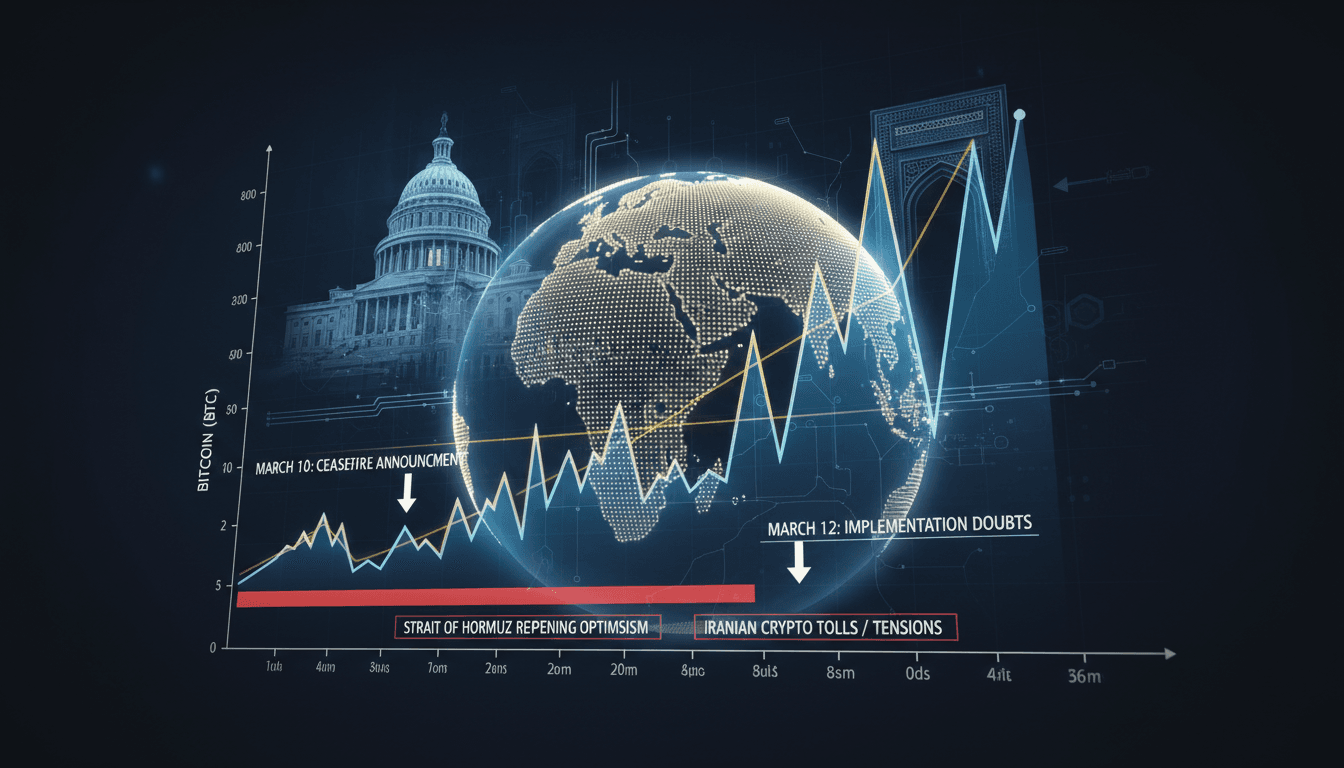
The recent surge in Bitcoin prices can be attributed to a complex interplay of geopolitical events and market psychology. On April 8, the announcement of a two-week ceasefire between the U.S. and Iran initially sparked optimism in global financial markets. Bitcoin, often viewed as a risk asset, rallied from approximately $67,000 to over $72,700, reflecting a 4% gain. This surge was accompanied by a significant drop in oil prices, which fell 16% to around $95 per barrel, as traders anticipated a reopening of the Strait of Hormuz, a vital transit route for about 20% of global oil consumption.
However, the optimism was short-lived. By April 9, reports of alleged violations of the ceasefire by Iranian officials began to surface, causing uncertainty among traders. Iran's insistence on including Lebanon in negotiations and its demand for a cryptocurrency toll of $1 per barrel for oil transiting through the Strait further complicated the situation. These developments led to a pullback in Bitcoin prices, which fell to around $70,800, reflecting a 1.2% decline. Altcoins also experienced declines of 2–4%, indicating a broader market retreat.
The situation underscores the fragility of geopolitical agreements and their immediate impact on financial markets. Investors are increasingly aware that the stability of the ceasefire is tenuous, and any further escalation could lead to significant market volatility. The U.S. government, led by President Donald Trump, has reiterated its demands for a "real agreement" with Iran, maintaining military presence in the region to ensure compliance. This ongoing tension keeps traders on edge, as they monitor developments in the Strait of Hormuz and the potential for further disruptions in oil supply.
Moreover, the implications of Iran's cryptocurrency toll demand could resonate beyond immediate market reactions. As Dubai and the UAE are major players in both the oil and cryptocurrency markets, any tolls imposed could elevate regional fuel prices and affect trade dynamics. The intersection of energy costs and digital asset markets could reshape local economic conditions, particularly for businesses reliant on stable energy prices and shipping logistics.
Who feels it first (and how)
- Cryptocurrency traders: Immediate impact on trading strategies and asset valuations.
- Oil exporters: Companies like ADNOC may face increased costs and logistical challenges.
- Investors in risk assets: Fluctuations in Bitcoin and stock prices affect portfolio valuations.
- UAE residents: Potential increases in fuel prices and economic uncertainty due to regional tensions.
What to watch next
- Ceasefire stability: Continued monitoring of compliance and any further violations will be crucial for market sentiment.
- Oil price movements: Fluctuations in oil prices will influence Bitcoin and other risk assets, particularly if supply disruptions occur.
- Regulatory responses: Watch for any regulatory changes regarding cryptocurrency tolls and their implications for trade in the region.
Bitcoin prices are sensitive to geopolitical developments, particularly in the Middle East.
Continued volatility in both cryptocurrency and oil markets as tensions evolve.
The long-term impact of Iran's cryptocurrency toll demands on regional trade and energy prices.
Frequently Asked Questions
- Why it matters?
- The volatility in Bitcoin and other risk assets reflects broader market sentiments tied to geopolitical stability, which can influence economic conditions globally.
- What happened (in 30 seconds)?
- Bitcoin prices surged above $72,000 on April 8, 2026, following a two-week ceasefire announcement between the U.S. and Iran. The rally was short-lived, with Bitcoin slipping below $71,000 on April 9 amid doubts about the ceasefire's stability and reports of violations. Oil prices declined sharply after the ceasefire announcement but rebounded as tensions resurfaced, impacting global markets.
- What's really happening?
- The recent surge in Bitcoin prices can be attributed to a complex interplay of geopolitical events and market psychology. On April 8, the announcement of a two-week ceasefire between the U.S. and Iran initially sparked optimism in global financial markets. Bitcoin, often viewed as a risk asset, rallied from approximately $67,000 to over $72,700, reflecting a 4% gain. This surge was accompanied by a significant drop in oil prices, which fell 16% to around $95 per barrel, as traders anticipated a
- Who feels it first (and how)?
- Cryptocurrency traders: Immediate impact on trading strategies and asset valuations. Oil exporters: Companies like ADNOC may face increased costs and logistical challenges. Investors in risk assets: Fluctuations in Bitcoin and stock prices affect portfolio valuations. UAE residents: Potential increases in fuel prices and economic uncertainty due to regional tensions.
- What to watch next?
- Ceasefire stability: Continued monitoring of compliance and any further violations will be crucial for market sentiment. Oil price movements: Fluctuations in oil prices will influence Bitcoin and other risk assets, particularly if supply disruptions occur. Regulatory responses: Watch for any regulatory changes regarding cryptocurrency tolls and their implications for trade in the region.
Market-moving headlines impacting equities, bonds, and related risk assets.
"Real-time catalysts and volatility drivers across indices and sectors."
— A47 Editor
Bitcoin moves higher as risk assets catch a bid on hopes of stable Iran ceasefire
Bitcoin has seen an upward movement as risk assets gain traction following the announcement of a two-week ceasefire between the United States and Iran, which has led to a significant drop in oil prices and a rally in stock markets.
Covers blockchain, cryptocurrency news, project analysis, and market insights.
"Cointelegraph is a leading crypto-focused media outlet known for timely news, analysis, and educational content related to blockchain and digital assets."
— A47 Editor
Bitcoin rally extends toward $73K despite concerning US economic data
Bitcoin's price has shown resilience, rallying toward $73,000 despite rising recession risks in the U.S. and increasing tensions in the fragile ceasefire with Iran. This surge follows a recent announcement of a two-week ceasefire, which temporarily e...