
Trump Issues Ultimatum to Iran Over Strait of Hormuz and Nuclear Program
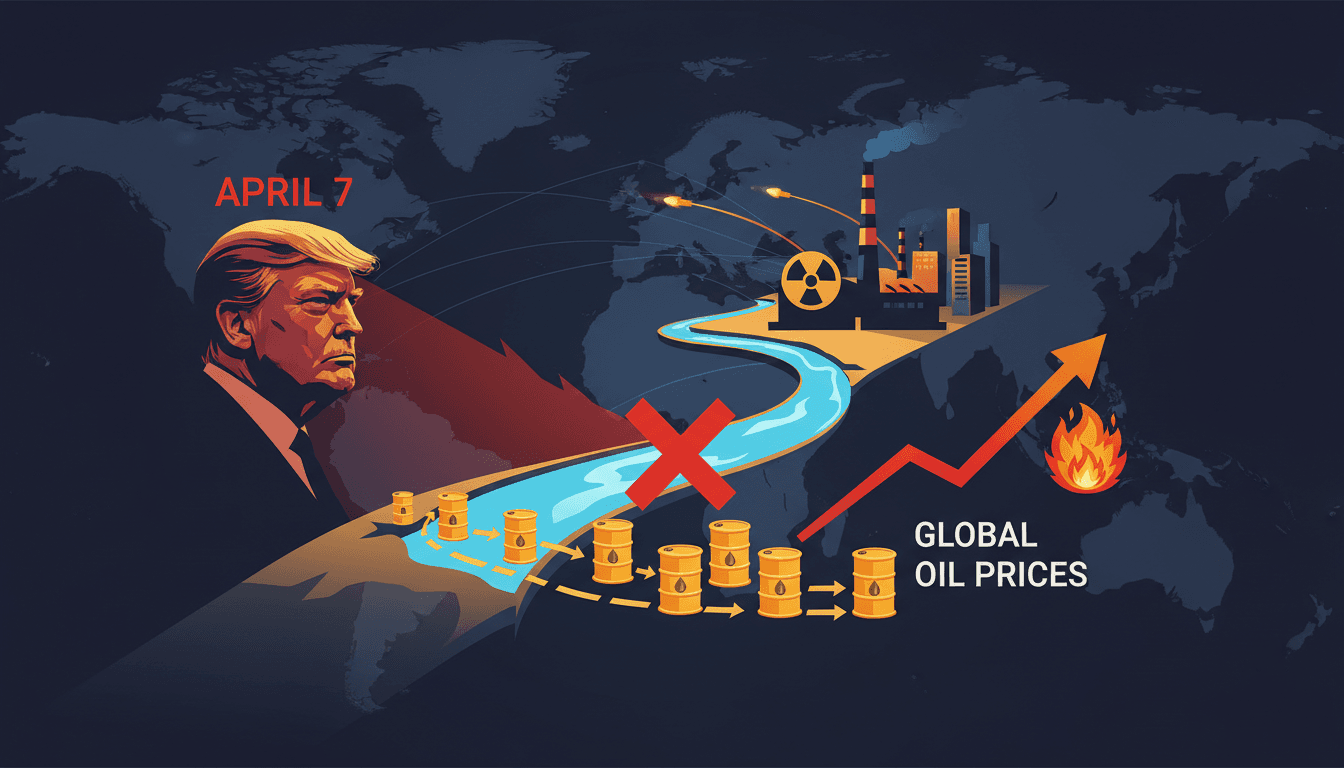
Here's what it means for you.
If you rely on global oil markets, the escalating tensions between the U.S. and Iran could lead to price volatility impacting your business operations.
Why it matters
The ultimatum threatens to disrupt a critical chokepoint for global oil transit, potentially leading to significant price increases and supply chain disruptions.
What happened (in 30 seconds)
- Trump issued a military ultimatum to Iran, threatening to destroy bridges and power plants unless they comply with U.S. demands by April 7.
- Iran rejected a ceasefire proposal, instead proposing a 10-point plan for permanent peace, which the U.S. dismissed as insufficient.
- UAE air defenses intercepted numerous Iranian missile and drone attacks, reflecting heightened military tensions in the region.
The context you actually need
- The Strait of Hormuz is a vital waterway through which approximately 20% of the world's oil passes, making its security crucial for global energy markets.
- Iran's missile and drone attacks on Gulf states, including the UAE, have escalated tensions, prompting U.S. retaliatory strikes and military posturing.
- Diplomatic efforts via Pakistan to mediate a ceasefire have stalled, increasing the likelihood of military action and further destabilization in the region.
What's really happening
On April 6, 2026, President Donald Trump delivered a stark ultimatum to Iran during a White House press briefing, demanding the reopening of the Strait of Hormuz, a halt to Iran's nuclear ambitions, and an unconditional surrender amid escalating military tensions. This ultimatum came after Iran's rejection of a U.S.-mediated ceasefire proposal, which included a 10-point counteroffer that sought permanent peace and sanctions relief. Trump's response to this counteroffer was swift and uncompromising, setting a deadline of 8:00 p.m. ET on April 7 for Iran to comply, or face devastating military strikes targeting critical infrastructure.
The backdrop to this ultimatum is a series of aggressive actions by both sides, including Iranian missile barrages on Gulf states and U.S. airstrikes in retaliation. The situation has been exacerbated by Iran's closure of the Strait of Hormuz, which has significant implications for global oil supply, as it is a key transit route for approximately 20% of the world's oil. The ongoing conflict has already led to heightened military readiness in the region, with the UAE's air defenses intercepting 519 ballistic missiles and numerous drones since the attacks began.
The stakes are high, as the U.S. aims to compel Iran to abandon its nuclear program and cease its regional aggression, while Iran seeks to maintain its influence and resist U.S. pressures. The ultimatum reflects a broader strategy by the U.S. to leverage military threats to achieve diplomatic goals, but it also risks escalating the conflict further. The potential for military action raises concerns about the stability of oil markets, as any disruption in the Strait of Hormuz could lead to significant price spikes and supply chain issues globally.
As the deadline approaches, the situation remains fluid, with both sides entrenched in their positions. The Iranian government has called for public demonstrations to protect its infrastructure, indicating a willingness to escalate the conflict further. Meanwhile, U.S. officials have described Iran's response as rigid, suggesting that a diplomatic resolution is unlikely in the immediate term.
Who feels it first (and how)
- Oil and gas companies: Increased prices and supply chain disruptions could affect profitability and operational costs.
- Consumers: Rising fuel prices may lead to higher costs for goods and services, impacting household budgets.
- Investors: Volatility in oil markets could affect stock prices, particularly in energy sectors, leading to potential losses.
- Geopolitical analysts: Heightened tensions will require close monitoring, impacting strategic assessments and risk evaluations.
What to watch next
- Iran's military response: How Iran reacts to the ultimatum could escalate or de-escalate tensions, impacting regional stability.
- Oil price fluctuations: Watch for changes in Brent crude prices, as any military action could lead to significant volatility.
- Diplomatic efforts: Any renewed attempts at mediation, particularly through Pakistan, could indicate a shift towards negotiation or further entrenchment.
The U.S. has issued a military ultimatum to Iran, threatening infrastructure destruction.
Oil prices will experience volatility as markets react to the unfolding situation.
Whether diplomatic negotiations will resume or if military action will be taken by the U.S. or Iran.
Frequently Asked Questions
- Why it matters?
- The ultimatum threatens to disrupt a critical chokepoint for global oil transit, potentially leading to significant price increases and supply chain disruptions.
- What happened (in 30 seconds)?
- Trump issued a military ultimatum to Iran, threatening to destroy bridges and power plants unless they comply with U.S. demands by April 7. Iran rejected a ceasefire proposal, instead proposing a 10-point plan for permanent peace, which the U.S. dismissed as insufficient. UAE air defenses intercepted numerous Iranian missile and drone attacks, reflecting heightened military tensions in the region.
- What's really happening?
- On April 6, 2026, President Donald Trump delivered a stark ultimatum to Iran during a White House press briefing, demanding the reopening of the Strait of Hormuz, a halt to Iran's nuclear ambitions, and an unconditional surrender amid escalating military tensions. This ultimatum came after Iran's rejection of a U.S.-mediated ceasefire proposal, which included a 10-point counteroffer that sought permanent peace and sanctions relief. Trump's response to this counteroffer was swift and uncompromisi
- Who feels it first (and how)?
- Oil and gas companies: Increased prices and supply chain disruptions could affect profitability and operational costs. Consumers: Rising fuel prices may lead to higher costs for goods and services, impacting household budgets. Investors: Volatility in oil markets could affect stock prices, particularly in energy sectors, leading to potential losses. Geopolitical analysts: Heightened tensions will require close monitoring, impacting strategic assessments and risk evaluations.
- What to watch next?
- Iran's military response: How Iran reacts to the ultimatum could escalate or de-escalate tensions, impacting regional stability. Oil price fluctuations: Watch for changes in Brent crude prices, as any military action could lead to significant volatility. Diplomatic efforts: Any renewed attempts at mediation, particularly through Pakistan, could indicate a shift towards negotiation or further entrenchment.
Arabic-language UAE newspaper coverage focused on domestic affairs, public institutions, business, society, and regional developments.
"Al Khaleej coverage generally reflects a mainstream UAE editorial lens with strong attention to public affairs, institutions, and regional developments."
— A47 Editor
ترامب يهدد بتدمير جسور إيران «خلال أربع ساعات»
On April 6, 2026, U.S. President Donald Trump threatened to destroy all bridges and power plants in Iran within four hours. This statement reflects escalating tensions between the United States and Iran, highlighting the potential for military action...
Arabic-language UAE newspaper coverage focused on domestic affairs, public institutions, business, society, and regional developments.
"Al Khaleej coverage generally reflects a mainstream UAE editorial lens with strong attention to public affairs, institutions, and regional developments."
— A47 Editor
ترامب يتوعد إيران: يمكننا تدمير جميع جسوركم ومحطاتكم خلال 4 ساعات فقط
On April 6, 2026, U.S. President Donald Trump stated that the United States has the capability to destroy all bridges and stations in Iran within just four hours. This declaration underscores the ongoing tensions between the U.S. and Iran, highlighti...
European coverage of Middle East politics and security issues.
"France 24 offers international reporting with a European editorial perspective."
— A47 Editor
Trump says will destroy all Iran bridges, power plants in '4 hours' if no deal
U.S. President Donald Trump announced at a White House press conference that he would destroy all bridges and power plants in Iran within four hours if a peace deal is not reached. This statement follows a series of escalating tensions between the U....
Coverage of current events and conflicts in the Middle East.
"France 24 is viewed as a globally focused outlet with balanced coverage and a European perspective."
— A47 Editor
Trump says will destroy all Iran bridges, power plants in '4 hours' if no deal
U.S. President Donald Trump announced at a White House press conference that he would destroy all bridges and power plants in Iran within four hours if a peace deal is not reached. This statement follows a series of escalating tensions between the U....