
Iran Closes Strait of Hormuz in Response to Israeli Airstrikes on Lebanon
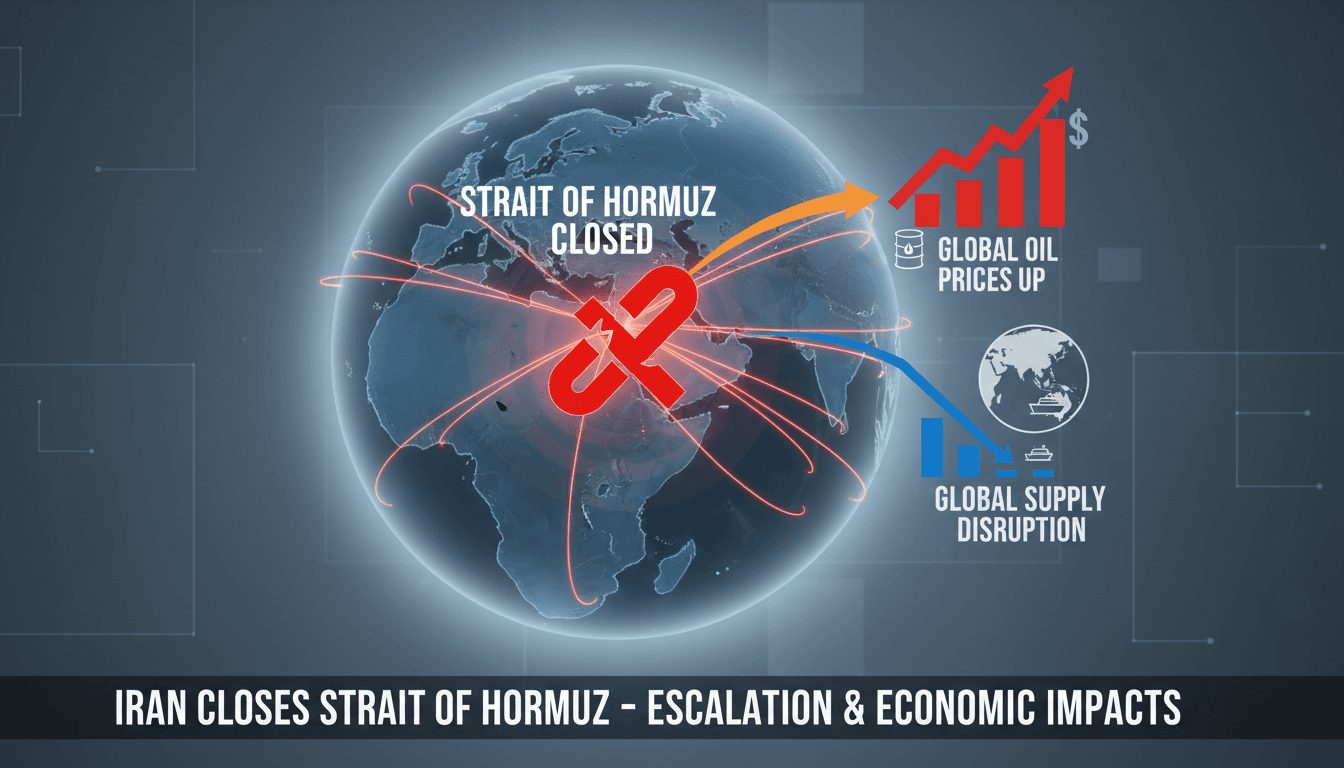
Here's what it means for you.
If you rely on global oil markets, be prepared for potential price fluctuations and supply chain disruptions.
Why it matters
The closure of the Strait of Hormuz threatens global oil supply, impacting prices and availability for consumers and businesses worldwide.
What happened (in 30 seconds)
- Iran reclosed the Strait of Hormuz on April 8, 2026, in retaliation for Israeli airstrikes on Lebanon, jeopardizing a newly announced ceasefire.
- Israeli forces launched over 100 airstrikes across Lebanon, marking the heaviest bombardment of the ongoing conflict, prompting Iran's swift response.
- US officials demanded the immediate reopening of the strait, as oil prices rebounded amid rising uncertainty in the region.
The context you actually need
- The Strait of Hormuz is crucial for global oil transport, with approximately 20% of seaborne oil passing through it, making its closure a significant concern for energy markets.
- The US-Iran conflict escalated in early March 2026, leading to Iran's initial blockade of the strait, which was briefly reopened under a ceasefire agreement that has now been violated.
- Israel's airstrikes targeted Hezbollah in Lebanon, complicating the ceasefire's terms, as Israel maintains that its operations do not violate the agreement.
What's really happening
On April 8, 2026, the geopolitical landscape shifted dramatically when Iran reclosed the Strait of Hormuz, a vital maritime passage for global oil. This closure came just hours after the US and Iran announced a two-week ceasefire, which included a temporary reopening of the strait to allow limited oil transit. Iran's decision to reimpose the closure was a direct response to a series of Israeli airstrikes that targeted Lebanese infrastructure, including areas in Beirut. These airstrikes were described as the heaviest bombardment of the ongoing conflict, indicating a significant escalation in hostilities.
The Strait of Hormuz is a critical chokepoint for oil shipments, with about 20% of the world's seaborne oil passing through it. The closure not only disrupts oil supply but also raises concerns about rising prices and economic instability in regions dependent on Gulf oil exports. The US's demand for the strait's reopening highlights the urgency of the situation, as oil prices, which had initially dropped by 15-19% following the ceasefire announcement, began to rebound due to renewed uncertainty.
Iran's actions are driven by a complex interplay of regional power dynamics, national security concerns, and the desire to assert its influence in the face of Israeli military operations. The Iranian government, through state media, framed the closure as a necessary measure to protect its interests and respond to perceived aggression from Israel. Concurrently, Iranian air defense systems were activated in major cities, signaling a heightened state of alert and readiness for potential further conflict.
The implications of this closure extend beyond immediate military concerns; they affect global energy markets, economic stability in oil-dependent nations, and the geopolitical balance in the Middle East. As tensions escalate, the potential for further military engagement increases, which could lead to broader regional instability and economic repercussions.
Who feels it first (and how)
- Oil traders and investors: They will experience immediate impacts on oil prices and market volatility.
- Consumers in oil-dependent countries: Increased fuel prices and potential shortages may affect daily living costs.
- Businesses reliant on oil: Companies in sectors like transportation and manufacturing may face rising operational costs.
- Residents of Dubai and the UAE: Proximity to the Strait of Hormuz means heightened fuel price volatility and supply risks, impacting the local economy.
What to watch next
- Oil price fluctuations: Monitor how prices react to ongoing tensions and potential military actions in the region, as they directly affect global markets.
- US-Iran diplomatic engagements: Look for any shifts in negotiations or statements from both governments that could signal changes in the conflict's trajectory.
- Military movements in the region: Pay attention to troop deployments or air defense activations, which could indicate escalating conflict or preparations for further hostilities.
The Strait of Hormuz is currently closed to tanker traffic, impacting global oil supply.
Oil prices will remain volatile as markets react to geopolitical developments.
The long-term implications of this closure on US-Iran relations and regional stability remain uncertain.
Frequently Asked Questions
- Why it matters?
- The closure of the Strait of Hormuz threatens global oil supply, impacting prices and availability for consumers and businesses worldwide.
- What happened (in 30 seconds)?
- Iran reclosed the Strait of Hormuz on April 8, 2026, in retaliation for Israeli airstrikes on Lebanon, jeopardizing a newly announced ceasefire. Israeli forces launched over 100 airstrikes across Lebanon, marking the heaviest bombardment of the ongoing conflict, prompting Iran's swift response. US officials demanded the immediate reopening of the strait, as oil prices rebounded amid rising uncertainty in the region.
- What's really happening?
- On April 8, 2026, the geopolitical landscape shifted dramatically when Iran reclosed the Strait of Hormuz, a vital maritime passage for global oil. This closure came just hours after the US and Iran announced a two-week ceasefire, which included a temporary reopening of the strait to allow limited oil transit. Iran's decision to reimpose the closure was a direct response to a series of Israeli airstrikes that targeted Lebanese infrastructure, including areas in Beirut. These airstrikes were desc
- Who feels it first (and how)?
- Oil traders and investors: They will experience immediate impacts on oil prices and market volatility. Consumers in oil-dependent countries: Increased fuel prices and potential shortages may affect daily living costs. Businesses reliant on oil: Companies in sectors like transportation and manufacturing may face rising operational costs. Residents of Dubai and the UAE: Proximity to the Strait of Hormuz means heightened fuel price volatility and supply risks, impacting the local economy.
- What to watch next?
- Oil price fluctuations: Monitor how prices react to ongoing tensions and potential military actions in the region, as they directly affect global markets. US-Iran diplomatic engagements: Look for any shifts in negotiations or statements from both governments that could signal changes in the conflict's trajectory. Military movements in the region: Pay attention to troop deployments or air defense activations, which could indicate escalating conflict or preparations for further hostilities.
European coverage of Middle East politics and security issues.
"France 24 offers international reporting with a European editorial perspective."
— A47 Editor
Iran closes Strait of Hormuz again as Israel pounds Lebanon, air defense systems go off in Tehran
Iran has announced the closure of the Strait of Hormuz in response to ongoing Israeli airstrikes in Lebanon, which have intensified despite a recently declared ceasefire between the United States and Iran. Air defense systems were activated in Tehran...
Coverage of current events and conflicts in the Middle East.
"France 24 is viewed as a globally focused outlet with balanced coverage and a European perspective."
— A47 Editor
Iran closes Strait of Hormuz again as Israel pounds Lebanon, air defense systems go off in Tehran
Iran has announced the closure of the Strait of Hormuz in response to ongoing Israeli airstrikes in Lebanon, which have intensified despite a recently declared ceasefire between the United States and Iran. Air defense systems were activated in Tehran...
National headlines across the United States including breaking stories and societal issues.
"NBC News is a mainstream media outlet known for comprehensive national and international news coverage with a centrist to slightly left-leaning editorial tone."
— A47 Editor
Iran says Strait of Hormuz is closed due to Israeli strikes on Lebanon
Iranian state media reports that the Strait of Hormuz is closed as a response to ongoing Israeli airstrikes in Lebanon, indicating a significant escalation in regional tensions. White House press secretary Karoline Leavitt clarified that Lebanon is n...
Comprehensive coverage of global events, politics, and international issues.
"NBC News is a mainstream outlet known for comprehensive national and international coverage with a centrist to slightly left-leaning editorial tone."
— A47 Editor
Iran says Strait of Hormuz is closed due to Israeli strikes on Lebanon
Iranian state media reports that the Strait of Hormuz is closed as a response to ongoing Israeli airstrikes in Lebanon, indicating a significant escalation in regional tensions. White House press secretary Karoline Leavitt clarified that Lebanon is n...
Business, investment, entrepreneurship, leadership, and innovation.
"Forbes is known for its coverage of business leaders, market trends, and entrepreneurial ventures with a pro-business editorial stance."
— A47 Editor
Trump Says Ceasefire Doesn’t Include Lebanon—After Iran Says It Does, And Closes Strait Of Hormuz
President Donald Trump stated that a recent ceasefire agreement does not extend to Lebanon, contradicting Iran's assertion that it does, while the Iranian navy has restricted passage through the Strait of Hormuz, requiring ships to seek permission.
Capitol Hill news, legislation, and policy insight.
"The Hill specializes in U.S. politics and policy, with a focus on Capitol Hill developments and a reputation for insider reporting."
— A47 Editor
Iran closes Strait of Hormuz over Israeli barrage in Lebanon
Iran has closed the Strait of Hormuz in response to Israeli military actions against Hezbollah in Lebanon, as reported by Iranian state media. This strategic waterway is crucial for global oil transport, with approximately 20% of the world's oil supp...