
Wall Street Banks Begin Trading Credit Default Swaps on Private Credit Funds
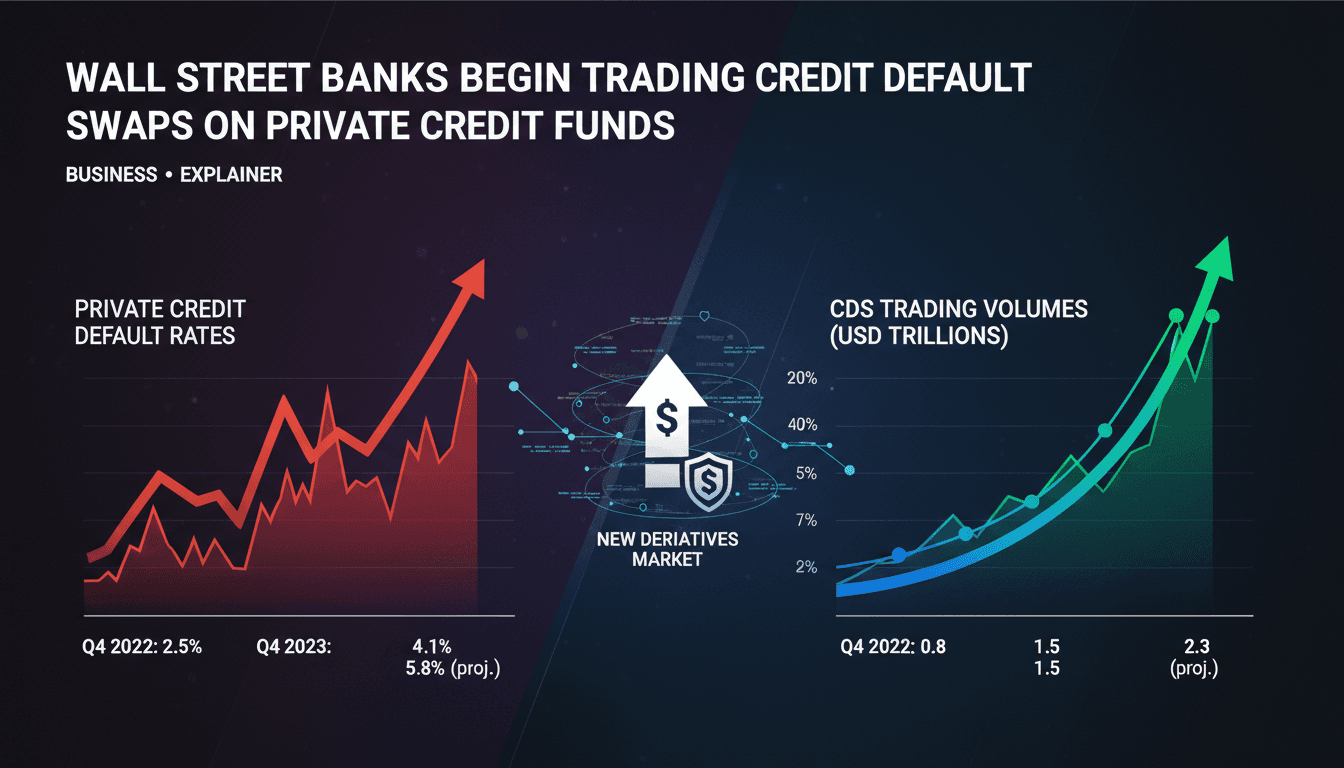
Here's what it means for you.
If you’re invested in private credit or related sectors, this shift could impact your portfolio's stability and liquidity.
Why it matters
This development signals heightened risk awareness in a sector managing approximately $2 trillion, potentially reshaping investment strategies.
What happened (in 30 seconds)
- On April 17, 2026, Wall Street banks began trading credit default swaps (CDS) linked to major private credit funds.
- Key players include JPMorgan Chase, Barclays, Morgan Stanley, and Citigroup, focusing on funds managed by Blackstone, Apollo Global Management, and Ares Management.
- This move allows investors to hedge against or speculate on distress in the private credit sector, which is currently facing significant stress.
The context you actually need
- Private credit has rapidly expanded since the 2008 financial crisis, reaching an estimated $2 trillion globally by 2026.
- Rising defaults and refinancing pressures have led to a record default rate of 9.2% among U.S. corporate borrowers in 2025.
- AI disruptions in the software sector, a key borrower group, have intensified stress, increasing demand for hedging instruments like CDS.
What's really happening
The initiation of credit default swaps trading on private credit funds marks a pivotal moment in the financial landscape. This shift follows the launch of a credit default swap index by S&P Dow Jones Indices on April 10, 2026, which standardized bets against sector distress. The index's introduction reflects a growing recognition of the vulnerabilities within the private credit market, particularly as it grapples with rising interest rates and a wave of defaults.
Wall Street banks, including JPMorgan Chase, Barclays, Morgan Stanley, and Citigroup, have quickly adapted to this new environment by offering bespoke CDS contracts tied to flagship funds managed by Blackstone, Apollo Global Management, and Ares Management. This move enables investors to hedge against potential losses or speculate on the likelihood of distress in the private credit sector, which has become increasingly precarious.
The private credit market, which has flourished in the years following the 2008 financial crisis, is now facing its most significant stress test. The sector's rapid growth has been fueled by non-bank institutions providing direct lending to mid-market companies. However, prolonged high interest rates have elevated borrowing costs, leading to a "refinancing wall" where many borrowers struggle to meet their obligations. The record default rate of 9.2% among U.S. corporate borrowers in 2025 underscores the urgency of this situation.
Moreover, the impact of artificial intelligence on the software sector, a critical constituency for private credit, has further complicated matters. As companies in this space face disruptions, the demand for hedging instruments like credit default swaps has surged. Investors are now more inclined to protect their positions against potential downturns, prompting banks to facilitate CDS trading as a response to these market dynamics.
The involvement of major financial institutions in this trading activity indicates a broader trend toward risk management and a proactive approach to navigating the uncertainties in the private credit landscape. As these banks conduct stress tests on their private credit exposures, the implications for liquidity and investor confidence become increasingly significant.
Who feels it first (and how)
- Investors in private credit funds: They may face increased volatility and potential redemption restrictions.
- High-net-worth individuals and family offices: Particularly those with allocations to U.S. private credit funds, especially in software-focused portfolios.
- Gulf sovereign wealth funds: Their substantial investments in private credit could be impacted by sector stress and valuation markdowns.
What to watch next
- Trading volumes of credit default swaps: An increase could indicate growing investor concern about the private credit sector's stability.
- Default rates among private credit borrowers: Continued rises may signal deeper issues within the sector, affecting investor confidence.
- Regulatory responses: Watch for any actions from the U.S. Treasury or other regulators regarding risks in the private credit market.
Major Wall Street banks have initiated trading in credit default swaps linked to private credit funds.
Increased scrutiny and stress testing of private credit exposures by financial institutions.
The long-term impact on liquidity and investor confidence in the private credit market.
Frequently Asked Questions
- Why it matters?
- This development signals heightened risk awareness in a sector managing approximately $2 trillion, potentially reshaping investment strategies.
- What happened (in 30 seconds)?
- On April 17, 2026, Wall Street banks began trading credit default swaps (CDS) linked to major private credit funds. Key players include JPMorgan Chase, Barclays, Morgan Stanley, and Citigroup, focusing on funds managed by Blackstone, Apollo Global Management, and Ares Management. This move allows investors to hedge against or speculate on distress in the private credit sector, which is currently facing significant stress.
- What's really happening?
- The initiation of credit default swaps trading on private credit funds marks a pivotal moment in the financial landscape. This shift follows the launch of a credit default swap index by S&P Dow Jones Indices on April 10, 2026, which standardized bets against sector distress. The index's introduction reflects a growing recognition of the vulnerabilities within the private credit market, particularly as it grapples with rising interest rates and a wave of defaults. Wall Street banks, including JP
- Who feels it first (and how)?
- Investors in private credit funds: They may face increased volatility and potential redemption restrictions. High-net-worth individuals and family offices: Particularly those with allocations to U.S. private credit funds, especially in software-focused portfolios. Gulf sovereign wealth funds: Their substantial investments in private credit could be impacted by sector stress and valuation markdowns.
- What to watch next?
- Trading volumes of credit default swaps: An increase could indicate growing investor concern about the private credit sector's stability. Default rates among private credit borrowers: Continued rises may signal deeper issues within the sector, affecting investor confidence. Regulatory responses: Watch for any actions from the U.S. Treasury or other regulators regarding risks in the private credit market.
Market-moving headlines impacting equities, bonds, and related risk assets.
"Real-time catalysts and volatility drivers across indices and sectors."
— A47 Editor
Wall Street banks trade derivatives to bet on private credit stress, FT reports
Wall Street banks have begun trading derivatives to bet against private credit, reflecting growing concerns about the stability of this investment sector, as reported by the Financial Times. This move aligns with the introduction of a new credit-defa...
Editor-curated FT homepage stories spanning markets, business, world, and opinion.
"The Financial Times is a globally respected business publication with a centrist/center-left tone and strong markets focus."
— A47 Editor
Wall Street banks start trading derivatives to bet on pain in private credit
Wall Street banks, including JPMorgan and Barclays, have begun trading credit default swaps (CDS) on private equity funds managed by Apollo, Ares, and Blackstone, indicating a shift towards hedging against potential downturns in the private credit ma...
Global markets, investing, and macroeconomics from a premier financial newsroom.
"Bloomberg is respected for in-depth financial reporting and data-driven analysis."
— A47 Editor
Private Credit Funds Face More Pressure as Banks Swap Collateral
Private credit funds are experiencing increased pressure as Wall Street banks adjust their collateral strategies, which has historically bolstered these funds with substantial loans, enhancing their investment capabilities. This shift comes amid risi...