
North Korea Conducts Short-Range Ballistic Missile Launches Amid Rising Tensions with South Korea
Here's what it means for you.
As geopolitical tensions escalate, professionals in global markets should prepare for potential shifts in trade and security dynamics.
Why it matters
The missile launches signal a deterioration in diplomatic relations, which could impact regional stability and international trade routes.
What happened (in 30 seconds)
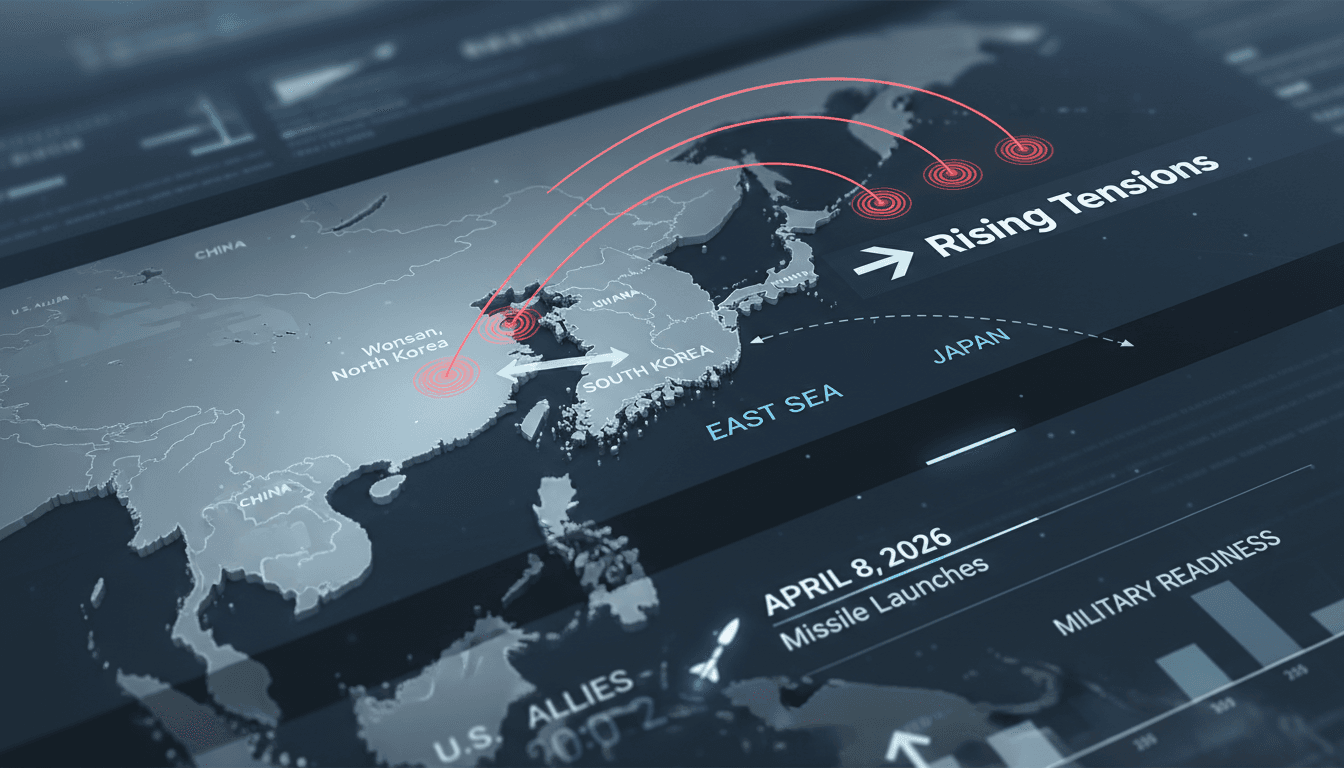
- On April 8, 2026, North Korea launched multiple short-range ballistic missiles into the East Sea from Wonsan, following derogatory remarks aimed at South Korea.
- The missiles flew approximately 240 km before splashing down without incident, with no reported damage.
- In response, South Korea's military vowed a stern reaction, while the US and Japan monitored the situation closely.
The context you actually need
- Tensions have been rising on the Korean Peninsula, particularly under South Korean President Lee Jae-myung's administration, which has seen North Korea reject diplomatic overtures.
- Recent incidents, including South Korean drone incursions into North Korean airspace, have exacerbated hostilities, leading to a cycle of provocations and retaliations.
- This missile launch fits a pattern of increased North Korean missile activity, with previous launches occurring in January and March 2026 amid ongoing US-South Korea military exercises.
What's really happening
The recent missile launches from North Korea are not isolated events but rather part of a broader pattern of escalating tensions on the Korean Peninsula. Following South Korean President Lee Jae-myung's expression of regret over drone incursions into North Korean airspace, the North's leadership quickly reverted to hostility, mocking South Korea's diplomatic efforts. This reaction underscores a deep-seated animosity and a strategic calculus that prioritizes military demonstrations over dialogue.
North Korea's First Vice Minister of Foreign Affairs, Jang Kum Chol, characterized South Korea as a "world-startling fool," reinforcing the narrative that any conciliatory gestures are viewed as weakness. This rhetoric serves to solidify internal support for the regime while simultaneously projecting strength externally. The missile launches, which traveled approximately 240 km into the East Sea, serve as a demonstration of military capability and a warning to both South Korea and its allies.
The backdrop to these events includes ongoing US-South Korea joint military exercises, which North Korea regularly condemns as provocations. The cyclical nature of these tensions suggests that diplomatic efforts are unlikely to yield immediate results, especially given North Korea's entrenched position against what it perceives as external threats. The international community, particularly the US and Japan, remains vigilant, with defense commitments reaffirmed in light of these developments.
The implications of this situation extend beyond the Korean Peninsula. As tensions rise, global markets may react to perceived instability in the region, particularly in sectors sensitive to geopolitical risks. Additionally, the potential for military conflict, while currently low, cannot be discounted, as both sides may miscalculate their responses in a high-stakes environment.
Who feels it first (and how)
- Government officials in South Korea and the US, who must navigate the diplomatic fallout and military responses.
- Defense contractors in the US and Japan, who may see increased demand for military equipment and services.
- Businesses involved in trade with the region, as heightened tensions could disrupt supply chains and market access.
What to watch next
- Responses from South Korea: Monitor how the South Korean government reacts in terms of military readiness and diplomatic outreach, as this will shape the immediate security landscape.
- US military posture: Watch for any changes in US military deployments in the region, which could indicate an escalation or de-escalation of tensions.
- Regional economic indicators: Keep an eye on market reactions in Asia, particularly in sectors sensitive to geopolitical risks, as investor sentiment may shift based on developments.
North Korea's missile launches are a direct response to perceived threats from South Korea and the US.
Continued military provocations from North Korea as diplomatic relations remain strained.
The long-term impact on regional trade and security dynamics, particularly if tensions escalate further.
Frequently Asked Questions
- Why it matters?
- The missile launches signal a deterioration in diplomatic relations, which could impact regional stability and international trade routes.
- What happened (in 30 seconds)?
- On April 8, 2026, North Korea launched multiple short-range ballistic missiles into the East Sea from Wonsan, following derogatory remarks aimed at South Korea. The missiles flew approximately 240 km before splashing down without incident, with no reported damage. In response, South Korea's military vowed a stern reaction, while the US and Japan monitored the situation closely.
- What's really happening?
- The recent missile launches from North Korea are not isolated events but rather part of a broader pattern of escalating tensions on the Korean Peninsula. Following South Korean President Lee Jae-myung's expression of regret over drone incursions into North Korean airspace, the North's leadership quickly reverted to hostility, mocking South Korea's diplomatic efforts. This reaction underscores a deep-seated animosity and a strategic calculus that prioritizes military demonstrations over dialogue.
- Who feels it first (and how)?
- Government officials in South Korea and the US, who must navigate the diplomatic fallout and military responses. Defense contractors in the US and Japan, who may see increased demand for military equipment and services. Businesses involved in trade with the region, as heightened tensions could disrupt supply chains and market access.
- What to watch next?
- Responses from South Korea: Monitor how the South Korean government reacts in terms of military readiness and diplomatic outreach, as this will shape the immediate security landscape. US military posture: Watch for any changes in US military deployments in the region, which could indicate an escalation or de-escalation of tensions. Regional economic indicators: Keep an eye on market reactions in Asia, particularly in sectors sensitive to geopolitical risks, as investor sentiment may shift ba
Global business headlines with AI angles.
"General business outlet that frequently covers AI."
— A47 Editor
North Korea Fires Missiles After Mocking South as 'World-Startling Fools' in Fresh Escalation
North Korea launched several short-range ballistic missiles into the sea on Wednesday, marking its second missile test in two days. This action followed a senior official's derogatory remarks about South Korea, labeling it as 'world-startling fools' ...
Conservative-leaning political and national coverage.
"The Washington Times is a conservative-leaning newspaper known for its political coverage and advocacy of right-of-center viewpoints."
— A47 Editor
North Korea fires missiles toward sea after ridiculing South's hopes for better ties
North Korea launched multiple short-range ballistic missiles into the sea on Wednesday, marking its second missile test in two days. This action followed derogatory remarks from a senior North Korean official regarding South Korea's aspirations for i...
Conservative-leaning coverage of current events.
"Fox News is a highly influential conservative news outlet known for right-leaning political commentary and coverage."
— A47 Editor
North Korea fires missiles toward sea after ridiculing South's hopes for better ties
North Korea has fired multiple ballistic missiles into the sea, following a period of deriding South Korea's aspirations for improved diplomatic relations. This missile launch reflects ongoing tensions in the region, particularly as North Korea conti...