
US Warns European Nations of Delays in Military Sales Due to Iran Conflict
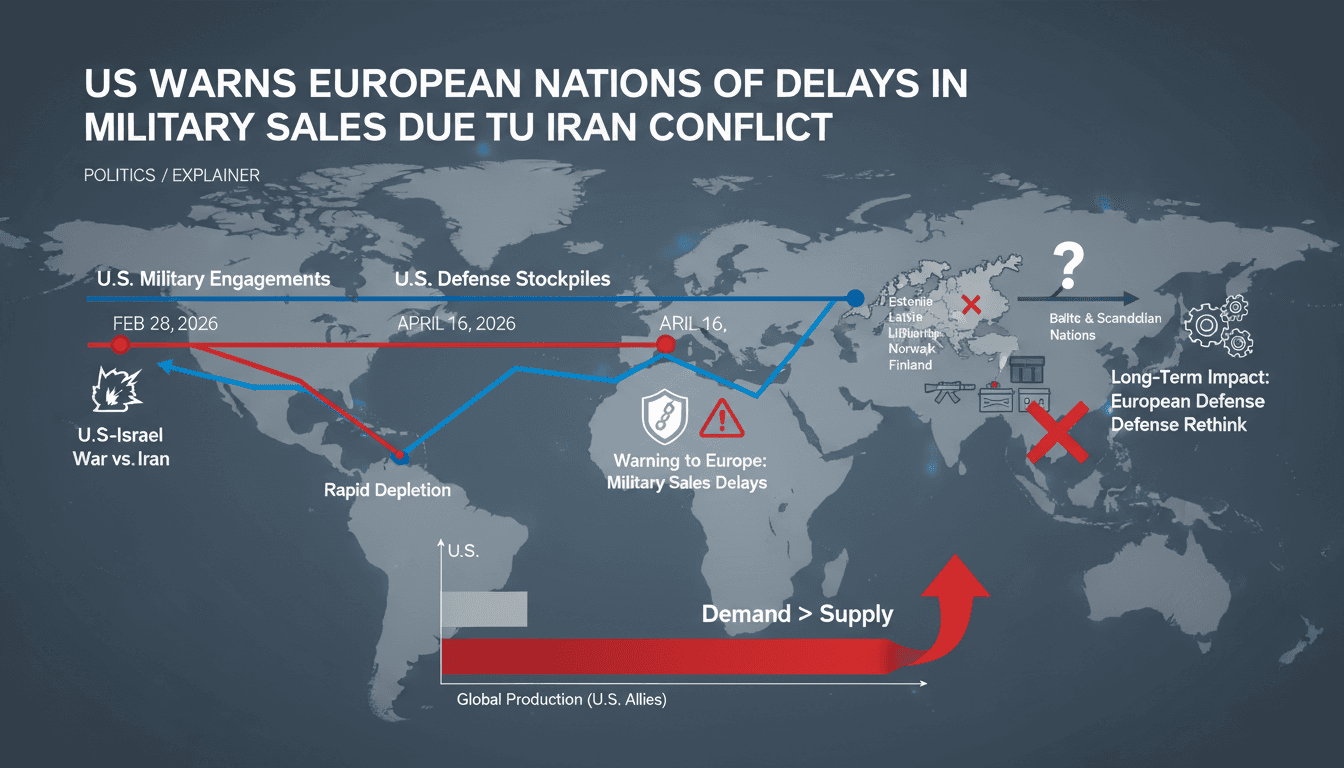
Here's what it means for you.
If you’re in defense contracting or reliant on European military partnerships, expect disruptions and potential shifts in procurement strategies.
Why it matters
This delay in military sales could reshape defense spending priorities across Europe, impacting security dynamics and procurement timelines.
What happened (in 30 seconds)
- On April 16, 2026, U.S. officials notified Baltic and Scandinavian countries of delays in Foreign Military Sales weapon shipments.
- The delays are due to rapid depletion of U.S. defense stockpiles amid the ongoing U.S.-Israel war against Iran, which began on February 28, 2026.
- Prior withdrawals of billions in military supplies for Ukraine and Gaza operations have compounded production and supply constraints.
The context you actually need
- The U.S. and Israel launched airstrikes on Iran on February 28, 2026, aiming to degrade Iranian military capabilities, which has led to significant depletion of U.S. weapon stockpiles.
- Since 2022, the U.S. has withdrawn billions of dollars in artillery and munitions for Ukraine and Gaza, straining its defense industrial base.
- European nations are now facing delays in arms deliveries, raising concerns about NATO readiness and prompting discussions about European defense autonomy.
What's really happening
The recent notification from U.S. officials to European counterparts about delays in Foreign Military Sales (FMS) weapon shipments is a direct consequence of the ongoing U.S.-Israel conflict with Iran. This conflict, which escalated dramatically with airstrikes on February 28, 2026, has led to a rapid depletion of U.S. defense stockpiles. The U.S. military's involvement in multiple theaters—supporting Ukraine against Russia since 2022 and Israel in Gaza since late 2023—has strained its resources significantly.
The U.S. defense industrial base is currently facing unprecedented production and supply constraints. The cumulative effect of these military engagements has forced the U.S. to prioritize domestic military needs over its obligations to foreign partners. As a result, European nations, particularly in the Baltic and Scandinavian regions, are now grappling with the reality of postponed arms deliveries, which could have far-reaching implications for their defense strategies.
The notification to European governments is not just a logistical issue; it reflects a broader strategic recalibration. The U.S. is signaling that its military resources are stretched thin, and it cannot meet the demands of its allies while simultaneously engaging in active conflicts. This situation raises questions about NATO's collective defense capabilities and the reliance of European nations on U.S. military support.
Moreover, the economic implications are significant. As the U.S. diverts resources to address immediate military needs, European countries may need to reassess their defense budgets and procurement strategies. This could lead to increased calls for European defense autonomy, as nations seek to reduce their dependence on U.S. military supplies.
The ongoing conflict and the resulting delays in military sales could also impact global defense markets. Countries that rely on U.S. military technology may seek alternative suppliers, potentially reshaping the landscape of international arms sales. The ripple effects of these delays will likely be felt across various sectors, from defense contracting to geopolitical alliances.
Who feels it first (and how)
- Defense Contractors: Companies involved in military procurement may face delays in contracts and revenue streams.
- European Governments: Nations in the Baltic and Scandinavian regions will need to adjust their defense strategies and budgets.
- Military Personnel: Troops may experience operational delays or reduced readiness due to lack of necessary equipment.
- Global Arms Suppliers: Other countries may see increased demand as European nations look for alternatives to U.S. arms.
What to watch next
- European Defense Spending: Watch for shifts in defense budgets as countries reassess their military needs in light of delayed shipments.
- NATO Discussions: Monitor NATO meetings for discussions on enhancing European defense autonomy and capabilities.
- U.S. Defense Production: Keep an eye on U.S. defense industry responses to increased demand and potential production ramp-ups.
The U.S. has notified European countries of delays in military sales due to stockpile depletion.
European nations will reassess their defense strategies and budgets in response to these delays.
The long-term impact on NATO's collective defense capabilities and the global arms market remains uncertain.
Frequently Asked Questions
- Why it matters?
- This delay in military sales could reshape defense spending priorities across Europe, impacting security dynamics and procurement timelines.
- What happened (in 30 seconds)?
- On April 16, 2026, U.S. officials notified Baltic and Scandinavian countries of delays in Foreign Military Sales weapon shipments. The delays are due to rapid depletion of U.S. defense stockpiles amid the ongoing U.S.-Israel war against Iran, which began on February 28, 2026. Prior withdrawals of billions in military supplies for Ukraine and Gaza operations have compounded production and supply constraints.
- What's really happening?
- The recent notification from U.S. officials to European counterparts about delays in Foreign Military Sales (FMS) weapon shipments is a direct consequence of the ongoing U.S.-Israel conflict with Iran. This conflict, which escalated dramatically with airstrikes on February 28, 2026, has led to a rapid depletion of U.S. defense stockpiles. The U.S. military's involvement in multiple theaters—supporting Ukraine against Russia since 2022 and Israel in Gaza since late 2023—has strained its resources
- Who feels it first (and how)?
- Defense Contractors: Companies involved in military procurement may face delays in contracts and revenue streams. European Governments: Nations in the Baltic and Scandinavian regions will need to adjust their defense strategies and budgets. Military Personnel: Troops may experience operational delays or reduced readiness due to lack of necessary equipment. Global Arms Suppliers: Other countries may see increased demand as European nations look for alternatives to U.S. arms.
- What to watch next?
- European Defense Spending: Watch for shifts in defense budgets as countries reassess their military needs in light of delayed shipments. NATO Discussions: Monitor NATO meetings for discussions on enhancing European defense autonomy and capabilities. U.S. Defense Production: Keep an eye on U.S. defense industry responses to increased demand and potential production ramp-ups.
Pan-Arab news coverage spanning politics, business, sports, and regional affairs.
"Asharq Al-Awsat reflects a broad Arab editorial perspective with strong attention to regional geopolitics."
— A47 Editor
تقرير: أميركا أبلغت دولاً أوروبية باحتمال تأخر شحنات أسلحة
American officials have informed European counterparts that some contracted arms shipments are likely to be delayed, according to three sources cited by Reuters. This development raises concerns about the reliability of U.S. military support to its E...
Regional coverage and analysis focused on politics, diplomacy, and business across the Middle East.
"Al-Monitor is known for analytical reporting on Middle East politics and policy developments."
— A47 Editor
Exclusive-US to delay weapons deliveries to some European countries due to Iran war, sources say
U.S. officials have indicated that the delivery of contracted weapons to several European countries will be delayed due to the ongoing Iran war, which is straining U.S. military resources. This situation affects nations particularly in the Baltic reg...
Arabic-language coverage of international news and geopolitics.
"RT Arabic is a Russian state-funded outlet often criticized for promoting Kremlin-aligned narratives."
— A47 Editor
"رويترز": أمريكا تبلغ الدول الأوروبية بتأخيرات في تسليم الأسلحة المتعاقد عليها مسبقا
According to Reuters, U.S. officials have informed their European counterparts about potential delays in the delivery of previously contracted weapons due to the depletion of stockpiles. This announcement raises concerns about the reliability of U.S....