
FinCEN Proposes New AML and Sanctions Compliance Rules for Stablecoin Issuers
Here's what it means for you.
If you engage with payment stablecoins, expect increased compliance measures that could affect transaction speed and privacy.
Why it matters
These proposed rules could reshape the regulatory landscape for the $317 billion stablecoin market, impacting how financial institutions operate.
What happened (in 30 seconds)
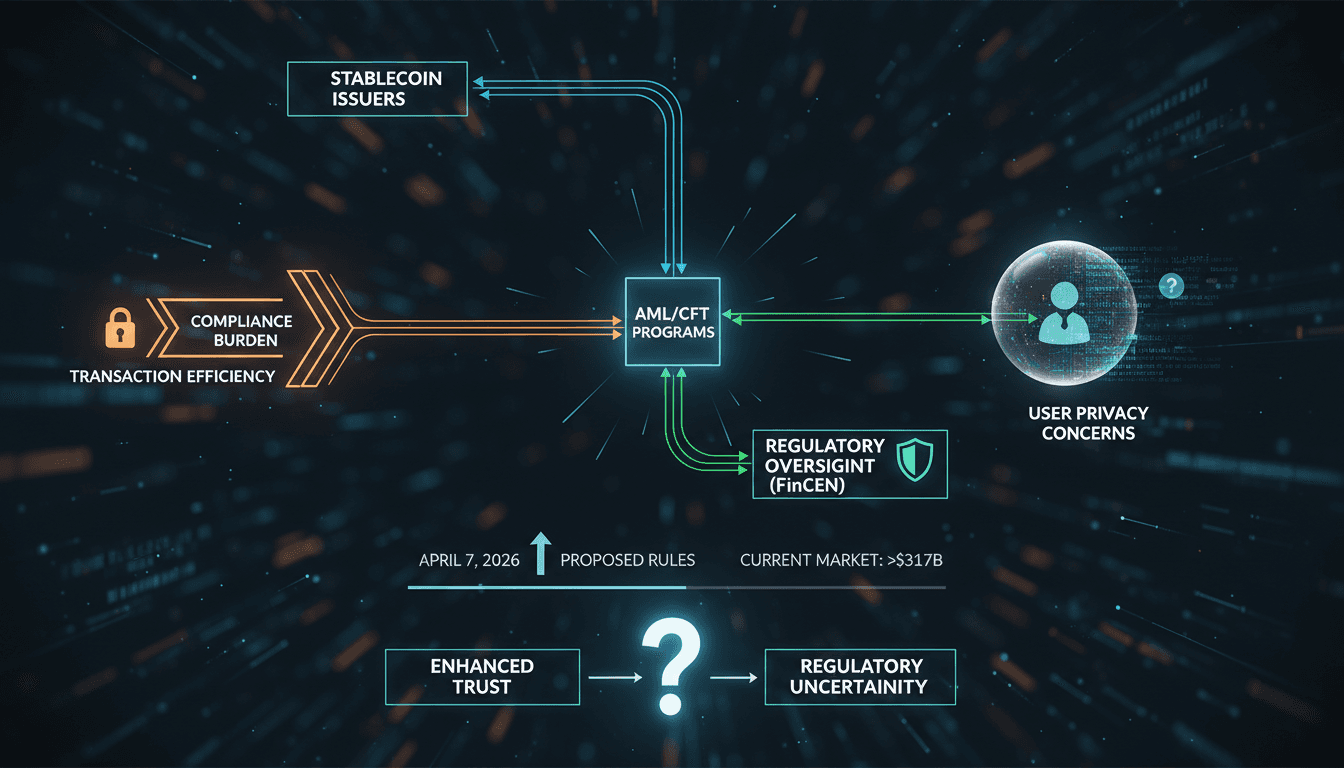
- On April 7, 2026, FinCEN proposed new rules for payment stablecoin issuers, requiring them to implement risk-based AML and CFT programs.
- Issuers classified as financial institutions must establish internal policies, appoint compliance officers, and conduct employee training.
- The proposal aims to combat illicit finance while streamlining compliance burdens, responding to the growing stablecoin market and concerns over money laundering.
The context you actually need
- The GENIUS Act, enacted in July 2025, designated payment stablecoin issuers as financial institutions under the Bank Secrecy Act, imposing stringent AML obligations.
- The stablecoin market has surpassed $317 billion, highlighting the urgency for regulatory clarity amid rising concerns over illicit finance in digital assets.
- The proposed rules are structured around four pillars: internal controls, U.S.-located compliance officers, tailored training, and independent effectiveness testing.
What's really happening
The U.S. Financial Crimes Enforcement Network (FinCEN) is taking decisive action to regulate payment stablecoin issuers through a Notice of Proposed Rulemaking (NPRM) issued on April 7, 2026. This initiative stems from the 2025 GENIUS Act, which reclassified these issuers as financial institutions under the Bank Secrecy Act, imposing bank-level anti-money laundering (AML) obligations. The proposed rules require issuers to implement risk-based AML and countering the financing of terrorism (CFT) programs, which include establishing internal policies, appointing U.S.-based compliance officers, conducting employee training, and performing independent testing.
The rationale behind these regulations is twofold: to combat the rising tide of illicit finance linked to digital assets and to provide a clearer compliance framework for issuers that previously operated under a patchwork of state regulations. The stablecoin market has seen explosive growth, surpassing $317 billion, raising alarms about potential money laundering and sanctions evasion. By mandating these compliance measures, FinCEN aims to restore confidence in the stability and integrity of the financial system.
Treasury Secretary Scott Bessent emphasized that the proposal "restores common sense" by prioritizing the identification and mitigation of bad actors over bureaucratic red tape. This sentiment is echoed by FDIC Chair Travis Hill, who views the initiative as a pivotal reform in the AML landscape. However, the industry is divided: while some stakeholders welcome the clarity that these regulations bring, others express concerns about increased surveillance and the potential for stifling innovation.
The proposed rules are currently open for public comments for 60 days following their publication in the Federal Register, allowing stakeholders to voice their opinions and concerns. As the regulatory landscape evolves, issuers will need to adapt quickly to comply with these new requirements, which could lead to significant operational changes.
Who feels it first (and how)
- Payment stablecoin issuers: They will need to invest in compliance infrastructure and training.
- Financial institutions: Banks and other financial entities engaging with stablecoins may face new compliance burdens.
- Consumers: Users of stablecoins could experience slower transaction times and increased scrutiny on their transactions.
- Regulatory bodies: Agencies like FinCEN and OFAC will be tasked with enforcing these new rules.
What to watch next
- Public comment period outcomes: The feedback received during the 60-day comment window could influence the final regulations and their implementation.
- Market reactions: Watch for any shifts in the stablecoin market capitalization and issuer strategies as they adapt to new compliance requirements.
- Global regulatory trends: Observe how other countries respond to similar concerns about illicit finance in digital assets, potentially leading to coordinated international regulations.
The proposed rules will require payment stablecoin issuers to implement AML and CFT programs.
The stablecoin market will see increased compliance costs and potential operational changes as issuers adapt.
The long-term impact on transaction speeds and user privacy remains to be seen.
Frequently Asked Questions
- Why it matters?
- These proposed rules could reshape the regulatory landscape for the $317 billion stablecoin market, impacting how financial institutions operate.
- What happened (in 30 seconds)?
- On April 7, 2026, FinCEN proposed new rules for payment stablecoin issuers, requiring them to implement risk-based AML and CFT programs. Issuers classified as financial institutions must establish internal policies, appoint compliance officers, and conduct employee training. The proposal aims to combat illicit finance while streamlining compliance burdens, responding to the growing stablecoin market and concerns over money laundering.
- What's really happening?
- The U.S. Financial Crimes Enforcement Network (FinCEN) is taking decisive action to regulate payment stablecoin issuers through a Notice of Proposed Rulemaking (NPRM) issued on April 7, 2026. This initiative stems from the 2025 GENIUS Act, which reclassified these issuers as financial institutions under the Bank Secrecy Act, imposing bank-level anti-money laundering (AML) obligations. The proposed rules require issuers to implement risk-based AML and countering the financing of terrorism (CFT) p
- Who feels it first (and how)?
- Payment stablecoin issuers: They will need to invest in compliance infrastructure and training. Financial institutions: Banks and other financial entities engaging with stablecoins may face new compliance burdens. Consumers: Users of stablecoins could experience slower transaction times and increased scrutiny on their transactions. Regulatory bodies: Agencies like FinCEN and OFAC will be tasked with enforcing these new rules.
- What to watch next?
- Public comment period outcomes: The feedback received during the 60-day comment window could influence the final regulations and their implementation. Market reactions: Watch for any shifts in the stablecoin market capitalization and issuer strategies as they adapt to new compliance requirements. Global regulatory trends: Observe how other countries respond to similar concerns about illicit finance in digital assets, potentially leading to coordinated international regulations.
Real-time updates, analysis, and reports on the blockchain and cryptocurrency sectors.
"Crypto News delivers real-time updates, analysis, and reports on the blockchain and cryptocurrency sectors."
— A47 Editor
Stablecoin News: Treasury’s FinCEN Just Proposed Rules Requiring Issuers to Police Their Own Transactions
The U.S. Department of the Treasury's Financial Crimes Enforcement Network (FinCEN) has proposed new rules that require stablecoin issuers to monitor their own transactions for anti-money laundering (AML) compliance. This initiative marks a significa...
Covers Bitcoin plus altcoin news, market updates, and educational resources.
"Bitcoin.com provides news, market data, and guides focused on Bitcoin and the wider crypto industry."
— A47 Editor
Treasury Proposes Stablecoin AML Rules as Bessent Vows to Protect US Financial System
The U.S. Department of the Treasury has proposed new anti-money laundering (AML) rules for stablecoin issuers, requiring them to monitor their own transactions to prevent illicit activities. This initiative, led by the Financial Crimes Enforcement Ne...
Covers blockchain, cryptocurrency news, project analysis, and market insights.
"CoinDesk is a well-established cryptocurrency and blockchain news provider, offering comprehensive insights, market data, and industry research."
— A47 Editor
U.S. Treasury proposes demands that stablecoin firms be set to police bad transactions
The U.S. Treasury has proposed new regulations requiring stablecoin firms to implement measures to prevent illicit transactions, aligning them with existing financial institutions. This initiative aims to enhance oversight and accountability in the r...