
Iranian Drone Intercepted Over Bahrain Injures Two Citizens
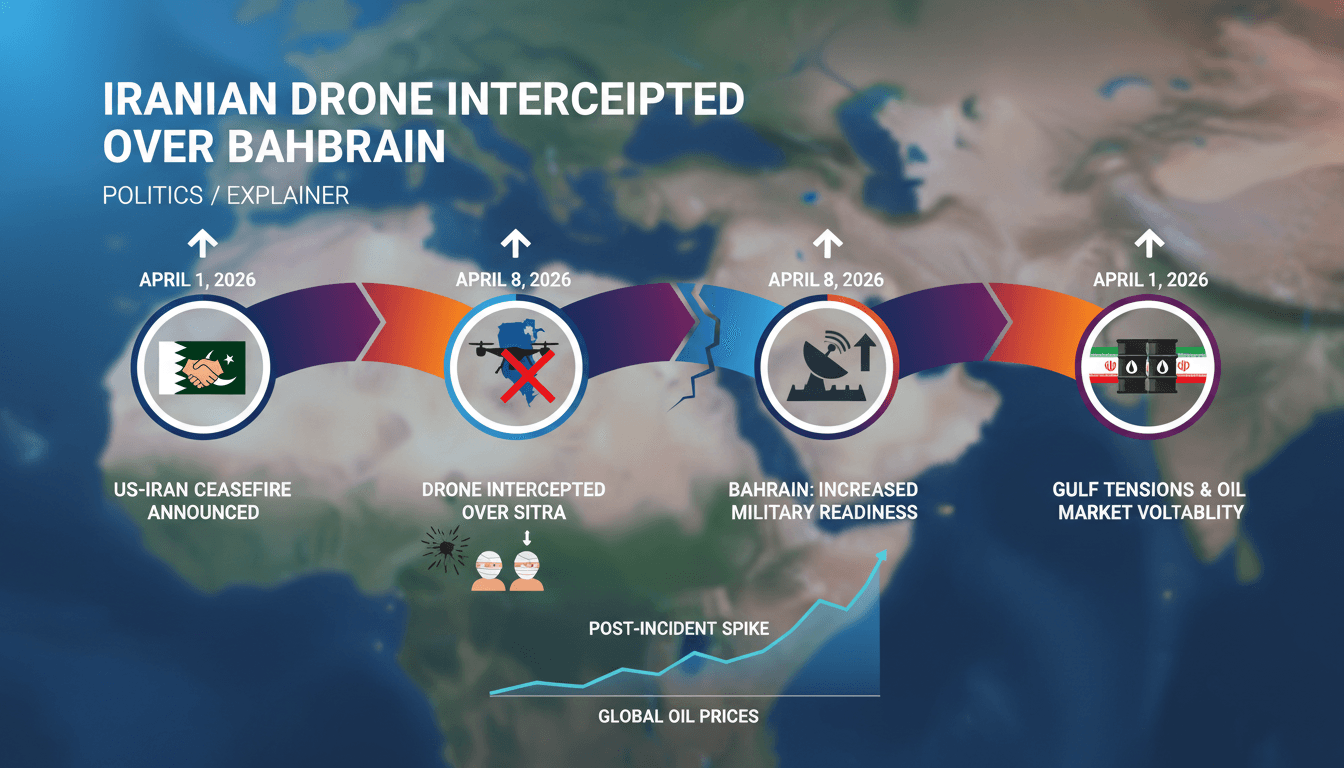
Here's what it means for you.
Increased security measures and potential disruptions in air travel could affect your plans if you're traveling in or out of the Gulf region.
Why it matters
This incident underscores the fragility of regional stability, which can directly impact global oil markets and security protocols.
What happened (in 30 seconds)
- On April 8, 2026: Bahraini air defenses intercepted an Iranian drone over Sitra, injuring two citizens with minor shrapnel wounds.
- Damage Reported: Falling debris caused damage to several homes in the area, prompting a swift response from the Bahrain Interior Ministry.
- Ceasefire Context: The incident occurred just hours after a US-Iran ceasefire was announced, mediated by Pakistan, aimed at reducing hostilities in the region.
The context you actually need
- Escalating Tensions: The interception is part of a broader pattern of Iranian drone and missile strikes targeting Gulf states, raising concerns about regional security.
- Economic Implications: The Strait of Hormuz is a critical chokepoint for global oil supplies; any disruption can lead to fluctuations in oil prices.
- International Dynamics: The ceasefire mediated by Pakistan reflects ongoing geopolitical maneuvering, with implications for US-Iran relations and Gulf security.
What's really happening
The interception of the Iranian drone over Bahrain's Sitra area is a significant event in the context of escalating tensions between Iran and Gulf states, particularly following a series of Iranian drone and missile strikes targeting energy infrastructure across the region. Since March 2026, these attacks have raised alarms about the security of oil supplies and the stability of the Gulf region.
The incident occurred just hours after a two-week ceasefire was announced, mediated by Pakistan, which aimed to de-escalate hostilities following US President Donald Trump's ultimatum regarding the reopening of the Strait of Hormuz. This strait is vital for global oil transportation, and any military action in the vicinity can have immediate repercussions on oil prices and international markets.
Bahrain's Interior Ministry condemned the drone as "Iranian aggression," highlighting the ongoing narrative of Iranian hostility in the region. The damage to homes and the injuries sustained by two citizens underscore the human cost of these geopolitical conflicts. While the injuries were minor, the psychological impact on the local population can be significant, fostering a climate of fear and uncertainty.
In the aftermath, pro-Iran factions in Iraq announced a halt to attacks, aligning with the ceasefire, indicating a complex interplay of military and diplomatic strategies. However, the volatility in oil markets suggests that investors remain cautious, with Brent crude prices fluctuating amid uncertainties about the ceasefire's durability.
This incident also reflects broader trends in regional security dynamics, where drone technology has become a tool of asymmetric warfare. Countries in the Gulf are likely to enhance their air defense systems in response to such threats, which could lead to increased military spending and shifts in defense procurement strategies.
The implications extend beyond immediate security concerns; they touch on economic stability, international relations, and the potential for further escalation if diplomatic efforts fail. As regional players navigate this complex landscape, the potential for miscalculation remains high, which could lead to more severe confrontations.
Who feels it first (and how)
- Local Residents: Citizens in Bahrain, particularly in Sitra, who face direct risks from military actions.
- Travelers: Individuals traveling to and from the Gulf region, who may experience increased security measures and potential flight disruptions.
- Investors: Stakeholders in oil markets, who will react to fluctuations in oil prices and geopolitical stability.
What to watch next
- Security Measures: Increased vigilance at airports and borders in the Gulf region could lead to longer wait times and potential travel disruptions.
- Oil Market Reactions: Fluctuations in Brent crude prices will indicate market confidence in the stability of the region and the effectiveness of the ceasefire.
- Diplomatic Developments: Further negotiations or escalations in US-Iran relations could significantly alter the security landscape in the Gulf.
The interception of the Iranian drone resulted in minor injuries and property damage.
Increased security measures will be implemented across the Gulf region in response to heightened tensions.
The long-term effectiveness of the ceasefire and its impact on regional stability remains uncertain.
Frequently Asked Questions
- Why it matters?
- This incident underscores the fragility of regional stability, which can directly impact global oil markets and security protocols.
- What happened (in 30 seconds)?
- On April 8, 2026: Bahraini air defenses intercepted an Iranian drone over Sitra, injuring two citizens with minor shrapnel wounds. Damage Reported: Falling debris caused damage to several homes in the area, prompting a swift response from the Bahrain Interior Ministry. Ceasefire Context: The incident occurred just hours after a US-Iran ceasefire was announced, mediated by Pakistan, aimed at reducing hostilities in the region.
- What's really happening?
- The interception of the Iranian drone over Bahrain's Sitra area is a significant event in the context of escalating tensions between Iran and Gulf states, particularly following a series of Iranian drone and missile strikes targeting energy infrastructure across the region. Since March 2026, these attacks have raised alarms about the security of oil supplies and the stability of the Gulf region. The incident occurred just hours after a two-week ceasefire was announced, mediated by Pakistan, whi
- Who feels it first (and how)?
- Local Residents: Citizens in Bahrain, particularly in Sitra, who face direct risks from military actions. Travelers: Individuals traveling to and from the Gulf region, who may experience increased security measures and potential flight disruptions. Investors: Stakeholders in oil markets, who will react to fluctuations in oil prices and geopolitical stability.
- What to watch next?
- Security Measures: Increased vigilance at airports and borders in the Gulf region could lead to longer wait times and potential travel disruptions. Oil Market Reactions: Fluctuations in Brent crude prices will indicate market confidence in the stability of the region and the effectiveness of the ceasefire. Diplomatic Developments: Further negotiations or escalations in US-Iran relations could significantly alter the security landscape in the Gulf.
Regional and international reporting focused on Middle Eastern politics, diplomacy, and economics.
"Asharq Al-Awsat is a Saudi-owned international newspaper reflecting mainstream Gulf political perspectives."
— A47 Editor
Iranian Drone Attack in Bahrain Injures Two, Says Interior Ministry
An Iranian drone attack in Bahrain has resulted in injuries to two individuals, as reported by the Interior Ministry. This incident highlights the escalating tensions in the Gulf region, particularly concerning Iranian military activities.
Arabic-language political and world news coverage for UAE readers.
"Emarat Al Youm world coverage usually presents international developments through a UAE and Arab audience lens."
— A47 Editor
وزارة الداخلية البحرينية: إصابتان وتضرر عدد من المنازل جراء سقوط شظايا نتيجة اعتراض وتدمير مسيرة إيرانية وزارة الداخلية البحرينية: إصابتان وتضرر عدد من المنازل جراء سقوط شظايا نتيجة اعتراض وتدمير مسيرة إيرانية
The Bahraini Ministry of Interior reported two minor injuries and damage to several homes due to debris falling from the interception and destruction of an Iranian drone. This incident highlights ongoing tensions in the region, particularly related t...