
Hui Ka Yan of China Evergrande Group Pleads Guilty to Fraud Charges
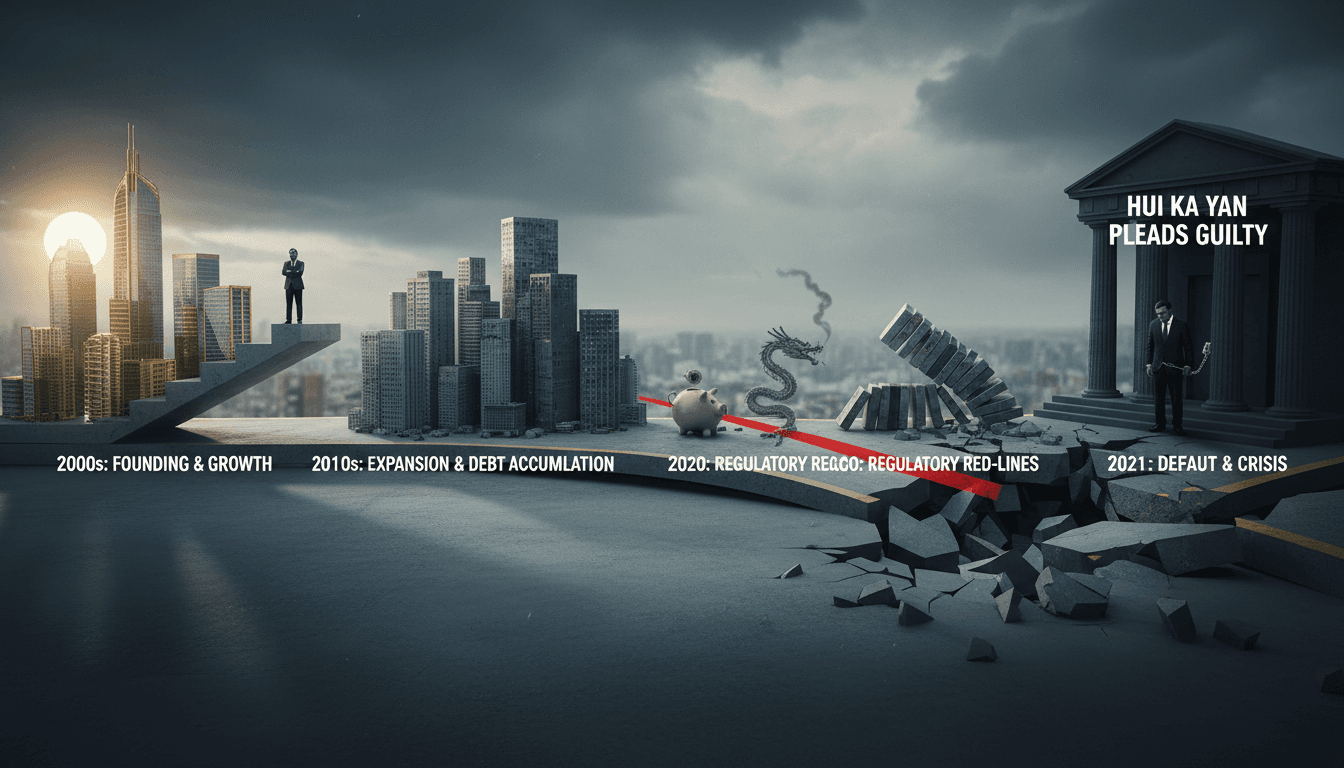
Here's what it means for you.
The fallout from Hui Ka Yan's trial could reshape global investor confidence in real estate markets.
Why it matters
This case highlights systemic vulnerabilities in China's property sector, impacting global investment strategies.
What happened (in 30 seconds)
- Hui Ka Yan, founder of China Evergrande Group, pleaded guilty to eight counts of fraud and bribery in a Shenzhen court.
- Evergrande's financial mismanagement has led to a staggering $300 billion in liabilities, contributing to a broader property crisis in China.
- Verdicts are pending, with potential life imprisonment for Hui, reflecting the severity of the fraud and its impact on investors.
The context you actually need
- China Evergrande Group, founded in 1996, became the world's most indebted developer, peaking at a net worth of $45 billion in 2017.
- Regulatory changes in 2020, specifically the "three red lines" policy, triggered a liquidity crisis, leading to Evergrande's default in 2021.
- Hui's legal troubles began with his detention in 2023, followed by a series of fines and a court-ordered liquidation in Hong Kong, culminating in this trial.
What's really happening
Hui Ka Yan's guilty plea is a significant moment in the ongoing saga of China Evergrande Group, a company that epitomizes the excesses and vulnerabilities of China's real estate sector. The company's aggressive borrowing strategy, which once fueled its rapid expansion into various sectors, including electric vehicles and sports, has now become its downfall. The trial, which began on April 13, 2026, is not just about Hui; it represents a broader reckoning for the entire property market in China.
The backdrop of this trial is the Chinese government's stringent regulatory measures aimed at curbing excessive debt among property developers. The "three red lines" policy introduced in 2020 was a direct response to the growing concerns over financial stability and the risk of a housing bubble. This policy has forced many developers, including Evergrande, to reassess their financial strategies, leading to a liquidity crisis that has left millions of homebuyers in limbo, with unfinished properties and lost investments.
Hui's admission of guilt to multiple fraud charges, including fundraising fraud and misuse of funds, underscores the systemic issues within the company. The diversion of pre-sale funds from homebuyers to other projects not only highlights a breach of trust but also reflects a desperate attempt to maintain liquidity amid mounting debts. The scale of the fraud—totaling billions—has drawn public outrage and demands for accountability, which the Chinese authorities are now attempting to address through this trial.
As the court prepares to deliver its verdict, the implications extend beyond Hui and Evergrande. Creditors are facing dismal recovery rates, with some reports indicating as low as 0.69% recovery on certain claims. This situation has led to a broader crisis of confidence in the Chinese property market, affecting not only domestic investors but also international stakeholders who may reconsider their exposure to Chinese real estate.
The trial's outcome is likely to set a precedent for how similar cases are handled in the future, potentially leading to stricter regulations and oversight in the property sector. As the Chinese government grapples with public anger over unfinished homes and wiped-out investments, the verdicts could signal a shift in how the state manages corporate malfeasance and protects consumer interests.
Who feels it first (and how)
- Homebuyers: Many are left with unfinished properties and lost investments, facing uncertainty about their financial futures.
- Investors: Both domestic and international investors are reassessing their positions in the Chinese property market, wary of potential losses.
- Developers: Other property developers may face increased scrutiny and regulatory pressure as a result of Evergrande's collapse and Hui's trial.
What to watch next
- Verdict outcomes: The court's decision on Hui's charges will be crucial in determining the future of corporate governance in China's property sector.
- Market reactions: Watch for shifts in investor sentiment and property stock performance in China following the verdict.
- Regulatory changes: Any new policies introduced by the Chinese government in response to this case could reshape the landscape for property developers.
Hui Ka Yan has pleaded guilty to multiple fraud charges.
The verdicts will influence future regulatory measures in China's property sector.
The long-term impact on global investor confidence in Chinese real estate remains uncertain.
Frequently Asked Questions
- Why it matters?
- This case highlights systemic vulnerabilities in China's property sector, impacting global investment strategies.
- What happened (in 30 seconds)?
- Hui Ka Yan, founder of China Evergrande Group, pleaded guilty to eight counts of fraud and bribery in a Shenzhen court. Evergrande's financial mismanagement has led to a staggering $300 billion in liabilities, contributing to a broader property crisis in China. Verdicts are pending, with potential life imprisonment for Hui, reflecting the severity of the fraud and its impact on investors.
- What's really happening?
- Hui Ka Yan's guilty plea is a significant moment in the ongoing saga of China Evergrande Group, a company that epitomizes the excesses and vulnerabilities of China's real estate sector. The company's aggressive borrowing strategy, which once fueled its rapid expansion into various sectors, including electric vehicles and sports, has now become its downfall. The trial, which began on April 13, 2026, is not just about Hui; it represents a broader reckoning for the entire property market in China.
- Who feels it first (and how)?
- Homebuyers: Many are left with unfinished properties and lost investments, facing uncertainty about their financial futures. Investors: Both domestic and international investors are reassessing their positions in the Chinese property market, wary of potential losses. Developers: Other property developers may face increased scrutiny and regulatory pressure as a result of Evergrande's collapse and Hui's trial.
- What to watch next?
- Verdict outcomes: The court's decision on Hui's charges will be crucial in determining the future of corporate governance in China's property sector. Market reactions: Watch for shifts in investor sentiment and property stock performance in China following the verdict. Regulatory changes: Any new policies introduced by the Chinese government in response to this case could reshape the landscape for property developers.
Macro commentary, policy analysis, growth/inflation themes, and global outlooks.
"Contextual macro coverage that complements day-to-day market headlines."
— A47 Editor
China Evergrande founder pleads guilty to fraud in Shenzhen court
The founder of China Evergrande, a major property developer, has pleaded guilty to fraud in a Shenzhen court, marking a significant legal setback for the company and its leadership. This plea follows a series of financial troubles that have plagued E...
Pan-Arab news coverage spanning politics, business, sports, and regional affairs.
"Asharq Al-Awsat reflects a broad Arab editorial perspective with strong attention to regional geopolitics."
— A47 Editor
مؤسس «إيفرغراند» الصينية يُقرُّ بالذنب في قضية احتيال
The founder of the Chinese Evergrande Group, the world's most indebted real estate developer, has pleaded guilty to charges including the misuse of funds and fraud in fundraising activities. This admission marks a significant development in the ongoi...
Macro commentary, policy analysis, growth/inflation themes, and global outlooks.
"Contextual macro coverage that complements day-to-day market headlines."
— A47 Editor
China Evergrande’s billionaire boss falls from circles of power to fraud plea
The billionaire head of China Evergrande has recently faced a significant fall from grace, culminating in a plea related to fraud charges. This development marks a dramatic shift for a figure once at the helm of one of the largest property developers...
Global political, business, and cultural coverage from WSJ international desks.
"The Wall Street Journal offers extensive international reporting with a reputation for financial insight and a center-right editorial stance."
— A47 Editor
Founder of Fallen Chinese Property Giant Evergrande Pleads Guilty to Fraud
Hui Ka Yan, the founder of China Evergrande, has pleaded guilty to fundraising fraud and other charges during trial proceedings in Shenzhen, marking a significant moment for the once-prominent property developer whose financial collapse has contribut...
UK and international business news, economics, and corporate coverage.
"The Guardian’s business section covers finance and markets with a progressive editorial tone."
— A47 Editor
China Evergrande’s billionaire boss pleads guilty to fraud
Hui Ka Yan, the founder of China Evergrande, has pleaded guilty to fundraising fraud and other charges during trial proceedings in Shenzhen, expressing remorse for his actions following the collapse of the world's most indebted property developer.
International coverage from The Guardian's global desks.
"The Guardian is known for its progressive editorial stance and in-depth analysis."
— A47 Editor
China Evergrande’s billionaire boss pleads guilty to fraud
Hui Ka Yan, the founder of China Evergrande, has pleaded guilty to fundraising fraud and other charges during trial proceedings in Shenzhen, expressing remorse for his actions following the collapse of the world's most indebted property developer.
Corporate news, economic trends, and markets with UK and global scope.
"BBC News is widely regarded as reputable and impartial, with a public service mandate."
— A47 Editor
Founder of China's Evergrande pleads guilty to fraud
The founder of Evergrande, once China's largest real estate firm with a market valuation exceeding $50 billion, has pleaded guilty to fraud. This development marks a significant moment for the company, which has faced severe financial difficulties in...