
Traders Increase Oil and Currency Positions as Trump Sets Iran Deadline
Here's what it means for you.
If you’re involved in global trade or finance, the upcoming deadline could significantly impact oil prices and currency valuations.
Why it matters
The Strait of Hormuz is a critical chokepoint for global oil shipments, and disruptions here can ripple through markets worldwide.
What happened (in 30 seconds)
- Trump issued a deadline: On April 7, 2026, President Trump set an 8 p.m. ET deadline for Iran to reopen the Strait of Hormuz.
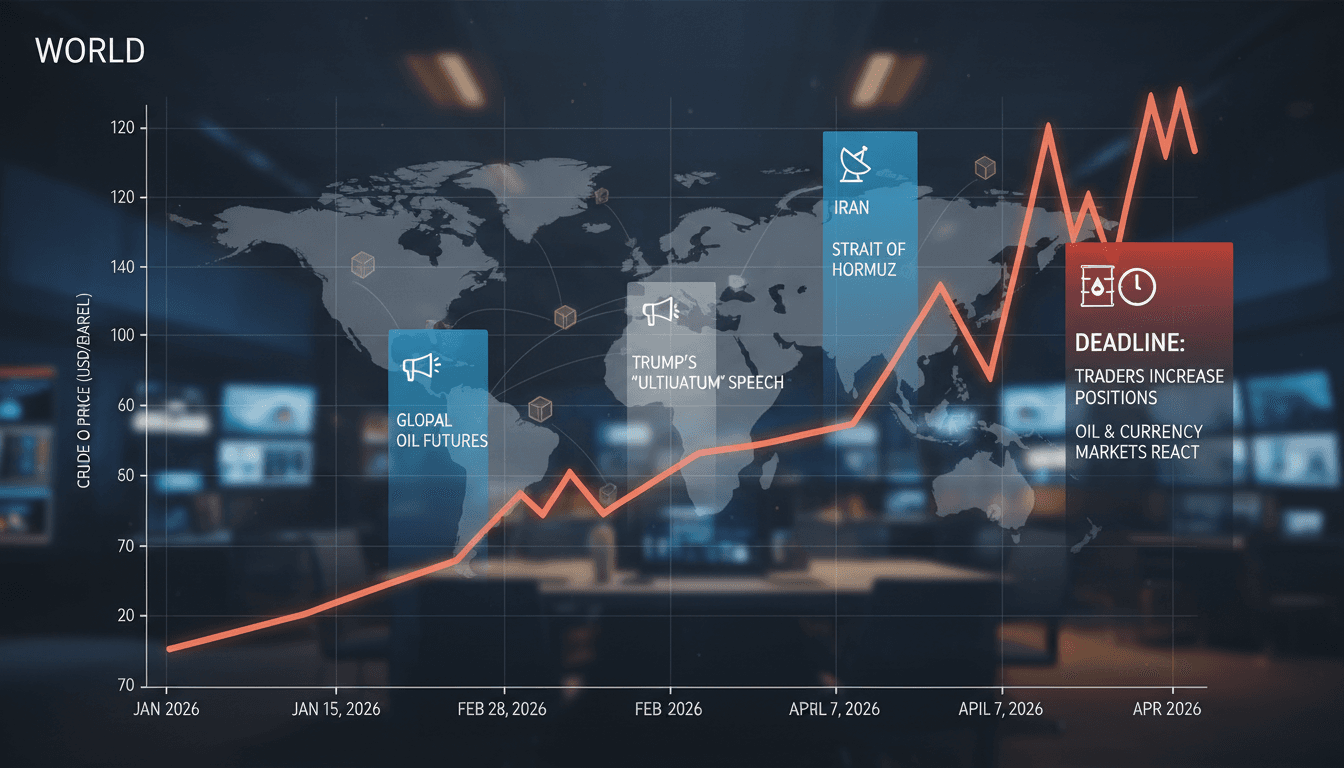
- Market reactions intensified: Traders accelerated their positions in crude oil futures, with prices fluctuating between $110 and $116 per barrel.
- Conditional cease-fire announced: Shortly after the deadline, a conditional two-week suspension of U.S. offensive operations was agreed upon, pending Iran's cooperation.
The context you actually need
- Escalating conflict: The situation escalated in March 2026 when Iran blocked the Strait of Hormuz, disrupting about 20% of global oil shipments.
- U.S. military responses: The U.S. has conducted military strikes on Iranian oil facilities, further heightening tensions in the region.
- Negotiation dynamics: The U.S. and Iran have been engaged in stalled nuclear talks, complicating the geopolitical landscape and influencing market behavior.
What's really happening
As the April 7 deadline approached, traders globally ramped up their positions in crude oil futures, reflecting heightened uncertainty and speculation about the potential outcomes of the ultimatum. The price of crude oil futures peaked at $115 per barrel, driven by fears of further military escalation and the potential for prolonged disruptions in oil supply. The WSJ Dollar Index also saw a slight decline of 0.3%, indicating a shift in investor sentiment as they braced for volatility.
The backdrop of this situation is rooted in a series of escalating tensions between the U.S. and Iran, which have been exacerbated by Iran's blockade of the Strait of Hormuz. This strategic waterway is vital for global oil trade, and any disruption can lead to significant price fluctuations and supply chain challenges. The U.S. has responded to Iran's actions with military threats and strikes, creating a precarious environment for traders and investors.
In the lead-up to the deadline, the Pakistani government urged for a two-week extension to allow for negotiations, highlighting the international stakes involved. Trump's ultimatum is not just a political maneuver; it reflects a broader strategy to exert pressure on Iran while also managing domestic expectations regarding U.S. foreign policy.
The conditional cease-fire announced by Trump, which hinges on Iran's commitment to facilitate safe passage through the Strait, underscores the delicate balance of power in the region. Iran's confirmation of coordination for temporary access via its armed forces indicates a willingness to negotiate, albeit under strict conditions. This development could lead to a temporary easing of tensions, but the underlying issues remain unresolved.
The implications for global markets are significant. Traders are not only reacting to immediate price movements but are also positioning themselves for longer-term shifts in oil supply dynamics. The uncertainty surrounding the Strait of Hormuz and the potential for military conflict could lead to increased volatility in oil prices, impacting everything from consumer fuel costs to broader economic indicators.
Who feels it first (and how)
- Oil traders: They are directly impacted by price fluctuations and market volatility.
- Global shipping companies: Disruptions in the Strait of Hormuz affect shipping routes and costs.
- Consumers: Rising oil prices can lead to increased costs for goods and services.
- Investors in Gulf markets: Stock prices in the UAE and surrounding regions are sensitive to geopolitical developments.
What to watch next
- Negotiation outcomes: The scheduled talks in Islamabad on April 11, 2026, will be crucial in determining the future of U.S.-Iran relations and the stability of oil markets.
- Market reactions to military developments: Any escalation in military actions or further threats from either side could lead to immediate market volatility.
- Oil price trends: Monitor crude oil prices closely, as they will reflect the ongoing geopolitical situation and traders' sentiment.
- The Strait of Hormuz is critical for global oil shipments.
- Traders will continue to position themselves for volatility in oil prices.
- The long-term implications of the cease-fire and negotiations on U.S.-Iran relations remain uncertain.
Frequently Asked Questions
- Why it matters?
- The Strait of Hormuz is a critical chokepoint for global oil shipments, and disruptions here can ripple through markets worldwide.
- What happened (in 30 seconds)?
- Trump issued a deadline: On April 7, 2026, President Trump set an 8 p.m. ET deadline for Iran to reopen the Strait of Hormuz. Market reactions intensified: Traders accelerated their positions in crude oil futures, with prices fluctuating between $110 and $116 per barrel. Conditional cease-fire announced: Shortly after the deadline, a conditional two-week suspension of U.S. offensive operations was agreed upon, pending Iran's cooperation.
- What's really happening?
- As the April 7 deadline approached, traders globally ramped up their positions in crude oil futures, reflecting heightened uncertainty and speculation about the potential outcomes of the ultimatum. The price of crude oil futures peaked at $115 per barrel, driven by fears of further military escalation and the potential for prolonged disruptions in oil supply. The WSJ Dollar Index also saw a slight decline of 0.3%, indicating a shift in investor sentiment as they braced for volatility. The backd
- Who feels it first (and how)?
- Oil traders: They are directly impacted by price fluctuations and market volatility. Global shipping companies: Disruptions in the Strait of Hormuz affect shipping routes and costs. Consumers: Rising oil prices can lead to increased costs for goods and services. Investors in Gulf markets: Stock prices in the UAE and surrounding regions are sensitive to geopolitical developments.
- What to watch next?
- Negotiation outcomes: The scheduled talks in Islamabad on April 11, 2026, will be crucial in determining the future of U.S.-Iran relations and the stability of oil markets. Market reactions to military developments: Any escalation in military actions or further threats from either side could lead to immediate market volatility. Oil price trends: Monitor crude oil prices closely, as they will reflect the ongoing geopolitical situation and traders' sentiment.
International coverage of politics, security, and social issues.
"Global News is a mainstream Canadian outlet with a centrist editorial stance, focusing on factual reporting."
— A47 Editor
Iranians brace as Trump deadline looms: ‘We will stand until the end’
As the deadline set by President Trump approaches, residents of Tehran are preparing for potential military action, rushing to stock up on essential supplies like bottled water and charging electronic devices. Trump's ultimatum demands the reopening ...
Markets desk coverage, trading insights, and investor updates.
"WSJ’s markets reporting provides in-depth analysis and context for investors."
— A47 Editor
Traders Are Racing to Place Their Bets Ahead of Trump’s Iran Deadline
Investors are bracing for potential outcomes as President Trump has set a deadline for Iran to reopen the Strait of Hormuz, a crucial maritime route for global oil shipments, by 8:00 p.m. ET on Tuesday. This ultimatum has led to increased volatility ...
Global political, business, and cultural coverage from WSJ international desks.
"The Wall Street Journal offers extensive international reporting with a reputation for financial insight and a center-right editorial stance."
— A47 Editor
‘We Have Been Punished Enough’: Iranians Fear Trump’s Threatened Escalation
Amid escalating tensions, Iranians are expressing deep concern over President Trump's threats of military action against their infrastructure, particularly following his ultimatum to reopen the Strait of Hormuz within 48 hours or face severe conseque...