
Neanderthal birch tar shown to have antibacterial properties in recent study
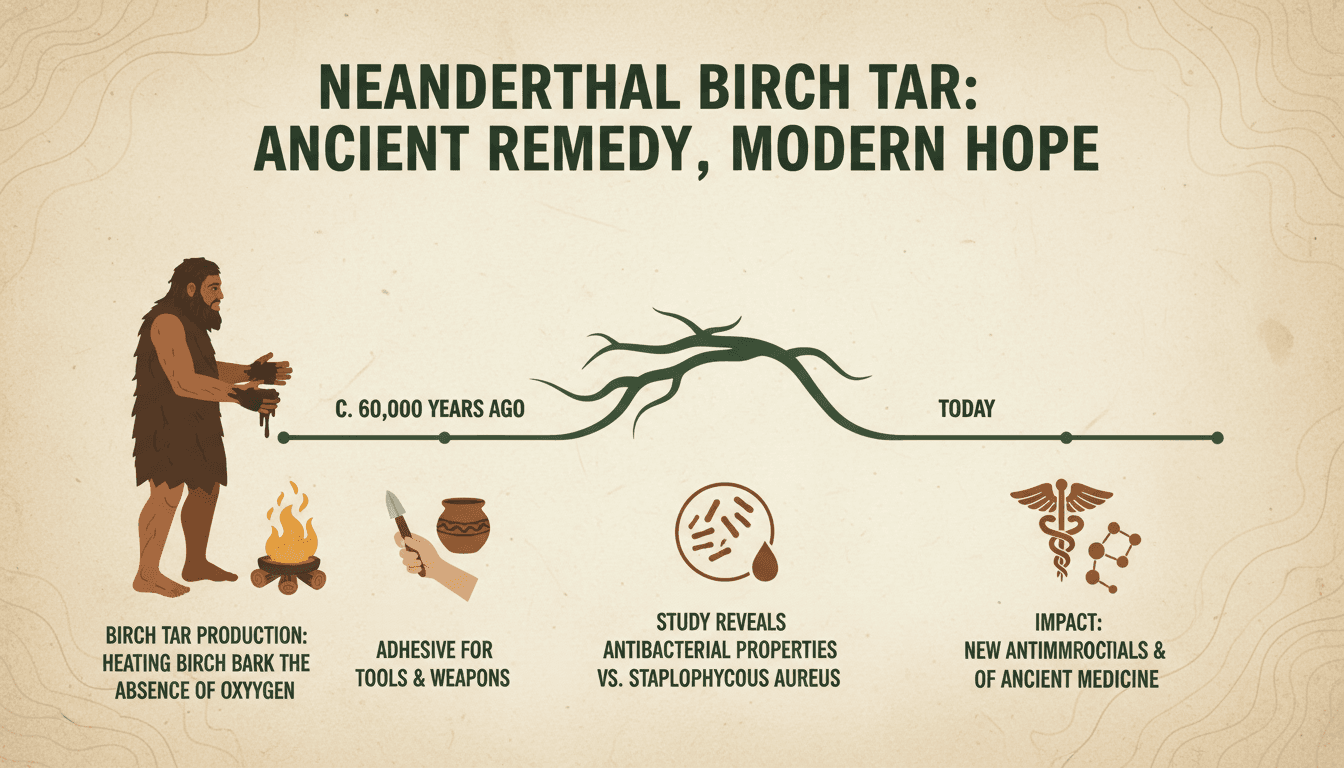
Here's what it means for you.
Insights into prehistoric medicinal practices could inform modern approaches to antimicrobial research.
What happened
On March 18, 2026, researchers published evidence that birch tar produced using Neanderthal methods has antibacterial properties effective against Staphylococcus aureus.
The Context
- Neanderthal Innovation: Birch tar, dating back over 200,000 years, was primarily used as an adhesive but may have also served medicinal purposes.
- Research Collaboration: Led by Tjaark Siemssen, the study involved techniques replicated from archaeological sites, highlighting Neanderthal behavioral complexity.
- Modern Implications: The findings align with contemporary concerns over antibiotic resistance, suggesting pathways for developing natural antimicrobials.
The Number
— This figure represents the earliest evidence of Neanderthal birch tar use, underscoring the long history of human ingenuity in pharmacology.
Takeaway
Expect ongoing discussions in academic circles about the implications of Neanderthal health practices for modern medicine and potential applications in antimicrobial development.
In-depth reporting on tech, policy, and science including AI.
"Respected analysis for technically savvy readers, including AI topics."
— A47 Editor
Never mind Band-Aids, Neanderthals had antiseptic birch tar
Recent findings reveal that Neanderthals utilized antiseptic birch tar, challenging previous perceptions of their capabilities and lifestyle. This discovery highlights the complexity and vibrancy of Neanderthal life, suggesting they had advanced know...
In-depth coverage of hardware, software, science, and policy.
"Ars Technica provides expert technology news, hardware reviews, and analysis for a technically savvy audience."
— A47 Editor
Never mind Band-Aids, Neanderthals had antiseptic birch tar
Recent findings reveal that Neanderthals utilized antiseptic birch tar, challenging previous perceptions of their capabilities and lifestyle. This discovery highlights the complexity and vibrancy of Neanderthal life, suggesting they had advanced know...
Discoveries, research, environment, and health innovations.
"New Scientist is a well-respected publication offering accessible science news, commentary, and expert analysis."
— A47 Editor
Neanderthals may have treated wounds with antibiotic sticky tar
Research indicates that Neanderthals may have utilized a sticky tar derived from birch tree bark to treat wounds, as this substance has been found at various Neanderthal archaeological sites. Experiments suggest that this tar possesses antibacterial ...
News in science and technology, with a focus on consumer and innovation stories.
"Popular Science simplifies complex scientific topics for general audiences and celebrates innovation."
— A47 Editor
Neanderthals used antibiotics, new experiment suggests
Recent experiments suggest that Neanderthals may have utilized birch tar, a sticky substance derived from birch tree bark, not only for crafting tools and weapons but also potentially for treating wounds due to its antibacterial properties. This find...