
UN Women Reports Over 38,000 Women and Girls Killed in Gaza War from October 2023 to December 2025
Here's what it means for you.
The staggering loss of life among women and girls in Gaza signals urgent humanitarian needs that could affect global aid dynamics and international relations.
Why it matters
The extensive casualties among women and girls in Gaza highlight systemic gender disparities in conflict zones, influencing international humanitarian policies and funding.
What happened (in 30 seconds)
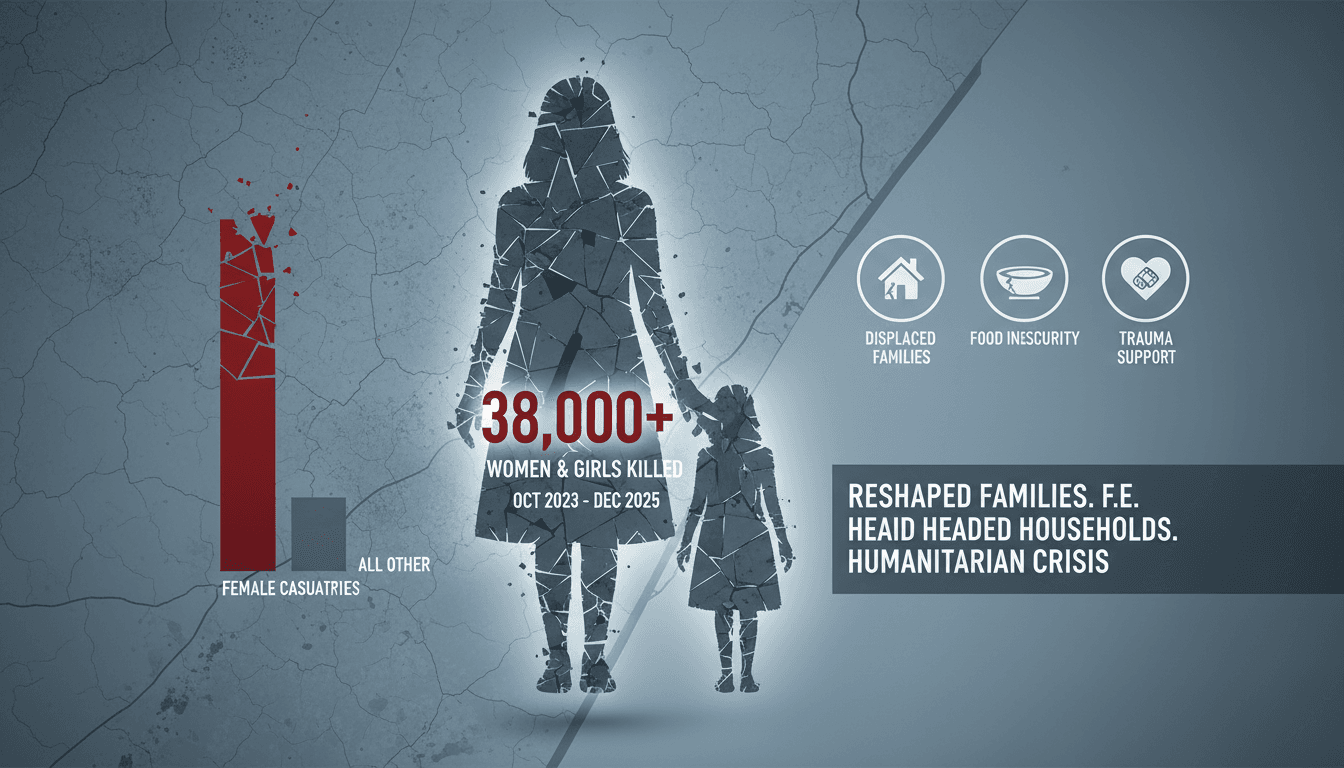
- UN Women reported over 38,000 women and girls killed in Gaza from October 2023 to December 2025, averaging 47 fatalities per day.
- Nearly 11,000 women and girls sustained lifelong disabilities due to the conflict, exacerbating the humanitarian crisis.
- A ceasefire was enacted in October 2025, yet ongoing humanitarian challenges persist, including displacement and food insecurity.
The context you actually need
- The Israel-Hamas war began on October 7, 2023, following a Hamas-led attack that resulted in significant casualties and hostages in Israel.
- Israel's military response included airstrikes and a ground invasion, leading to extensive destruction and loss of life in Gaza.
- UN Women’s analysis reveals a higher proportion of female casualties compared to previous conflicts, indicating a shift in the gendered impact of warfare.
What's really happening
The report from UN Women, titled "The Cost of the War in Gaza on Women and Girls," reveals a grim reality for women and girls in the Gaza Strip. Over 38,000 women and girls were killed during the conflict, with the average daily death toll reaching 47. This staggering figure reflects not only the immediate impact of military actions but also the long-term consequences of war on gender dynamics within affected communities.
The conflict has reshaped family structures, with tens of thousands of households now led by women due to the loss of male family members. This shift has significant economic implications, as these female-headed households face increased financial hardship and social instability. The report highlights that nearly 11,000 women and girls have sustained lifelong disabilities, further complicating their ability to support themselves and their families.
The humanitarian crisis in Gaza is compounded by ongoing challenges such as displacement and food insecurity, which disproportionately affect women and girls. The ceasefire established in October 2025 has not resolved these issues; instead, it has highlighted the urgent need for comprehensive humanitarian aid that prioritizes the needs of women and girls. UN Women has called for adherence to international law and accountability for those responsible for the violence, emphasizing the necessity of scaling up humanitarian efforts.
Critics of the report, including some Israeli sources, have questioned the methodology and data sources used by UN Women, suggesting that the casualty figures may be inflated. However, the global media has amplified the findings, prompting renewed calls for reconstruction and support for the affected populations. The implications of this report extend beyond Gaza, as it raises awareness of the gendered impacts of conflict and the need for targeted humanitarian responses.
As the international community grapples with the fallout from this conflict, the focus on women's and girls' rights in humanitarian contexts is likely to gain momentum. The report serves as a stark reminder of the human cost of war and the importance of addressing gender disparities in conflict zones.
Who feels it first (and how)
- Women and girls in Gaza: Directly affected by violence, loss of family members, and lifelong disabilities.
- Humanitarian organizations: Facing increased demand for aid and resources to support affected populations.
- International policymakers: Required to address the implications of the report in terms of funding and humanitarian strategies.
What to watch next
- Increased humanitarian aid: Watch for shifts in international funding and support directed towards women and girls in conflict zones, as the report may influence donor priorities.
- Policy changes: Monitor potential changes in international humanitarian law discussions, particularly regarding gendered impacts of warfare.
- Public awareness campaigns: Expect a rise in advocacy efforts aimed at highlighting the plight of women and girls in conflict, potentially influencing public opinion and policy.
Over 38,000 women and girls were killed in Gaza from October 2023 to December 2025.
Humanitarian aid efforts will increase in response to the report's findings, focusing on women and girls.
The long-term impact on international relations and funding dynamics remains uncertain.
Frequently Asked Questions
- Why it matters?
- The extensive casualties among women and girls in Gaza highlight systemic gender disparities in conflict zones, influencing international humanitarian policies and funding.
- What happened (in 30 seconds)?
- UN Women reported over 38,000 women and girls killed in Gaza from October 2023 to December 2025, averaging 47 fatalities per day. Nearly 11,000 women and girls sustained lifelong disabilities due to the conflict, exacerbating the humanitarian crisis. A ceasefire was enacted in October 2025, yet ongoing humanitarian challenges persist, including displacement and food insecurity.
- What's really happening?
- The report from UN Women, titled "The Cost of the War in Gaza on Women and Girls," reveals a grim reality for women and girls in the Gaza Strip. Over 38,000 women and girls were killed during the conflict, with the average daily death toll reaching 47. This staggering figure reflects not only the immediate impact of military actions but also the long-term consequences of war on gender dynamics within affected communities. The conflict has reshaped family structures, with tens of thousands of ho
- Who feels it first (and how)?
- Women and girls in Gaza: Directly affected by violence, loss of family members, and lifelong disabilities. Humanitarian organizations: Facing increased demand for aid and resources to support affected populations. International policymakers: Required to address the implications of the report in terms of funding and humanitarian strategies.
- What to watch next?
- Increased humanitarian aid: Watch for shifts in international funding and support directed towards women and girls in conflict zones, as the report may influence donor priorities. Policy changes: Monitor potential changes in international humanitarian law discussions, particularly regarding gendered impacts of warfare. Public awareness campaigns: Expect a rise in advocacy efforts aimed at highlighting the plight of women and girls in conflict, potentially influencing public opinion and polic
Arabic-language coverage of international news and geopolitics.
"RT Arabic is a Russian state-funded outlet often criticized for promoting Kremlin-aligned narratives."
— A47 Editor
الأمم المتحدة: 38 ألف امرأة وفتاة قتلن في غزة
The United Nations has reported that over 38,000 women and girls were killed in Gaza between October 2023 and the end of 2025 due to Israeli operations, averaging at least 47 casualties daily. This alarming statistic highlights the severe impact of o...
Regional and international reporting focused on Middle Eastern politics, diplomacy, and economics.
"Asharq Al-Awsat is a Saudi-owned international newspaper reflecting mainstream Gulf political perspectives."
— A47 Editor
UN: Average of 47 Women and Girls Killed Daily During Gaza War
The United Nations has reported that an average of 47 women and girls are killed daily during the ongoing conflict in Gaza, highlighting the severe toll the war is taking on vulnerable populations. This alarming statistic underscores the urgent human...
Arabic-language UAE newspaper coverage focused on domestic affairs, public institutions, business, society, and regional developments.
"Al Khaleej coverage generally reflects a mainstream UAE editorial lens with strong attention to public affairs, institutions, and regional developments."
— A47 Editor
الأمم المتحدة: 47 امرأة وفتاة قُتلن يومياً خلال حرب غزة
The United Nations reported that at least 47 women and girls are killed daily during the ongoing conflict in Gaza, highlighting the severe impact of the war on vulnerable populations. This alarming statistic was released by UN Women, emphasizing the ...
UAE-based English-language newspaper covering regional politics, economics, and global affairs.
"The National reflects Emirati policy perspectives while maintaining international editorial standards."
— A47 Editor
Women and girls comprise more than half of Gaza war dead
Recent reports indicate that women and girls make up more than half of the fatalities in the ongoing conflict in Gaza, highlighting the severe impact of the violence on vulnerable populations. This alarming statistic underscores the urgent humanitari...