
Pharmaceutical Companies Embrace Smaller Acquisitions to Support Biotech Growth
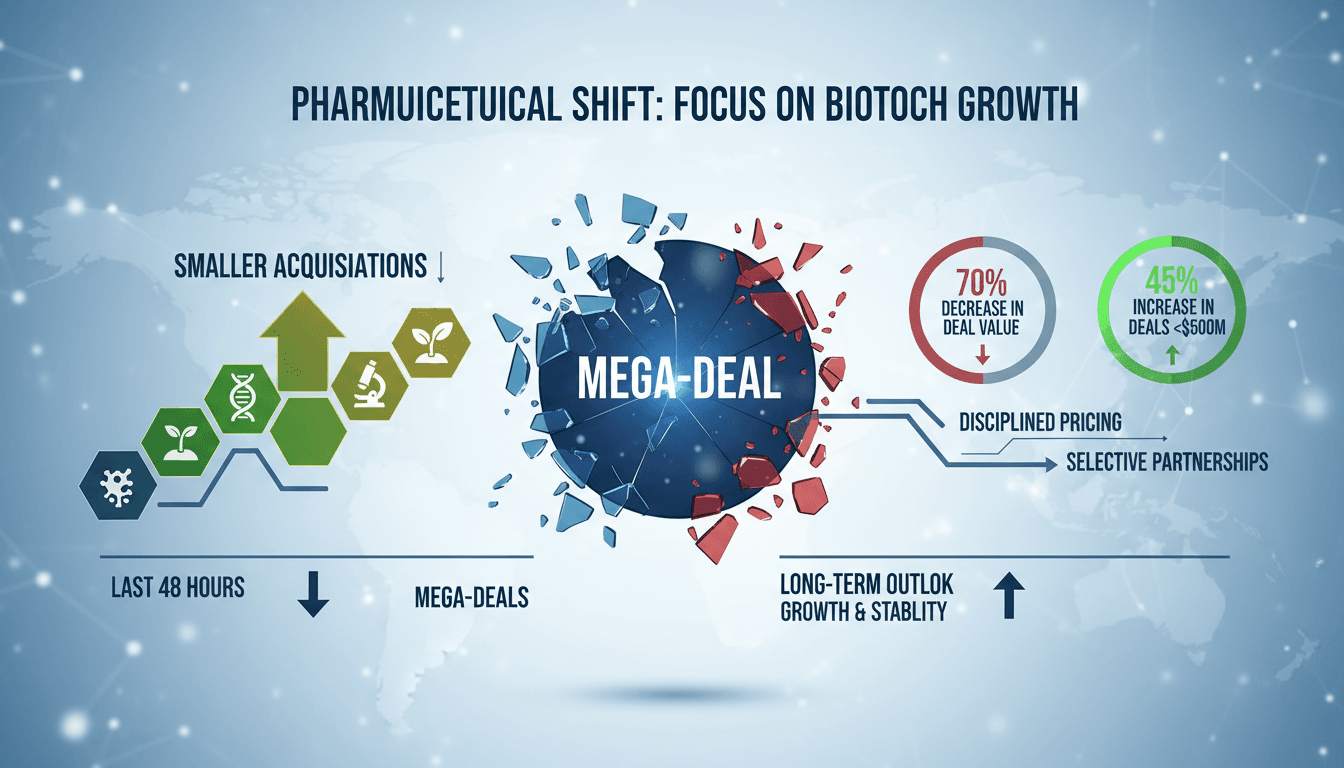
Here's what it means for you.
If you’re in the biotech sector, this trend could mean more opportunities for partnerships and funding without the pressure of inflated valuations.
Why it matters
This shift in acquisition strategy reflects a significant recalibration in the biopharma landscape, impacting innovation and investment dynamics.
What happened (in 30 seconds)
- Big Pharma is focusing on smaller acquisitions of biotech firms, moving away from large megadeals.
- This trend allows biotech companies to secure fair-value partnerships and sustain operations.
- Analysts predict continued M&A activity in 2026, with deal values expected between $140-160 billion.
The context you actually need
- Post-2023 megadeal boom: The biopharma sector saw a record $152 billion in megadeals in 2023, driven by patent expirations and a need for innovation.
- Market reset in 2024: Deal values dropped to around $82 billion amid market caution and high interest rates, leading to a more selective acquisition approach.
- 2025 rebound: M&A values peaked at $292.55 billion, but Big Pharma shifted focus to smaller, targeted acquisitions to manage risks effectively.
What's really happening
In early 2026, major pharmaceutical companies are strategically pivoting towards smaller-scale acquisitions of biotech assets. This shift is characterized by reduced deal sizes and a disciplined approach to valuations, allowing Big Pharma to avoid the pitfalls of overpriced megadeals. The trend is a response to the lessons learned from previous years, particularly the frenetic pace of acquisitions that characterized the 2023 boom.
The 2023 megadeal frenzy, which totaled approximately $152 billion, was largely driven by impending patent cliffs and a pressing need for innovation. However, the market reset in 2024, where deal values fell to around $82 billion, highlighted the risks associated with such large transactions, especially in a high-interest-rate environment. This reset prompted Big Pharma to adopt a more cautious and selective approach to acquisitions.
In 2025, while the M&A landscape rebounded dramatically, reaching a record high of $292.55 billion, the focus shifted towards bolt-on acquisitions rather than transformative mergers. This strategy allows pharmaceutical companies to integrate innovations more efficiently while minimizing the integration challenges that often accompany larger targets. By pursuing smaller deals, Big Pharma can target specific areas of interest, such as oncology and rare diseases, where they can add value without the complexities of larger mergers.
This disciplined approach not only benefits Big Pharma by optimizing their pipelines but also provides a significant advantage to biotechnology firms. These smaller-scale acquisitions enable biotech companies to secure fair-value partnerships, sustain their operations, and foster innovation without the pressure of inflated bids or hostile takeovers. As a result, the biotech sector is experiencing a revitalization, with increased opportunities for collaboration and growth.
Moreover, the implications of this trend extend beyond the immediate players involved. Regions like Dubai and the UAE are emerging as attractive hubs for biotech innovation, thanks to favorable tax policies and R&D incentives. The local pharmaceutical market, currently valued at $4.15 billion, is projected to reach $8 billion by 2033, creating a fertile ground for smaller partnerships with Big Pharma. This dynamic is likely to further enhance the global biotech landscape, as companies seek to capitalize on the opportunities presented by this shift in acquisition strategy.
Who feels it first (and how)
- Biotechnology firms: More opportunities for partnerships and funding.
- Investors in biotech: Potential for increased returns as smaller firms gain traction.
- Pharmaceutical companies: Enhanced ability to innovate without the risks associated with large mergers.
- Emerging markets like Dubai: Growth in local biotech sectors due to increased interest from Big Pharma.
What to watch next
- Increased M&A activity: Watch for the number of smaller acquisitions in 2026, as analysts predict values between $140-160 billion.
- Biotech indices performance: Monitor the performance of biotech indices like XBI, which have rallied on improved sentiment.
- Regional biotech growth: Keep an eye on emerging biotech hubs like Dubai, which may attract more investments and partnerships.
Big Pharma is shifting focus to smaller acquisitions.
Continued growth in biotech partnerships and M&A activity in 2026.
The long-term impact on the overall biopharma landscape and innovation rates.
Frequently Asked Questions
- Why it matters?
- This shift in acquisition strategy reflects a significant recalibration in the biopharma landscape, impacting innovation and investment dynamics.
- What happened (in 30 seconds)?
- Big Pharma is focusing on smaller acquisitions of biotech firms, moving away from large megadeals. This trend allows biotech companies to secure fair-value partnerships and sustain operations. Analysts predict continued M&A activity in 2026, with deal values expected between $140-160 billion.
- What's really happening?
- In early 2026, major pharmaceutical companies are strategically pivoting towards smaller-scale acquisitions of biotech assets. This shift is characterized by reduced deal sizes and a disciplined approach to valuations, allowing Big Pharma to avoid the pitfalls of overpriced megadeals. The trend is a response to the lessons learned from previous years, particularly the frenetic pace of acquisitions that characterized the 2023 boom. The 2023 megadeal frenzy, which totaled approximately $152 billi
- Who feels it first (and how)?
- Biotechnology firms: More opportunities for partnerships and funding. Investors in biotech: Potential for increased returns as smaller firms gain traction. Pharmaceutical companies: Enhanced ability to innovate without the risks associated with large mergers. Emerging markets like Dubai: Growth in local biotech sectors due to increased interest from Big Pharma.
- What to watch next?
- Increased M&A activity: Watch for the number of smaller acquisitions in 2026, as analysts predict values between $140-160 billion. Biotech indices performance: Monitor the performance of biotech indices like XBI, which have rallied on improved sentiment. Regional biotech growth: Keep an eye on emerging biotech hubs like Dubai, which may attract more investments and partnerships.
Markets desk coverage, trading insights, and investor updates.
"WSJ’s markets reporting provides in-depth analysis and context for investors."
— A47 Editor
Big Pharma Is Thinking Small on Deals. That’s a Boon for Biotech.
Big Pharma is shifting its acquisition strategy, focusing on smaller deals valued between $1 billion and $10 billion, which has become a significant trend this year. This approach is seen as beneficial for a broader range of companies, particularly i...