
World Bank Group Launches Water Forward Initiative to Address Global Water Scarcity
Here's what it means for you.
If you rely on water-intensive industries or live in water-stressed regions, this initiative could reshape your economic landscape.
Why it matters
Water scarcity affects economic stability, job security, and public health, making this initiative crucial for global resilience.
What happened (in 30 seconds)
- On April 15, 2026, the World Bank Group launched the 'Water Forward' initiative to improve water security for over 1 billion people by 2030.
- Fourteen countries committed to national water compacts focusing on urban leakage reduction, irrigation modernization, and wastewater reuse.
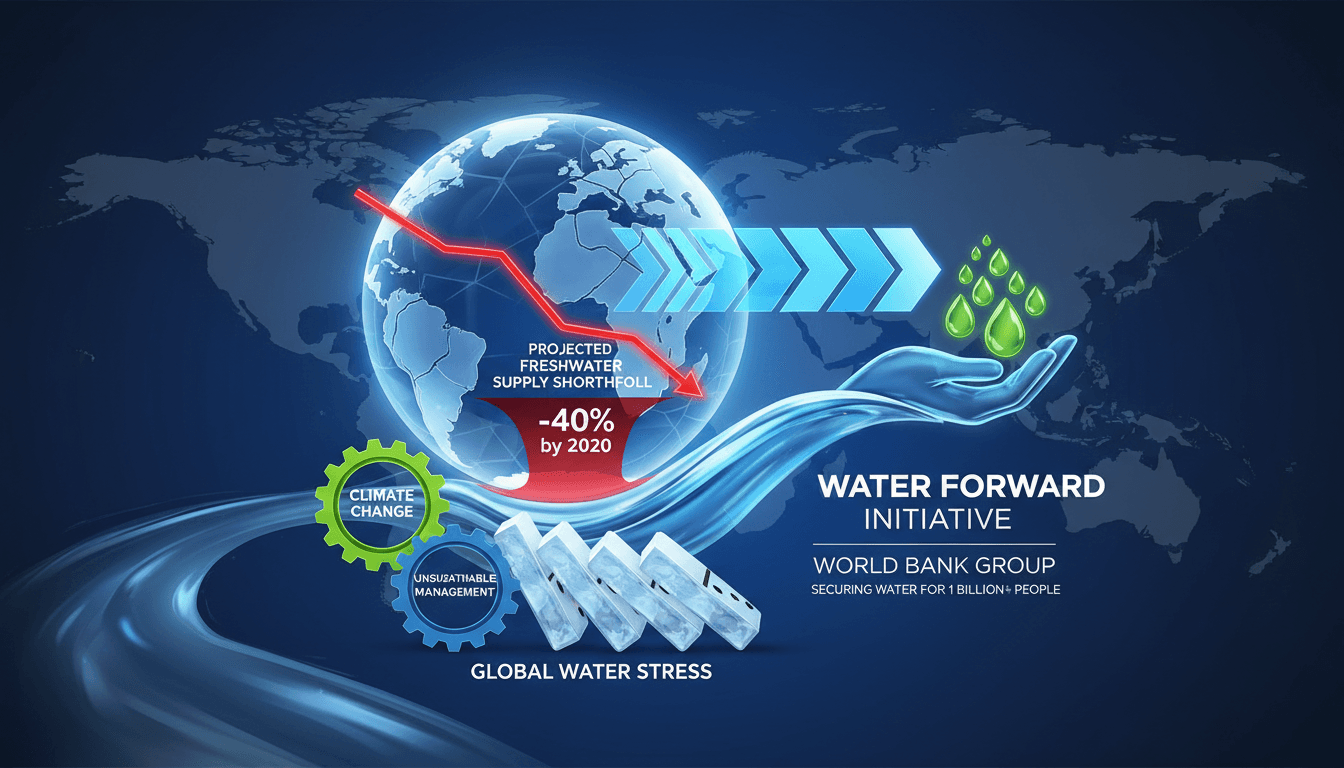
- The initiative aims to address global water stress impacting 4 billion people, with a projected freshwater supply shortfall of 40% by the decade's end.
The context you actually need
- Global freshwater demand is expected to exceed supply by 40% by 2030, exacerbating water scarcity issues.
- 2.1 billion people currently lack access to safe drinking water, while 3.4 billion do not have adequate sanitation.
- Water-related shocks can erode GDP by several percentage points in affected nations, highlighting the economic stakes involved.
What's really happening
The World Bank's Water Forward initiative is a strategic response to escalating global water stress, driven by climate change and unsustainable water management practices. Launched during the Spring Meetings in April 2026, the program aims to mobilize investments and policy reforms across 14 water-stressed countries, including Jordan and Angola.
The initiative is built on the premise that water is not merely a resource but a strategic economic asset. By repositioning water management within the framework of economic development, the World Bank seeks to attract private capital and enhance public-private partnerships. This shift is crucial, as traditional funding mechanisms have often fallen short due to unclear policies and weak regulations.
The initiative's focus on urban leakage reduction, irrigation modernization, and wastewater reuse is particularly significant. Urban areas often experience substantial water loss due to outdated infrastructure, with some cities losing up to 50% of their water supply before it reaches consumers. By addressing these inefficiencies, the initiative aims to improve water availability and reduce costs for consumers and businesses alike.
Moreover, the emphasis on data-driven planning is intended to create a more resilient water management system. By leveraging technology and data analytics, countries can better understand their water needs and develop targeted solutions. This approach not only enhances water security but also supports economic stability by safeguarding jobs in water-dependent sectors.
The coalition of multilateral development banks involved in Water Forward, including the Asian Development Bank and the European Investment Bank, underscores the collaborative nature of this initiative. By pooling resources and expertise, these institutions aim to create a comprehensive financing platform that can address the multifaceted challenges of water scarcity.
As the initiative rolls out, it will be critical to monitor its implementation and the effectiveness of the national water compacts. The success of Water Forward will depend on the commitment of participating countries to adhere to their reform agendas and the ability to mobilize the necessary investments.
Who feels it first (and how)
- Water-dependent industries: Agriculture, manufacturing, and tourism sectors will experience immediate impacts due to changes in water availability and costs.
- Urban residents: Individuals in cities with high water leakage rates may face increased water bills and service disruptions.
- Governments: National and local governments will need to adapt policies and regulations to align with the new water compacts.
What to watch next
- Investment flows: Monitor the level of private capital mobilized for water infrastructure projects, as this will indicate the initiative's traction.
- Policy reforms: Watch for changes in national water policies in the 14 participating countries, as these will shape the effectiveness of the initiative.
- Public response: Keep an eye on community reactions to water management changes, particularly in urban areas where water scarcity is most acute.
The World Bank's Water Forward initiative aims to improve water security for over 1 billion people by 2030.
Increased investment in water infrastructure and technology will emerge as a result of the initiative.
The long-term effectiveness of national water compacts in achieving their goals remains to be seen.
Frequently Asked Questions
- Why it matters?
- Water scarcity affects economic stability, job security, and public health, making this initiative crucial for global resilience.
- What happened (in 30 seconds)?
- On April 15, 2026, the World Bank Group launched the 'Water Forward' initiative to improve water security for over 1 billion people by 2030. Fourteen countries committed to national water compacts focusing on urban leakage reduction, irrigation modernization, and wastewater reuse. The initiative aims to address global water stress impacting 4 billion people, with a projected freshwater supply shortfall of 40% by the decade's end.
- What's really happening?
- The World Bank's Water Forward initiative is a strategic response to escalating global water stress, driven by climate change and unsustainable water management practices. Launched during the Spring Meetings in April 2026, the program aims to mobilize investments and policy reforms across 14 water-stressed countries, including Jordan and Angola. The initiative is built on the premise that water is not merely a resource but a strategic economic asset. By repositioning water management within th
- Who feels it first (and how)?
- Water-dependent industries: Agriculture, manufacturing, and tourism sectors will experience immediate impacts due to changes in water availability and costs. Urban residents: Individuals in cities with high water leakage rates may face increased water bills and service disruptions. Governments: National and local governments will need to adapt policies and regulations to align with the new water compacts.
- What to watch next?
- Investment flows: Monitor the level of private capital mobilized for water infrastructure projects, as this will indicate the initiative's traction. Policy reforms: Watch for changes in national water policies in the 14 participating countries, as these will shape the effectiveness of the initiative. Public response: Keep an eye on community reactions to water management changes, particularly in urban areas where water scarcity is most acute.
Regional coverage and analysis focused on politics, diplomacy, and business across the Middle East.
"Al-Monitor is known for analytical reporting on Middle East politics and policy developments."
— A47 Editor
World Bank launches 'Water Forward' programme to tackle global water stress
The World Bank, alongside other major development lenders, has launched the 'Water Forward' programme, aiming to enhance secure water access for one billion people over the next four years. This initiative emphasizes the importance of treating water ...
Macro commentary, policy analysis, growth/inflation themes, and global outlooks.
"Contextual macro coverage that complements day-to-day market headlines."
— A47 Editor
World Bank launches ’Water Forward’ programme to tackle global water stress
The World Bank has launched the 'Water Forward' programme aimed at addressing global water stress, a critical issue affecting numerous countries. This initiative is part of the institution's broader efforts to enhance water security and sustainabilit...
UAE-based English-language newspaper covering regional politics, economics, and global affairs.
"The National reflects Emirati policy perspectives while maintaining international editorial standards."
— A47 Editor
World Bank taps private capital to build water economy and protect 1.7 billion jobs
The World Bank has initiated a new program aimed at leveraging private capital to enhance water security, targeting the protection of 1.7 billion jobs globally. This initiative is part of a broader strategy to address critical water access issues, pa...