
Iran Releases Frozen Assets of Women's Football Captain After Asylum Withdrawal
Here's what it means for you.
The unfolding events surrounding Zahra Ghanbari's return to Iran could influence international perceptions of athlete activism and asylum claims.
Why it matters
This incident highlights the intersection of sports, politics, and personal safety, affecting how athletes navigate geopolitical tensions.
What happened (in 30 seconds)
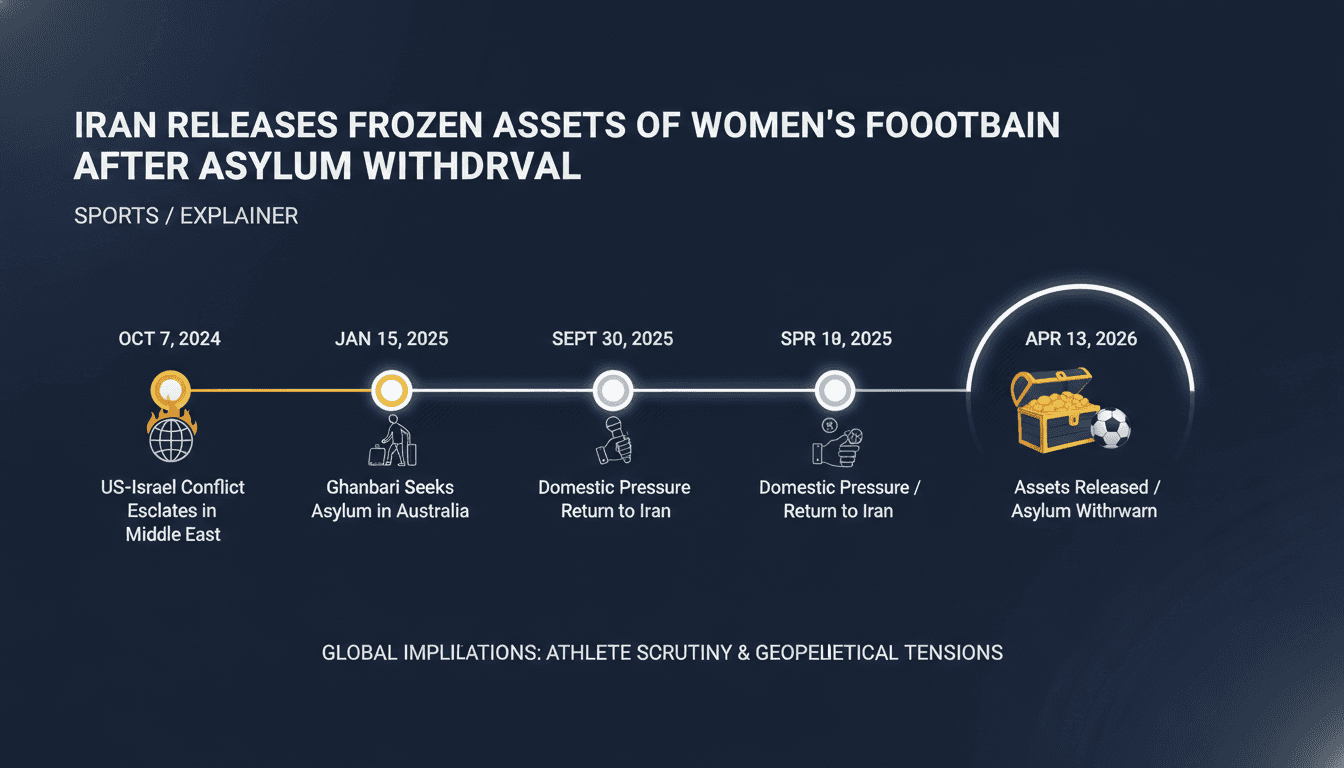
- On April 13, 2026: Iran's judiciary released the frozen assets of Zahra Ghanbari after she withdrew her asylum claim in Australia.
- March 19, 2026: Ghanbari returned to Iran, receiving a hero's welcome despite being labeled a 'traitor' during her absence.
- February 28, 2026: The US-Israel war against Iran began, prompting Ghanbari and six teammates to seek asylum due to safety concerns.
The context you actually need
- Geopolitical tensions: The US-Israel war against Iran has resulted in over 2,000 Iranian casualties, creating a climate of fear and uncertainty.
- Athlete activism: Ghanbari's case underscores the risks athletes face when speaking out or seeking asylum, especially in politically charged environments.
- Public sentiment: The Iranian public's reaction to Ghanbari's return reflects a complex mix of nationalism and support for athletes, complicating the narrative around dissent.
What's really happening
The release of Zahra Ghanbari's assets is emblematic of the broader geopolitical landscape shaped by the ongoing US-Israel war against Iran. This conflict has not only resulted in significant casualties—over 2,000 Iranians killed in the initial weeks—but has also heightened domestic pressures on the Iranian government. In this context, Ghanbari's decision to seek asylum during the Women's Asian Cup in Australia was a bold move, driven by fears of reprisals against her and her family.
The Iranian judiciary's subsequent freezing of her assets was a clear signal of the regime's stance on dissent and its willingness to punish those who challenge its authority. However, Ghanbari's return and the eventual release of her assets suggest a calculated shift by the Iranian government. By allowing her to return and reintegrate, the regime aims to project an image of strength and control, framing her as a 'hero' rather than a 'traitor.' This narrative serves to bolster national pride amidst external pressures and internal dissent.
Moreover, the reactions from Iranian officials, including praise from the Football Federation president and parliament speaker, indicate a strategic effort to unify public sentiment around the national team. This is particularly important as the Iranian government faces increasing scrutiny both domestically and internationally. The release of Ghanbari's assets can be seen as a move to quell potential unrest and reinforce loyalty among athletes, who are often viewed as representatives of national identity.
The implications of this incident extend beyond Iran. It raises questions about the safety and rights of athletes in politically volatile regions, particularly those who choose to speak out or seek asylum. As more athletes navigate these treacherous waters, the global sports community may need to reassess its support structures and advocacy efforts for those facing persecution.
Who feels it first (and how)
- Athletes: Those in politically sensitive regions may face increased scrutiny and pressure regarding their actions and statements.
- Sports organizations: Teams and federations may need to develop clearer policies on athlete activism and asylum support.
- Geopolitical analysts: Experts will closely monitor how this incident influences international relations and public sentiment in Iran.
What to watch next
- Future asylum claims: Monitor whether more Iranian athletes seek asylum amid ongoing geopolitical tensions, as this could signal a trend.
- Government responses: Watch for any shifts in Iranian government policy regarding athletes and dissent, which could impact public perception.
- International reactions: Observe how global sports organizations respond to incidents of athlete activism, potentially leading to new advocacy frameworks.
Ghanbari's assets were frozen and later released following her return to Iran.
Increased scrutiny on athletes from politically sensitive regions will continue, influencing their decisions.
The long-term impact of this incident on international relations and athlete activism remains uncertain.
Frequently Asked Questions
- Why it matters?
- This incident highlights the intersection of sports, politics, and personal safety, affecting how athletes navigate geopolitical tensions.
- What happened (in 30 seconds)?
- On April 13, 2026: Iran's judiciary released the frozen assets of Zahra Ghanbari after she withdrew her asylum claim in Australia. March 19, 2026: Ghanbari returned to Iran, receiving a hero's welcome despite being labeled a 'traitor' during her absence. February 28, 2026: The US-Israel war against Iran began, prompting Ghanbari and six teammates to seek asylum due to safety concerns.
- What's really happening?
- The release of Zahra Ghanbari's assets is emblematic of the broader geopolitical landscape shaped by the ongoing US-Israel war against Iran. This conflict has not only resulted in significant casualties—over 2,000 Iranians killed in the initial weeks—but has also heightened domestic pressures on the Iranian government. In this context, Ghanbari's decision to seek asylum during the Women's Asian Cup in Australia was a bold move, driven by fears of reprisals against her and her family. The Irania
- Who feels it first (and how)?
- Athletes: Those in politically sensitive regions may face increased scrutiny and pressure regarding their actions and statements. Sports organizations: Teams and federations may need to develop clearer policies on athlete activism and asylum support. Geopolitical analysts: Experts will closely monitor how this incident influences international relations and public sentiment in Iran.
- What to watch next?
- Future asylum claims: Monitor whether more Iranian athletes seek asylum amid ongoing geopolitical tensions, as this could signal a trend. Government responses: Watch for any shifts in Iranian government policy regarding athletes and dissent, which could impact public perception. International reactions: Observe how global sports organizations respond to incidents of athlete activism, potentially leading to new advocacy frameworks.
Covers global sporting events, athlete news, and cultural perspectives on sports.
"The Guardian is known for progressive editorial analysis, often exploring social and cultural dimensions of sports."
— A47 Editor
Iran releases assets of women’s football team captain in Australia asylum drama
Iran's judiciary announced the release of assets belonging to Zahra Ghanbari, captain of the Iranian women's football team, after they were frozen due to her asylum claim in Australia, which she later withdrew. This decision follows her change in beh...
Pan-Arab news coverage spanning politics, business, sports, and regional affairs.
"Asharq Al-Awsat reflects a broad Arab editorial perspective with strong attention to regional geopolitics."
— A47 Editor
إيران تُعيد أصول قائدة منتخب كرة القدم بعد أزمة طلب اللجوء في أستراليا
Iranian authorities have returned the financial assets of Zahra Ghanbari, the captain of the women's national football team, which were confiscated after she applied for asylum in Australia. This decision was announced by the Iranian judiciary on Mon...
Regional coverage and analysis focused on politics, diplomacy, and business across the Middle East.
"Al-Monitor is known for analytical reporting on Middle East politics and policy developments."
— A47 Editor
Iran releases assets of football captain in Australia asylum row
Iran's judiciary announced the release of assets belonging to Zahra Ghanbari, the captain of the Iranian women's football team, which had been seized following her asylum claim in Australia last month. Ghanbari was part of a group of players who soug...