
Iran and US Reach Two-Week Ceasefire Amid Ongoing Conflict
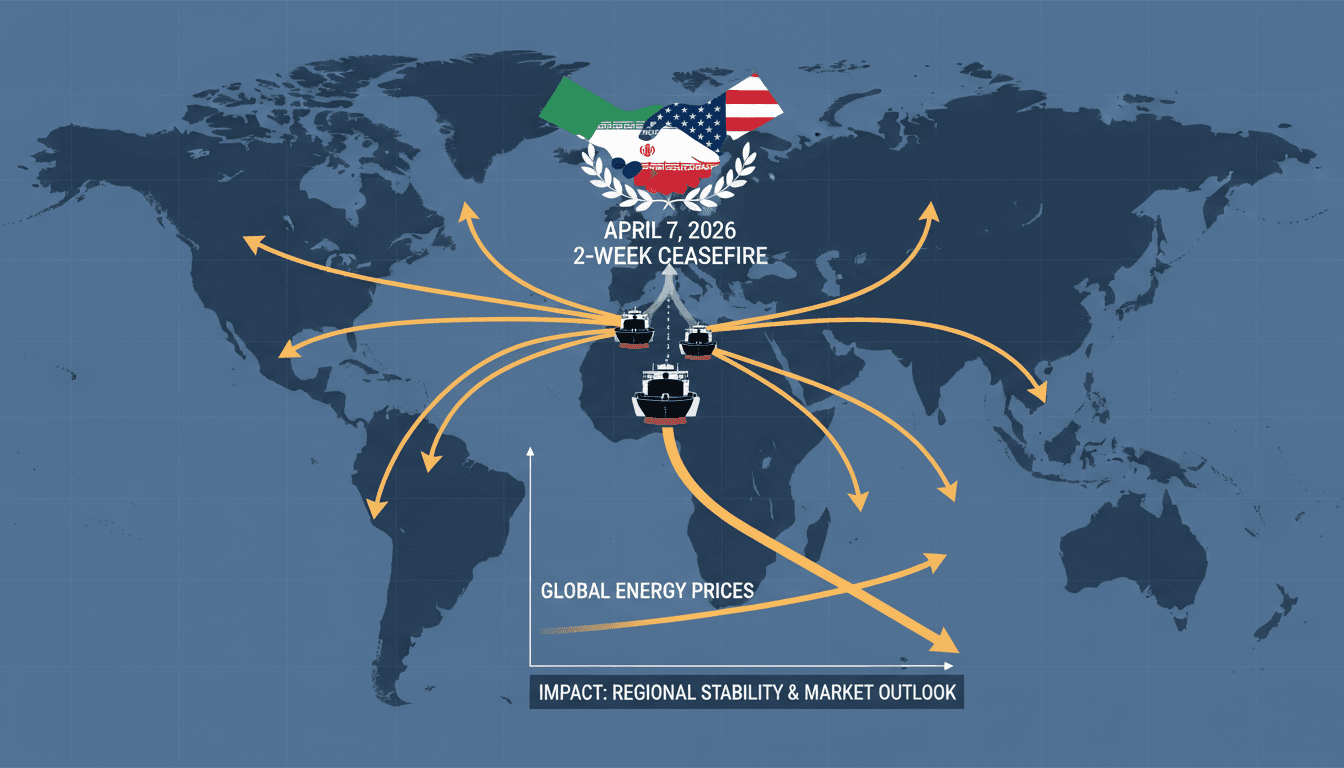
Here's what it means for you.
The recent ceasefire between Iran and the United States could stabilize global energy prices, impacting your cost of living and investment opportunities.
Why it matters
This ceasefire halts military actions that have disrupted oil supplies, directly influencing global energy markets and economic stability.
What happened (in 30 seconds)
- On April 7, 2026, Iran and the U.S. agreed to a two-week ceasefire, mediated by Pakistan, to halt military operations and reopen the Strait of Hormuz.
- Celebrations erupted in Tehran as both sides claimed victories amid prior escalations that had severely impacted global energy supplies.
- Global markets reacted positively, with Dubai's stock index surging 6.9%, marking its largest daily gain since March 2020.
The context you actually need
- Hostilities began on February 28, 2026, following U.S.-Israeli targeted strikes, including the assassination of Iranian leadership, prompting Iran to retaliate by closing the Strait of Hormuz.
- The conflict escalated, disrupting oil shipments and causing a spike in energy prices, which drew in regional actors like Hezbollah in Lebanon.
- Pakistani mediation led to the ceasefire agreement just hours before a U.S. deadline for military action, demonstrating the urgency of stabilizing the situation.
What's really happening
The recent ceasefire between Iran and the United States is a critical moment in a long-standing geopolitical conflict that has significant implications for global energy markets. The hostilities, which began with targeted assassinations and retaliatory strikes, had already caused severe disruptions in oil supply chains, particularly through the vital Strait of Hormuz, a chokepoint for approximately 20% of the world's oil. The closure of this strategic waterway led to a spike in oil prices and heightened tensions in the region, affecting global markets and economies.
The mediation by Pakistan's Prime Minister Shehbaz Sharif highlights the role of third-party nations in de-escalating conflicts that have far-reaching consequences. The ceasefire not only halts immediate military actions but also opens the door for negotiations aimed at a more sustainable resolution. Both Iran and the U.S. have claimed strategic victories, which is crucial for domestic political narratives. For Iran, the ability to reopen the Strait of Hormuz is a significant win, allowing for the resumption of oil exports and alleviating economic pressures at home. For the U.S., the ceasefire can be framed as a successful diplomatic intervention, potentially easing political tensions domestically.
The economic implications are already being felt. Following the announcement, Dubai's stock market surged by 6.9%, indicating a strong rebound in investor confidence. This uptick is particularly relevant for sectors heavily reliant on stable energy prices, such as real estate and banking. The UAE government has also stepped in with financial support measures, further stabilizing the market environment.
In the broader context, the ceasefire could signal a shift in how global powers engage with Iran, particularly as the U.S. navigates its foreign policy landscape under President Trump. The implications of this ceasefire extend beyond immediate military concerns; they touch on global energy security, economic stability, and the intricate web of alliances and enmities that characterize Middle Eastern geopolitics.
Who feels it first (and how)
- Investors in energy markets: They will see immediate fluctuations in oil prices and stock valuations based on the ceasefire's effectiveness.
- Residents of Dubai and the UAE: A rebound in the stock market and potential easing of inflation pressures will directly affect their economic conditions.
- Businesses reliant on stable shipping routes: Companies engaged in global trade will benefit from the reopening of the Strait of Hormuz, ensuring smoother operations.
What to watch next
- Negotiation outcomes in Islamabad: The success of talks between Iran and the U.S. could lead to longer-term stability or further escalations.
- Oil price trends: Keep an eye on fluctuations in oil prices, particularly if the ceasefire holds or if new tensions arise.
- Market reactions in the Gulf: Continued investor confidence in the region will be reflected in stock market performance and economic indicators.
The ceasefire is currently in effect, halting military operations and reopening the Strait of Hormuz.
Global energy prices will stabilize if the ceasefire holds, benefiting economies reliant on oil imports.
The long-term effectiveness of the ceasefire and its impact on U.S.-Iran relations remain uncertain.
Frequently Asked Questions
- Why it matters?
- This ceasefire halts military actions that have disrupted oil supplies, directly influencing global energy markets and economic stability.
- What happened (in 30 seconds)?
- On April 7, 2026, Iran and the U.S. agreed to a two-week ceasefire, mediated by Pakistan, to halt military operations and reopen the Strait of Hormuz. Celebrations erupted in Tehran as both sides claimed victories amid prior escalations that had severely impacted global energy supplies. Global markets reacted positively, with Dubai's stock index surging 6.9%, marking its largest daily gain since March 2020.
- What's really happening?
- The recent ceasefire between Iran and the United States is a critical moment in a long-standing geopolitical conflict that has significant implications for global energy markets. The hostilities, which began with targeted assassinations and retaliatory strikes, had already caused severe disruptions in oil supply chains, particularly through the vital Strait of Hormuz, a chokepoint for approximately 20% of the world's oil. The closure of this strategic waterway led to a spike in oil prices and he
- Who feels it first (and how)?
- Investors in energy markets: They will see immediate fluctuations in oil prices and stock valuations based on the ceasefire's effectiveness. Residents of Dubai and the UAE: A rebound in the stock market and potential easing of inflation pressures will directly affect their economic conditions. Businesses reliant on stable shipping routes: Companies engaged in global trade will benefit from the reopening of the Strait of Hormuz, ensuring smoother operations.
- What to watch next?
- Negotiation outcomes in Islamabad: The success of talks between Iran and the U.S. could lead to longer-term stability or further escalations. Oil price trends: Keep an eye on fluctuations in oil prices, particularly if the ceasefire holds or if new tensions arise. Market reactions in the Gulf: Continued investor confidence in the region will be reflected in stock market performance and economic indicators.
Global news coverage with extensive reporting on Middle Eastern conflicts and geopolitics.
"Al Jazeera is a Qatar-based broadcaster known for wide regional coverage and alternative perspectives."
— A47 Editor
Tehran celebrates as Iran, US agree to two-week ceasefire
A two-week ceasefire between Iran and the United States has been agreed upon, marking a significant pause in hostilities. This agreement, celebrated in Tehran, is seen as a victory for Iran, highlighting the nation's unity and patience in the face of...
Comprehensive coverage of Middle Eastern and global issues.
"Al Jazeera is a prominent voice from the Global South, especially the Middle East, with an emphasis on underreported stories."
— A47 Editor
Tehran celebrates as Iran, US agree to two-week ceasefire
A two-week ceasefire between Iran and the United States has been agreed upon, marking a significant pause in hostilities. This agreement, celebrated in Tehran, is seen as a victory for Iran, highlighting the nation's unity and patience in the face of...
Global markets, investing, and macroeconomics from a premier financial newsroom.
"Bloomberg is respected for in-depth financial reporting and data-driven analysis."
— A47 Editor
US and Iran Agree to Two-Week Ceasefire Plan
The US and Iran have reached a two-week ceasefire agreement, which is expected to halt military actions and facilitate the reopening of the strategically significant Strait of Hormuz. This development follows ongoing diplomatic negotiations aimed at ...
National headlines across the United States including breaking stories and societal issues.
"NBC News is a mainstream media outlet known for comprehensive national and international news coverage with a centrist to slightly left-leaning editorial tone."
— A47 Editor
Iran reportedly agrees to two-week ceasefire agreement
Iran has reportedly agreed to a two-week ceasefire agreement, marking a significant diplomatic step amid ongoing military tensions. This agreement follows a series of escalating threats from U.S. President Donald Trump, who had demanded Iran's compli...
UAE-based English-language newspaper covering regional politics, economics, and global affairs.
"The National reflects Emirati policy perspectives while maintaining international editorial standards."
— A47 Editor
Iran war latest: Ceasefire in Lebanon is 'central' to peace deal, Iran says after 'massacre'
Iran has emphasized that a ceasefire in Lebanon is essential for achieving a lasting peace deal, following reports of a massacre in the region. This statement comes amid heightened tensions in the Middle East, particularly concerning military actions...
Comprehensive coverage of Middle Eastern and global issues.
"Al Jazeera is a prominent voice from the Global South, especially the Middle East, with an emphasis on underreported stories."
— A47 Editor
Iraqis celebrates US-Iran ceasefire as two-week halt in war begins
Celebrations have erupted in Iraq following the announcement of a two-week ceasefire between the United States and Iran, marking a significant pause in their ongoing conflict. This ceasefire was facilitated by diplomatic interventions, particularly f...
Global news coverage with extensive reporting on Middle Eastern conflicts and geopolitics.
"Al Jazeera is a Qatar-based broadcaster known for wide regional coverage and alternative perspectives."
— A47 Editor
Iraqis celebrates US-Iran ceasefire as two-week halt in war begins
Celebrations have erupted in Iraq following the announcement of a two-week ceasefire between the United States and Iran, marking a significant pause in their ongoing conflict. This ceasefire was facilitated by diplomatic interventions, particularly f...
Global news coverage with extensive reporting on Middle Eastern conflicts and geopolitics.
"Al Jazeera is a Qatar-based broadcaster known for wide regional coverage and alternative perspectives."
— A47 Editor
Iran agrees to open Strait of Hormuz for two-week US ceasefire
Iran's Foreign Minister Abbas Araghchi announced that Iran agrees to open the Strait of Hormuz for a two-week ceasefire with the United States, contingent upon the cessation of attacks against Iran. This agreement comes amid ongoing tensions and mili...
Comprehensive coverage of Middle Eastern and global issues.
"Al Jazeera is a prominent voice from the Global South, especially the Middle East, with an emphasis on underreported stories."
— A47 Editor
Iran agrees to open Strait of Hormuz for two-week US ceasefire
Iran's Foreign Minister Abbas Araghchi announced that Iran agrees to open the Strait of Hormuz for a two-week ceasefire with the United States, contingent upon the cessation of attacks against Iran. This agreement comes amid ongoing tensions and mili...