
IMF Warns of Global Humanitarian Crisis Due to Ongoing Iran War
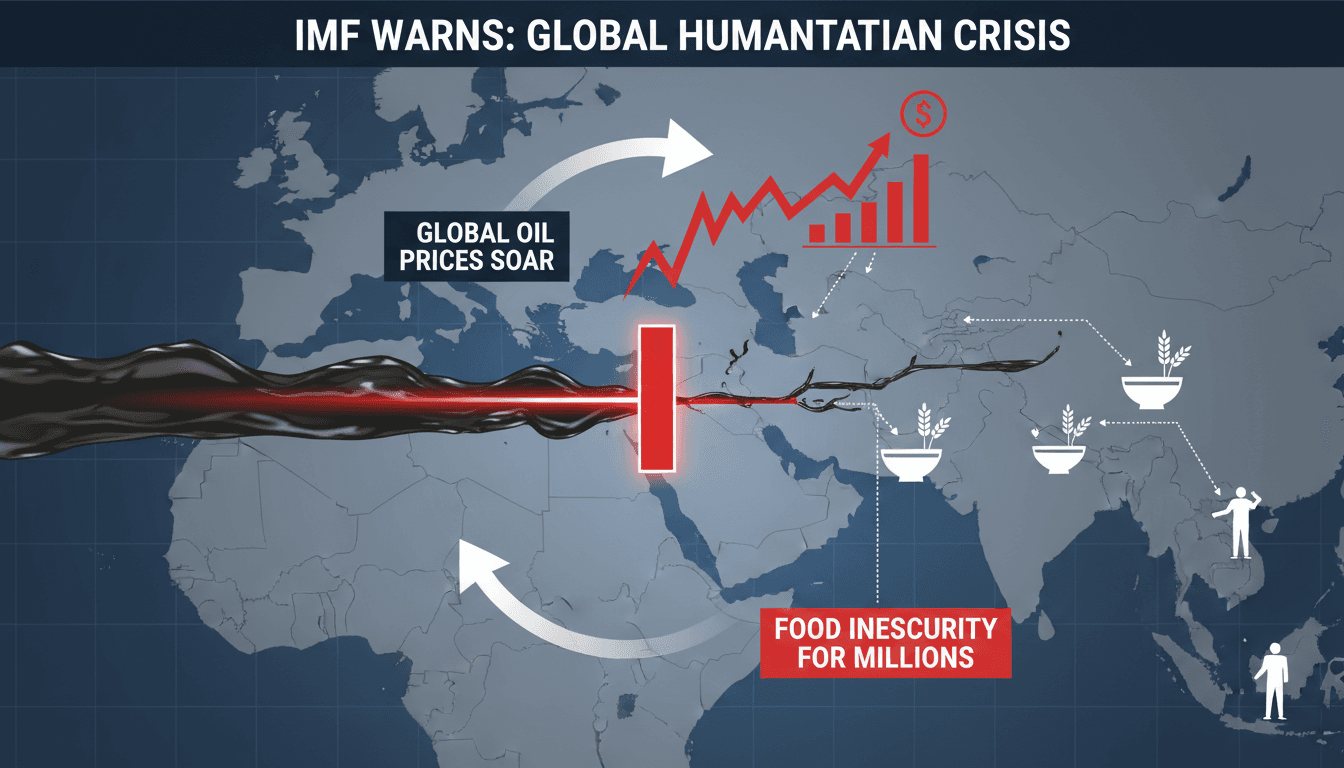
Here's what it means for you.
If you rely on global supply chains or energy imports, the ongoing conflict in Iran could significantly impact your costs and availability of essential goods.
Why it matters
The war in Iran is disrupting critical energy routes, leading to rising prices and potential humanitarian crises that could affect global markets.
What happened (in 30 seconds)
- February 28, 2026: U.S. and Israeli strikes on Iran trigger the 2026 Iran War.
- Early March: Iran closes the Strait of Hormuz, causing oil prices to surge past $100 per barrel.
- April 16: IMF warns of severe human impacts, projecting 20 million people in Sub-Saharan Africa at risk of hunger due to rising energy and food prices.
The context you actually need
- The Strait of Hormuz is vital: It handles 25-30% of global oil trade and 20% of LNG shipments, making its closure a significant threat to energy security.
- Fragile economies at risk: Countries in Sub-Saharan Africa and the Asia-Pacific are particularly vulnerable, with many already facing economic challenges.
- Historical parallels: This situation mirrors the economic fallout from previous conflicts, such as the 2008 global financial crisis, which saw similar downgrades in growth forecasts.
What's really happening
The 2026 Iran War, ignited by U.S. and Israeli military actions, has led to a rapid escalation of geopolitical tensions in the Middle East. The immediate consequence was Iran's closure of the Strait of Hormuz, a critical chokepoint for global oil and gas shipments. This closure has not only driven oil prices above $100 per barrel but has also triggered a broader economic shockwave that is reverberating through global markets.
The International Monetary Fund (IMF) has highlighted the severe human impacts of this conflict, particularly in regions that rely heavily on energy imports. Sub-Saharan Africa, for instance, is projected to see 20 million people pushed toward hunger due to skyrocketing prices for food, fertilizers, and energy. This situation is exacerbated by existing vulnerabilities in these economies, which are already grappling with high inflation and limited fiscal buffers.
The IMF's assessment indicates that the war has led to the largest six-month growth downgrades for the Middle East since the 2008 financial crisis. Countries in this region are facing deteriorating trade balances and rising living costs, which could lead to social unrest and further destabilization. The IMF's Africa Director, Abebe Selassie, and Middle East Director, Jihad Azour, have emphasized the need for calibrated fiscal measures to mitigate these impacts.
As the conflict continues, the ripple effects are likely to extend beyond immediate economic concerns. The disruption of energy supplies could lead to increased competition for resources, further straining international relations. Additionally, the ongoing instability may deter foreign investment in the region, compounding the economic challenges faced by affected countries.
In the Gulf Cooperation Council (GCC) region, including the UAE, the economic outlook has also dimmed. Growth forecasts have been revised down from 4.3% to 2% for 2026, as sectors like aviation, logistics, and tourism face disruptions due to air traffic halts and regional instability. While the UAE has substantial reserves and benefits from elevated oil prices, the overall economic strain is palpable, with stock markets losing $120 billion since the onset of the war.
Who feels it first (and how)
- Energy-importing countries: Nations in Sub-Saharan Africa and East Asia will experience immediate impacts from rising energy prices.
- Food-insecure populations: Over half the population in Yemen, Sudan, and Somalia is already affected, with many facing increased hunger risks.
- Gulf economies: UAE and Saudi Arabia are experiencing growth downgrades and public finance pressures, impacting local businesses and expatriate workers.
What to watch next
- Oil price fluctuations: Monitor Brent crude prices, which have already exceeded $120 per barrel, as they will influence global inflation and economic stability.
- Humanitarian aid responses: Watch for international responses to the projected hunger crisis in Sub-Saharan Africa, which could shape geopolitical alliances and aid distribution.
- Market recovery indicators: Keep an eye on Gulf stock markets and fiscal measures from regional governments, as these will signal the potential for economic recovery if the Strait of Hormuz reopens.
The war in Iran is disrupting global oil supplies and increasing prices.
Humanitarian crises will escalate in vulnerable regions, leading to increased international aid efforts.
The long-term geopolitical implications of the conflict and its impact on global trade dynamics remain uncertain.
Frequently Asked Questions
- Why it matters?
- The war in Iran is disrupting critical energy routes, leading to rising prices and potential humanitarian crises that could affect global markets.
- What happened (in 30 seconds)?
- February 28, 2026: U.S. and Israeli strikes on Iran trigger the 2026 Iran War. Early March: Iran closes the Strait of Hormuz, causing oil prices to surge past $100 per barrel. April 16: IMF warns of severe human impacts, projecting 20 million people in Sub-Saharan Africa at risk of hunger due to rising energy and food prices.
- What's really happening?
- The 2026 Iran War, ignited by U.S. and Israeli military actions, has led to a rapid escalation of geopolitical tensions in the Middle East. The immediate consequence was Iran's closure of the Strait of Hormuz, a critical chokepoint for global oil and gas shipments. This closure has not only driven oil prices above $100 per barrel but has also triggered a broader economic shockwave that is reverberating through global markets. The International Monetary Fund (IMF) has highlighted the severe huma
- Who feels it first (and how)?
- Energy-importing countries: Nations in Sub-Saharan Africa and East Asia will experience immediate impacts from rising energy prices. Food-insecure populations: Over half the population in Yemen, Sudan, and Somalia is already affected, with many facing increased hunger risks. Gulf economies: UAE and Saudi Arabia are experiencing growth downgrades and public finance pressures, impacting local businesses and expatriate workers.
- What to watch next?
- Oil price fluctuations: Monitor Brent crude prices, which have already exceeded $120 per barrel, as they will influence global inflation and economic stability. Humanitarian aid responses: Watch for international responses to the projected hunger crisis in Sub-Saharan Africa, which could shape geopolitical alliances and aid distribution. Market recovery indicators: Keep an eye on Gulf stock markets and fiscal measures from regional governments, as these will signal the potential for economic
Regional coverage and analysis focused on politics, diplomacy, and business across the Middle East.
"Al-Monitor is known for analytical reporting on Middle East politics and policy developments."
— A47 Editor
IMF warns of war's human impact far from Middle East
The International Monetary Fund (IMF) has issued a warning regarding the severe human impact of the ongoing war in Iran, highlighting that the repercussions extend far beyond the Middle East, particularly affecting energy-importing nations in East As...
Regional coverage and analysis focused on politics, diplomacy, and business across the Middle East.
"Al-Monitor is known for analytical reporting on Middle East politics and policy developments."
— A47 Editor
Mideast war an 'unprecedented' blow for region: IMF to AFP
The ongoing war in the Middle East has resulted in an unprecedented economic shock for the region, as highlighted by a senior official from the International Monetary Fund (IMF). The IMF's recent report indicates that five of the eight Gulf oil and g...
Capitol Hill news, legislation, and policy insight.
"The Hill specializes in U.S. politics and policy, with a focus on Capitol Hill developments and a reputation for insider reporting."
— A47 Editor
War-torn global economy needs IMF emergency assistance
The ongoing U.S.-Israeli war on Iran has triggered a significant supply shock in the global energy market, leading to heightened economic instability and rising costs for energy importers. The International Monetary Fund (IMF) has the capacity to all...
News from the United States including domestic politics, society, and culture.
"The Guardian is known for its progressive editorial stance and in-depth analysis, often advocating for social justice, environmental issues, and liberal values."
— A47 Editor
Economic shock from Iran war risks driving up global debt levels, says IMF
The International Monetary Fund (IMF) has issued a warning that the ongoing conflict in Iran could lead to a significant increase in global debt levels, as governments grapple with rising costs of living and economic instability. The IMF's report hig...
International coverage from The Guardian's global desks.
"The Guardian is known for its progressive editorial stance and in-depth analysis."
— A47 Editor
Economic shock from Iran war risks driving up global debt levels, says IMF
The International Monetary Fund (IMF) has issued a warning that the ongoing conflict in Iran could lead to a significant increase in global debt levels, as governments grapple with rising costs of living and economic instability. The IMF's report hig...
International stories from NPR’s global desk.
"NPR is an American public media organization known for thoughtful reporting and a slightly left-leaning editorial tone."
— A47 Editor
IMF predicts Iran war will slow economic growth and raise inflation globally
The International Monetary Fund (IMF) has projected that the ongoing war in Iran will significantly slow global economic growth and increase inflation rates. This forecast was discussed by NPR's Michel Martin with Simon Johnson, a former IMF chief ec...