
Iran imposes naval blockade in response to U.S. and Israeli attacks amid escalating tensions
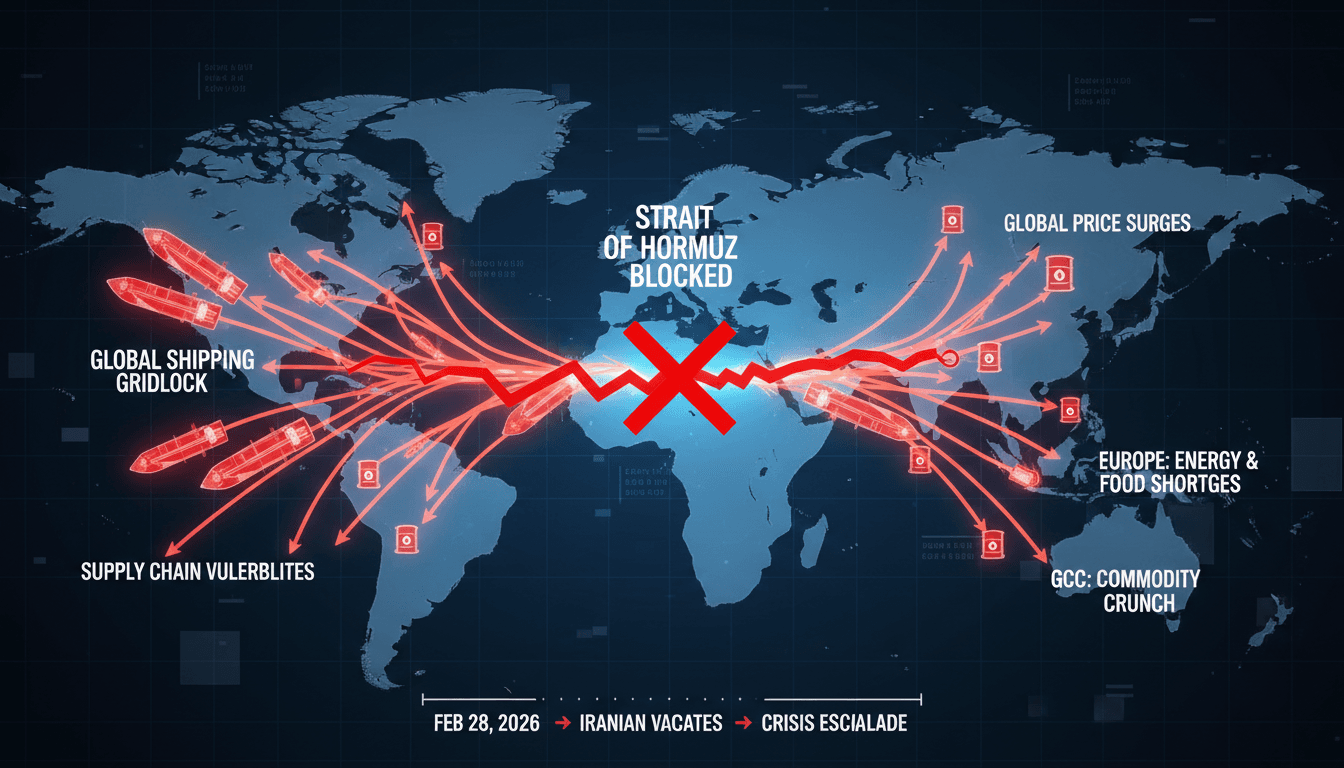
Here's what it means for you.
If you rely on global supply chains for food, fuel, or travel, prepare for significant disruptions and price increases.
Why it matters
The blockade of the Strait of Hormuz threatens to destabilize global food production and aviation operations, impacting economies worldwide.
What happened (in 30 seconds)
- February 28, 2026: The U.S. and Israel launched airstrikes on Iran, prompting Iran to impose a naval blockade on the Strait of Hormuz.
- April 17, 2026: A temporary ceasefire allowed limited commercial traffic, but restrictions were reimposed the following day amid a U.S. counter-blockade.
- Current Status: Iran has restricted access to the strait again, affecting 20% of global oil and critical fertilizer shipments.
The context you actually need
- Geopolitical tensions: The blockade is a response to escalating military actions by the U.S. and Israel against Iran, particularly concerning its nuclear program.
- Historical precedents: This blockade is the most severe disruption since 1979, highlighting vulnerabilities in global supply chains that depend on Gulf exports.
- Economic implications: The blockade has already led to price surges in essential commodities, including jet fuel and fertilizers, which are critical for food production.
What's really happening
The 2026 Strait of Hormuz blockade is a complex interplay of military aggression, economic dependency, and geopolitical strategy. The U.S. and Israel's Operation Epic Fury, initiated on February 28, targeted Iranian nuclear sites and leadership, escalating tensions in the region. In retaliation, Iran leveraged its strategic position to impose a blockade on the Strait of Hormuz, a critical maritime route for global oil and fertilizer shipments. This strait is responsible for 20% of the world's seaborne oil trade, making its closure a significant threat to global supply chains.
The blockade has immediate and far-reaching consequences. With 75% of Europe's jet fuel sourced from the Middle East, the risk of systemic shortages looms large within weeks. The disruption of fertilizer shipments, particularly urea and ammonia, threatens agricultural productivity, especially in regions heavily reliant on these imports. The situation is exacerbated by the fact that many countries in the Gulf Cooperation Council (GCC) depend on these routes for food imports, leading to price spikes of 40-120% in grocery prices in places like Dubai.
The economic fallout is already visible. Airlines, including Emirates and Etihad, have faced near-total flight suspensions due to airspace closures and jet fuel scarcity, stranding passengers and disrupting travel plans. The blockade has also triggered a cascade of reactions from governments and markets. The U.S. has maintained its blockade of Iranian ports, prioritizing mine clearance, while the UK has activated contingency plans for CO2 shortages affecting food processing and health sectors.
As the conflict continues, the fragility of global supply networks is laid bare. The reliance on a few key maritime routes for essential goods means that any disruption can lead to widespread shortages and price increases, affecting consumers and businesses alike. The ongoing military actions and counteractions create a volatile environment, making it difficult to predict when normalcy will return.
Who feels it first (and how)
- Consumers: Individuals relying on imported food and fuel will face immediate price increases and potential shortages.
- Airlines: Companies like Emirates and Etihad are experiencing flight cancellations and operational disruptions.
- Agricultural sectors: Farmers dependent on imported fertilizers will struggle to maintain production levels.
- Retailers: Grocery stores in regions like the GCC will see price surges and supply shortages, impacting daily life.
What to watch next
- Supply chain adjustments: Monitor how companies adapt their logistics to cope with ongoing disruptions, which could lead to longer-term changes in sourcing strategies.
- Geopolitical developments: Keep an eye on diplomatic efforts to resolve the conflict, as any ceasefire or agreement could significantly alter the blockade's impact.
- Market reactions: Watch for fluctuations in commodity prices, particularly oil and fertilizers, as these will indicate the broader economic implications of the blockade.
The Strait of Hormuz blockade is currently in effect, disrupting global oil and fertilizer shipments.
Price increases for food and fuel will continue as shortages develop.
The duration of the blockade and its long-term effects on global supply chains remain uncertain.
Frequently Asked Questions
- Why it matters?
- The blockade of the Strait of Hormuz threatens to destabilize global food production and aviation operations, impacting economies worldwide.
- What happened (in 30 seconds)?
- February 28, 2026: The U.S. and Israel launched airstrikes on Iran, prompting Iran to impose a naval blockade on the Strait of Hormuz. April 17, 2026: A temporary ceasefire allowed limited commercial traffic, but restrictions were reimposed the following day amid a U.S. counter-blockade. Current Status: Iran has restricted access to the strait again, affecting 20% of global oil and critical fertilizer shipments.
- What's really happening?
- The 2026 Strait of Hormuz blockade is a complex interplay of military aggression, economic dependency, and geopolitical strategy. The U.S. and Israel's Operation Epic Fury, initiated on February 28, targeted Iranian nuclear sites and leadership, escalating tensions in the region. In retaliation, Iran leveraged its strategic position to impose a blockade on the Strait of Hormuz, a critical maritime route for global oil and fertilizer shipments. This strait is responsible for 20% of the world's se
- Who feels it first (and how)?
- Consumers: Individuals relying on imported food and fuel will face immediate price increases and potential shortages. Airlines: Companies like Emirates and Etihad are experiencing flight cancellations and operational disruptions. Agricultural sectors: Farmers dependent on imported fertilizers will struggle to maintain production levels. Retailers: Grocery stores in regions like the GCC will see price surges and supply shortages, impacting daily life.
- What to watch next?
- Supply chain adjustments: Monitor how companies adapt their logistics to cope with ongoing disruptions, which could lead to longer-term changes in sourcing strategies. Geopolitical developments: Keep an eye on diplomatic efforts to resolve the conflict, as any ceasefire or agreement could significantly alter the blockade's impact. Market reactions: Watch for fluctuations in commodity prices, particularly oil and fertilizers, as these will indicate the broader economic implications of the blockad
European coverage of Middle East politics and security issues.
"France 24 offers international reporting with a European editorial perspective."
— A47 Editor
Hormuz domino effect: How the Middle East crisis affects food, flights and global supply chains
The ongoing conflict in the Middle East has led to the closure of the Strait of Hormuz, significantly impacting global supply chains, particularly in jet fuel, fertilizers, and essential goods. Although a temporary ceasefire has allowed for a provisi...
24/7 international news from a French perspective in multiple languages.
"France 24 is viewed as a globally focused outlet with balanced coverage and a European perspective."
— A47 Editor
Hormuz domino effect: How the Middle East crisis affects food, flights and global supply chains
The ongoing conflict in the Middle East has led to the closure of the Strait of Hormuz, significantly impacting global supply chains, particularly in jet fuel, fertilizers, and essential goods. Although a temporary ceasefire has allowed for a provisi...
International stories from NPR’s global desk.
"NPR is an American public media organization known for thoughtful reporting and a slightly left-leaning editorial tone."
— A47 Editor
UN looks for a short-term solution for moving fertilizer through the Strait of Hormuz
The United Nations is actively seeking a short-term solution to facilitate the movement of fertilizer through the Strait of Hormuz, a crucial maritime route, in response to growing concerns over a potential global food crisis.
UK and international business news, economics, and corporate coverage.
"The Guardian’s business section covers finance and markets with a progressive editorial tone."
— A47 Editor
UK could face gaps on supermarket shelves by summer if Iran war continues
The UK is preparing for potential shortages in supermarkets this summer due to ongoing disruptions caused by the Iran war, particularly affecting the supply of carbon dioxide essential for food production. Ministers are developing contingency plans f...
International coverage from The Guardian's global desks.
"The Guardian is known for its progressive editorial stance and in-depth analysis."
— A47 Editor
UK could face gaps on supermarket shelves by summer if Iran war continues
The UK is preparing for potential shortages in supermarkets this summer due to ongoing disruptions caused by the Iran war, particularly affecting the supply of carbon dioxide essential for food production. Ministers are developing contingency plans f...