
Saudi Air Defences Successfully Intercept Seven Ballistic Missiles Targeting Eastern Province
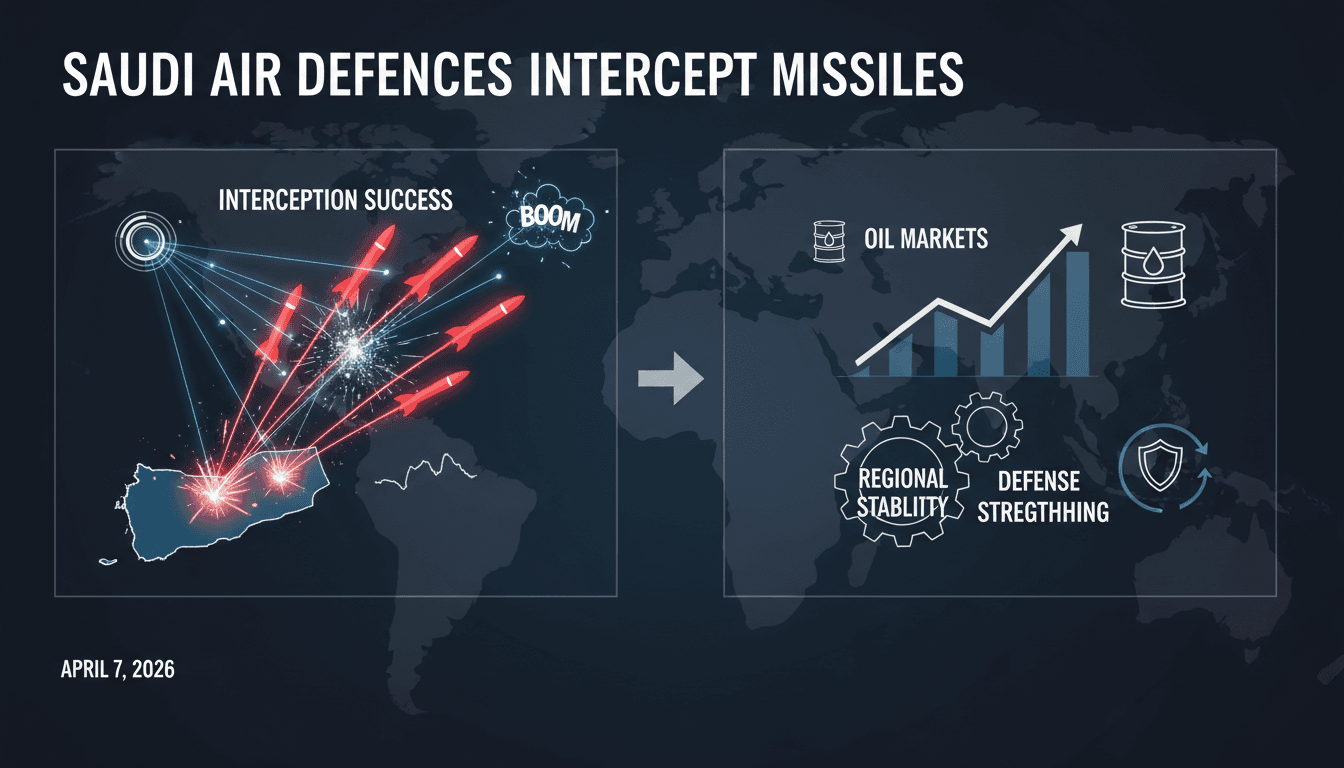
Here's what it means for you.
If you're involved in energy markets or international travel, the stability of the Middle East directly impacts your operations and costs.
Why it matters
This incident highlights ongoing regional tensions that could affect global oil prices and security protocols.
What happened (in 30 seconds)
- On April 7, 2026, Saudi air defences intercepted and destroyed seven ballistic missiles targeting the Eastern Province.
- No casualties were reported, thanks to effective air defence operations amid ongoing threats from Houthi rebels.
- Debris fell near energy facilities, prompting ongoing damage assessments and concerns over potential disruptions.
The context you actually need
- Persistent threats: Houthi rebels, backed by Iran, have been increasingly targeting Saudi infrastructure, especially in the oil-rich Eastern Province.
- Strategic importance: The Eastern Province is crucial for Saudi Arabia's oil production and export, making it a prime target for attacks.
- Operational success: The Saudi Ministry of Defence's ability to intercept missiles demonstrates the effectiveness of their air defence systems amid escalating regional tensions.
What's really happening
On April 7, 2026, Saudi Arabian air defences successfully intercepted and destroyed seven ballistic missiles aimed at the Eastern Province, a region critical for the country’s oil production. This incident is part of a broader pattern of escalating attacks from Houthi rebels in Yemen, who have been increasingly targeting Saudi infrastructure, particularly energy sites. The Houthi movement, which receives backing from Iran, has launched multiple drone and missile attacks, prompting Saudi Arabia to bolster its air defence capabilities.
The Saudi Ministry of Defence initially reported the interception of four missiles but later updated the count to seven, indicating a rapid response to the evolving threat. The debris from the intercepted missiles fell near energy facilities, raising concerns about potential damage to critical infrastructure. However, no casualties were reported, attributed to the effectiveness of the Royal Saudi Air Defence Forces.
This incident underscores the ongoing volatility in the region and the strategic importance of Saudi Arabia's Eastern Province. As the world's largest oil exporter, any disruption in this area could have far-reaching implications for global oil markets. The successful interception of these missiles not only protects Saudi infrastructure but also serves as a deterrent against further attacks, reinforcing the country's commitment to safeguarding its energy resources.
Despite the immediate success in intercepting the missiles, the underlying tensions remain. The Houthi rebels have not claimed responsibility for this specific attack, but their history of aggression towards Saudi Arabia suggests that such incidents may continue. The international community is closely monitoring these developments, as any escalation could impact oil supply chains and market stability.
In the context of Dubai and the broader UAE, while no direct impacts or disruptions were reported, the regional tensions could indirectly affect air travel and oil markets. The UAE has a vested interest in maintaining stability in the region, given its proximity to Saudi Arabia and its own significant oil production.
Who feels it first (and how)
- Energy sector professionals: Fluctuations in oil prices and supply chain stability could impact operations and profitability.
- Air travel industry: Increased security measures and potential flight disruptions may affect travel plans.
- Investors in Middle Eastern markets: Heightened tensions could lead to volatility in stock prices and investment strategies.
What to watch next
- Future missile attacks: Monitoring Houthi activities will be crucial to understanding ongoing risks to Saudi infrastructure.
- Oil price fluctuations: Keep an eye on global oil prices as they may react to any escalation in regional tensions.
- International diplomatic responses: Watch for shifts in foreign policy from major powers regarding Saudi Arabia and Iran, which could influence regional stability.
Saudi Arabia's air defence systems are effective in intercepting missile threats.
Continued Houthi aggression towards Saudi infrastructure is expected.
The long-term impact on global oil markets remains uncertain amid fluctuating regional dynamics.
Frequently Asked Questions
- Why it matters?
- This incident highlights ongoing regional tensions that could affect global oil prices and security protocols.
- What happened (in 30 seconds)?
- On April 7, 2026, Saudi air defences intercepted and destroyed seven ballistic missiles targeting the Eastern Province. No casualties were reported, thanks to effective air defence operations amid ongoing threats from Houthi rebels. Debris fell near energy facilities, prompting ongoing damage assessments and concerns over potential disruptions.
- What's really happening?
- On April 7, 2026, Saudi Arabian air defences successfully intercepted and destroyed seven ballistic missiles aimed at the Eastern Province, a region critical for the country’s oil production. This incident is part of a broader pattern of escalating attacks from Houthi rebels in Yemen, who have been increasingly targeting Saudi infrastructure, particularly energy sites. The Houthi movement, which receives backing from Iran, has launched multiple drone and missile attacks, prompting Saudi Arabia t
- Who feels it first (and how)?
- Energy sector professionals: Fluctuations in oil prices and supply chain stability could impact operations and profitability. Air travel industry: Increased security measures and potential flight disruptions may affect travel plans. Investors in Middle Eastern markets: Heightened tensions could lead to volatility in stock prices and investment strategies.
- What to watch next?
- Future missile attacks: Monitoring Houthi activities will be crucial to understanding ongoing risks to Saudi infrastructure. Oil price fluctuations: Keep an eye on global oil prices as they may react to any escalation in regional tensions. International diplomatic responses: Watch for shifts in foreign policy from major powers regarding Saudi Arabia and Iran, which could influence regional stability.
Arabic-language local and national news coverage from Saudi Arabia.
"Al-Jazirah is a major Saudi daily with strong emphasis on domestic reporting and official developments."
— A47 Editor
تدمير 4 صواريخ باليستية في المنطقة الشرقية
The official spokesperson for the Ministry of Defense, Major General Turki Al-Maliki, announced that four ballistic missiles were intercepted and destroyed in the Eastern region, along with two drones in the past hours.
Arabic-language political and world news coverage for UAE readers.
"Emarat Al Youm world coverage usually presents international developments through a UAE and Arab audience lens."
— A47 Editor
"الدفاع السعودية": اعتراض وتدمير 7 صواريخ باليستية بالمنطقة الشرقية وسقوط أجزاء من حطام الصواريخ في محيط منشآت للطاقة "الدفاع السعودية": اعتراض وتدمير 7 صواريخ باليستية بالمنطقة الشرقية وسقوط أجزاء من حطام الصواريخ في محيط منشآت للطاقة
The Saudi Ministry of Defense, represented by spokesman Major General Turki Al-Maliki, announced the interception and destruction of seven ballistic missiles in the Eastern Province. Fragments of the missiles fell in the vicinity of energy facilities...
Arabic-language coverage of Saudi, regional, and international affairs.
"Al Bilad offers mainstream Saudi newspaper coverage across domestic and broader Arab topics."
— A47 Editor
وزارة الدفاع: تدمير 7 صواريخ باليستية وسقوط حطام قرب منشآت للطاقة بالمنطقة الشرقية
The Ministry of Defense announced that seven ballistic missiles were intercepted and destroyed as they were launched towards the Eastern Province, with debris from the missiles falling near energy facilities. Damage assessment is currently underway.
Arabic-language coverage of international news and geopolitics.
"RT Arabic is a Russian state-funded outlet often criticized for promoting Kremlin-aligned narratives."
— A47 Editor
الدفاع السعودية: اعتراض وتدمير 4 صواريخ باليستية بالمنطقة الشرقية
The Saudi Ministry of Defense announced that four ballistic missiles were intercepted and destroyed in the Eastern Province, as stated by the official spokesman, Major General Turki Al-Maliki. This action reflects ongoing military efforts to protect ...