
UK Government Caps Student Loan Interest Rates at 6% Effective September 2026
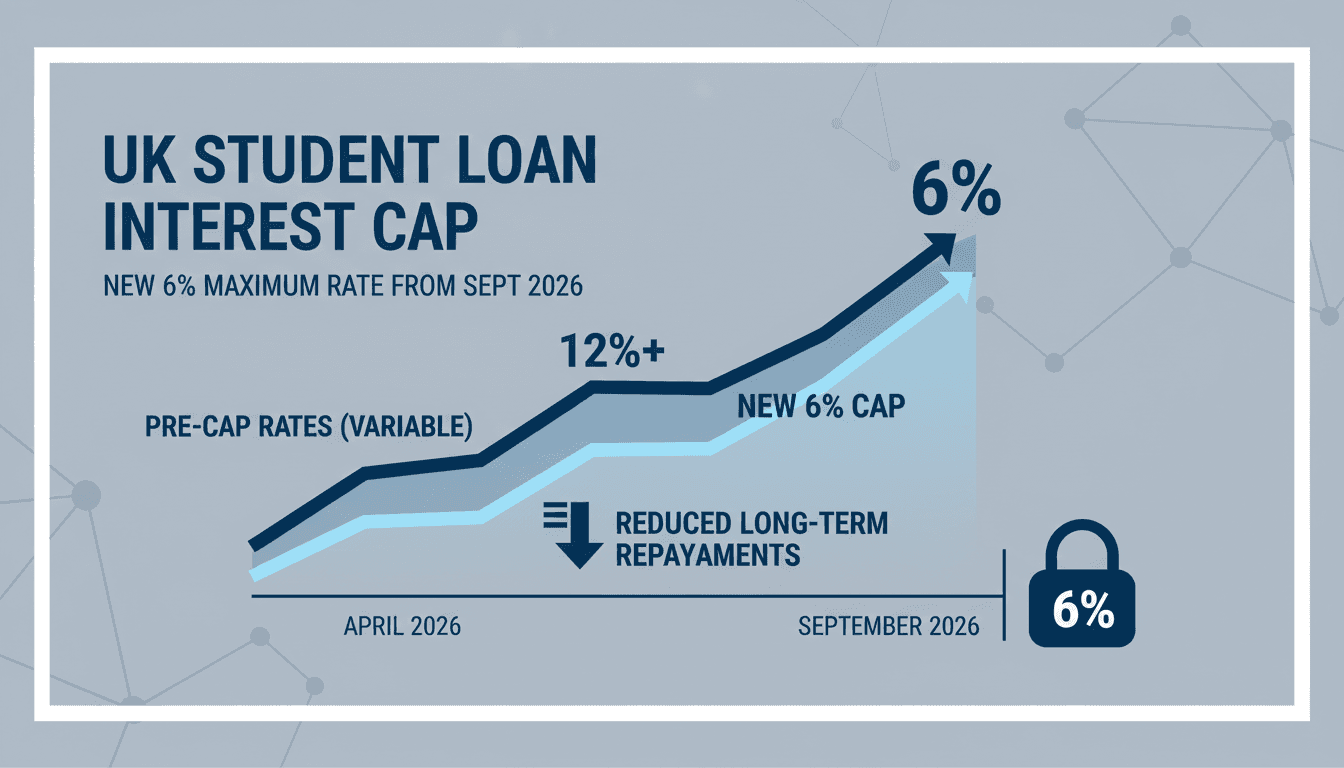
Here's what it means for you.
If you're a UK student or graduate, this new cap could significantly reduce your long-term repayment burden.
Why it matters
This policy shift aims to alleviate financial pressure on borrowers amid rising inflation concerns.
What happened (in 30 seconds)
- On April 7, 2026, the UK government announced a temporary 6% cap on interest rates for Plan 2 and Plan 3 student loans, effective September 1, 2026.
- This cap replaces the previous Retail Prices Index (RPI) plus up to 3% formula, which had resulted in rates exceeding 6.2% for higher earners.
- The measure targets undergraduate loans issued between 2012 and 2023 and postgraduate loans in England and Wales, responding to inflation fears linked to global events.
The context you actually need
- High interest rates in the UK student loan system have been criticized for creating a "debt trap," where borrowers owe more than their original loan amounts.
- Previous caps were implemented during inflation peaks, indicating a reactive approach to economic pressures rather than proactive reform.
- The current cap is part of broader Labour government pledges for fairness in student finance, especially ahead of the 2024 elections.
What's really happening
The UK government’s decision to impose a 6% cap on student loan interest rates is a strategic response to rising inflation fears exacerbated by geopolitical tensions, particularly in the Middle East. The cap is designed to protect borrowers from escalating costs that could arise from fluctuating economic conditions.
Historically, the UK student loan system has faced scrutiny for its high-interest rates, which often lead to borrowers accumulating debt that far exceeds their initial loans. The previous structure, which tied interest rates to the Retail Prices Index (RPI) plus an additional 3%, meant that many graduates were left with burdensome repayments, particularly those earning above the £29,385 threshold. This cap is intended to provide immediate relief to borrowers, particularly as inflation rates have been volatile due to global events.
The cap applies universally to all Plan 2 and Plan 3 borrowers, including current students and graduates, ensuring that the financial relief is widespread. However, the effectiveness of this cap will depend on its implementation and the broader economic context in the coming years. The Welsh Government has agreed in principle to the cap but awaits approval from the Senedd, which could affect its uniform application across the UK.
Despite the positive reception from student advocacy groups, there are calls for further reforms, including increasing income thresholds for repayment and a more comprehensive overhaul of the student finance system. Critics argue that while the cap is a step in the right direction, it does not address the root issues within the student loan framework. The cap is seen as a temporary measure, a "stopgap" rather than a long-term solution, and it may not significantly alter the trajectory of student debt in the UK.
In a global context, this cap extends to UK expatriates, including those living in high-cost areas like Dubai. While there are no specific exceptions for expatriates, the high living costs in such regions can amplify the pressures of student debt, making the cap even more relevant for those individuals.
Who feels it first (and how)
- Current students: They will benefit from reduced interest accrual while studying.
- Graduates earning above £29,385: They will see a decrease in long-term repayment amounts.
- Expatriates in high-cost regions: UK nationals living abroad, particularly in cities like Dubai, will experience relief from accumulating interest.
- Student advocacy groups: They will likely continue to push for further reforms and increased thresholds.
What to watch next
- Implementation of the cap: Monitor how effectively the cap is applied across England and Wales, particularly in light of the Welsh Government's pending approval.
- Economic indicators: Keep an eye on inflation rates and economic stability, as these will influence future student loan policies.
- Political responses: Watch for reactions from opposition parties and advocacy groups, as they may push for further reforms or adjustments to the cap.
The 6% cap will be effective from September 1, 2026, for Plan 2 and Plan 3 loans.
There will be ongoing discussions about further reforms to the student loan system as political pressures mount ahead of the 2024 elections.
The long-term impact of this cap on the overall student debt landscape in the UK remains uncertain.
Frequently Asked Questions
- Why it matters?
- This policy shift aims to alleviate financial pressure on borrowers amid rising inflation concerns.
- What happened (in 30 seconds)?
- On April 7, 2026, the UK government announced a temporary 6% cap on interest rates for Plan 2 and Plan 3 student loans, effective September 1, 2026. This cap replaces the previous Retail Prices Index (RPI) plus up to 3% formula, which had resulted in rates exceeding 6.2% for higher earners. The measure targets undergraduate loans issued between 2012 and 2023 and postgraduate loans in England and Wales, responding to inflation fears linked to global events.
- What's really happening?
- The UK government’s decision to impose a 6% cap on student loan interest rates is a strategic response to rising inflation fears exacerbated by geopolitical tensions, particularly in the Middle East. The cap is designed to protect borrowers from escalating costs that could arise from fluctuating economic conditions. Historically, the UK student loan system has faced scrutiny for its high-interest rates, which often lead to borrowers accumulating debt that far exceeds their initial loans. The p
- Who feels it first (and how)?
- Current students: They will benefit from reduced interest accrual while studying. Graduates earning above £29,385: They will see a decrease in long-term repayment amounts. Expatriates in high-cost regions: UK nationals living abroad, particularly in cities like Dubai, will experience relief from accumulating interest. Student advocacy groups: They will likely continue to push for further reforms and increased thresholds.
- What to watch next?
- Implementation of the cap: Monitor how effectively the cap is applied across England and Wales, particularly in light of the Welsh Government's pending approval. Economic indicators: Keep an eye on inflation rates and economic stability, as these will influence future student loan policies. Political responses: Watch for reactions from opposition parties and advocacy groups, as they may push for further reforms or adjustments to the cap.
UK and international business news, economics, and corporate coverage.
"The Guardian’s business section covers finance and markets with a progressive editorial tone."
— A47 Editor
UK government caps student loan interest rates at 6% from September
The UK government has announced a cap on student loan interest rates at 6% for Plan 2 and postgraduate loans in England and Wales, effective from September 2026. This decision comes in response to rising inflation concerns exacerbated by global confl...
Top international stories selected by The Guardian editors.
"The Guardian is known for its progressive editorial stance and in-depth analysis."
— A47 Editor
UK government caps student loan interest rates at 6% from September
The UK government has announced a cap on student loan interest rates at 6% for Plan 2 and postgraduate loans in England and Wales, effective from September 2026. This decision comes in response to rising inflation concerns exacerbated by global confl...
Practical investing ideas, macro commentary, and market strategy.
"MoneyWeek is a UK-based investment magazine focused on actionable insights."
— A47 Editor
Interest rate on student loans to be capped at 6% for one year as inflation fears rise
The UK government has announced a cap on the interest rate for Plan 2 student loans at 6% for the 2026/27 academic year, a move aimed at shielding graduates from rising inflation concerns linked to ongoing conflicts in the Middle East.
Corporate news, economic trends, and markets with UK and global scope.
"BBC News is widely regarded as reputable and impartial, with a public service mandate."
— A47 Editor
Plan 2 student loan interest rates capped at 6% in England
The UK government has announced a cap on Plan 2 and postgraduate student loan interest rates at 6%, effective from September 2026, in response to rising inflation concerns. This decision aims to alleviate financial pressure on borrowers during a time...
Political developments, policy debates, elections, and government affairs in the UK.
"BBC News is widely regarded as a reputable international news organization, known for its impartial tone and public service mandate."
— A47 Editor
Plan 2 student loan interest rates capped at 6% in England
The interest rates for Plan 2 student loans and postgraduate loans in England have been capped at 6%, a decision made in response to concerns about rising inflation. This measure aims to provide financial relief to borrowers amid economic uncertainti...
UK and global business, economy, and markets coverage.
"Sky News is often seen as a center-right outlet in the UK, known for rolling news and breaking business stories."
— A47 Editor
Interest rate to be capped on some student loans
The government has announced a cap on interest rates for Plan 2 and Plan 3 student loans at 6% for one year starting in September, a move aimed at providing financial relief to students amid rising inflation concerns.