
CK Hutchison Holdings Files Arbitration Against Maersk Over Panama Canal Ports Dispute
Here's what it means for you.
If you rely on global shipping routes, this dispute could affect shipping efficiency and costs.
Why it matters
This arbitration could reshape the competitive landscape of global shipping and port operations.
What happened (in 30 seconds)
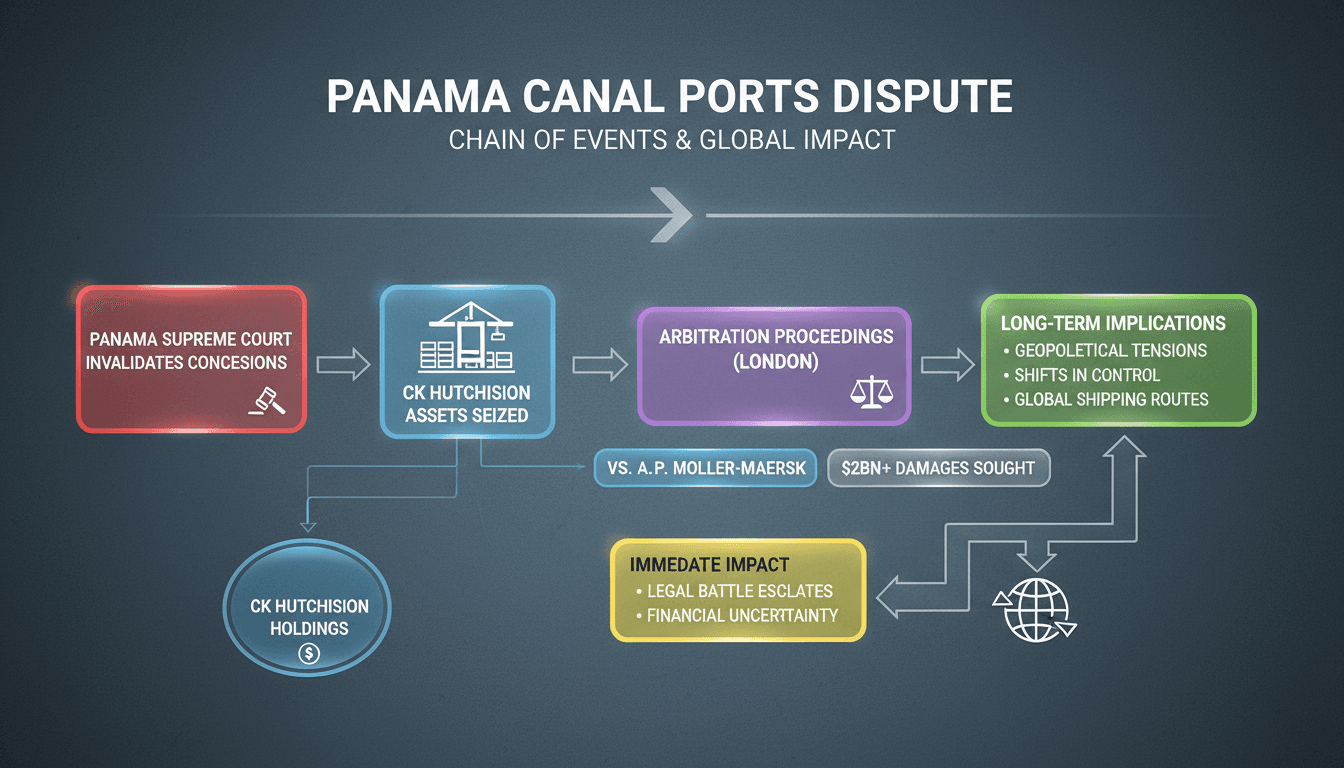
- CK Hutchison Holdings initiated arbitration in London against A.P. Moller-Maersk over a contract breach related to Panama Canal ports.
- Panama's Supreme Court invalidated CK Hutchison's concessions, leading to the government seizing control of the ports and granting interim licenses to Maersk.
- CK Hutchison claims Maersk supported the takeover, complicating its ongoing legal battles against both the Panamanian government and Maersk.
The context you actually need
- CK Hutchison's Panama Ports Company has operated Balboa and Cristobal terminals since 1997, handling 39% of Panama's container traffic.
- Geopolitical tensions surrounding Chinese influence in Panama have intensified scrutiny over port operations and ownership.
- Legal frameworks in Panama have shifted, complicating long-term investments and operations for foreign companies.
What's really happening
The dispute between CK Hutchison Holdings and A.P. Moller-Maersk is rooted in a complex interplay of legal, geopolitical, and economic factors. CK Hutchison's Panama Ports Company has been a significant player in the region since 1997, managing crucial terminals that facilitate a substantial portion of Panama's container traffic. The recent ruling by Panama's Supreme Court, which deemed the legal basis for CK Hutchison's concessions unconstitutional, has thrown the future of these operations into uncertainty.
This ruling was not merely a legal technicality; it reflects broader geopolitical tensions, particularly concerning Chinese influence in the region. The implications of this ruling extend beyond CK Hutchison, as it signals a potential shift in how foreign investments are treated in Panama. The government's decision to seize control of the ports and grant interim licenses to Maersk and MSC indicates a strategic pivot that could alter the competitive dynamics in global shipping.
CK Hutchison's subsequent arbitration against Maersk is a critical response to what it perceives as collusion between Maersk and the Panamanian government to undermine its operations. The company is seeking over $2 billion in damages, a figure that underscores the stakes involved. This arbitration is not just about recovering losses; it is also about setting a precedent for how international contracts are honored in the face of domestic legal challenges.
As the arbitration unfolds, it could lead to significant changes in the operational landscape of the Panama Canal, which serves as a vital artery for global trade. The outcome may influence how other companies approach investments in Panama and similar jurisdictions, particularly those with complex legal environments. Additionally, the situation raises questions about the future of international arbitration as a mechanism for resolving disputes in an increasingly protectionist world.
Who feels it first (and how)
- Shipping companies: They may face increased operational costs or disruptions depending on the arbitration outcome.
- Logistics firms: Changes in port operations could affect supply chain efficiency and shipping rates.
- Investors: Those with interests in Panama or related sectors may reassess risk profiles based on the evolving legal landscape.
- Local economies: Communities reliant on port operations could experience economic fluctuations tied to shipping activities.
What to watch next
- Arbitration outcomes: The results could set significant precedents for international contracts and foreign investments in Panama.
- Shipping rates: Monitor any changes in shipping costs that may arise from disruptions or shifts in port operations.
- Geopolitical developments: Keep an eye on U.S. and Chinese responses to the situation, which could affect broader trade dynamics.
CK Hutchison has filed arbitration against Maersk, claiming breach of contract.
The arbitration process will take time, potentially leading to prolonged uncertainty in port operations.
The long-term impacts on shipping rates and global trade efficiency remain uncertain as the situation evolves.
Frequently Asked Questions
- Why it matters?
- This arbitration could reshape the competitive landscape of global shipping and port operations.
- What happened (in 30 seconds)?
- CK Hutchison Holdings initiated arbitration in London against A.P. Moller-Maersk over a contract breach related to Panama Canal ports. Panama's Supreme Court invalidated CK Hutchison's concessions, leading to the government seizing control of the ports and granting interim licenses to Maersk. CK Hutchison claims Maersk supported the takeover, complicating its ongoing legal battles against both the Panamanian government and Maersk.
- What's really happening?
- The dispute between CK Hutchison Holdings and A.P. Moller-Maersk is rooted in a complex interplay of legal, geopolitical, and economic factors. CK Hutchison's Panama Ports Company has been a significant player in the region since 1997, managing crucial terminals that facilitate a substantial portion of Panama's container traffic. The recent ruling by Panama's Supreme Court, which deemed the legal basis for CK Hutchison's concessions unconstitutional, has thrown the future of these operations int
- Who feels it first (and how)?
- Shipping companies: They may face increased operational costs or disruptions depending on the arbitration outcome. Logistics firms: Changes in port operations could affect supply chain efficiency and shipping rates. Investors: Those with interests in Panama or related sectors may reassess risk profiles based on the evolving legal landscape. Local economies: Communities reliant on port operations could experience economic fluctuations tied to shipping activities.
- What to watch next?
- Arbitration outcomes: The results could set significant precedents for international contracts and foreign investments in Panama. Shipping rates: Monitor any changes in shipping costs that may arise from disruptions or shifts in port operations. Geopolitical developments: Keep an eye on U.S. and Chinese responses to the situation, which could affect broader trade dynamics.
U.S. business news, corporate developments, and economy.
"The Wall Street Journal is respected for deep financial and economic reporting with a center-right editorial perspective."
— A47 Editor
CK Hutchison Starts Arbitration Against Maersk Over Panama Ports
CK Hutchison has initiated arbitration against A.P. Moeller-Maersk following the seizure of its port assets in Panama, escalating a legal conflict over control of these critical facilities. This move comes as the company faces significant challenges ...
Market-moving headlines impacting equities, bonds, and related risk assets.
"Real-time catalysts and volatility drivers across indices and sectors."
— A47 Editor
CK Hutchison’s Panama unit files arbitration against Maersk over ports takeover
CK Hutchison's Panama unit has initiated arbitration proceedings against Maersk in London, following the forced takeover of its two ports in Panama. This legal action highlights ongoing disputes over asset control and the complexities surrounding the...