
UAE President and UK Prime Minister Discuss Iranian Aggression and Regional Security in Abu Dhabi
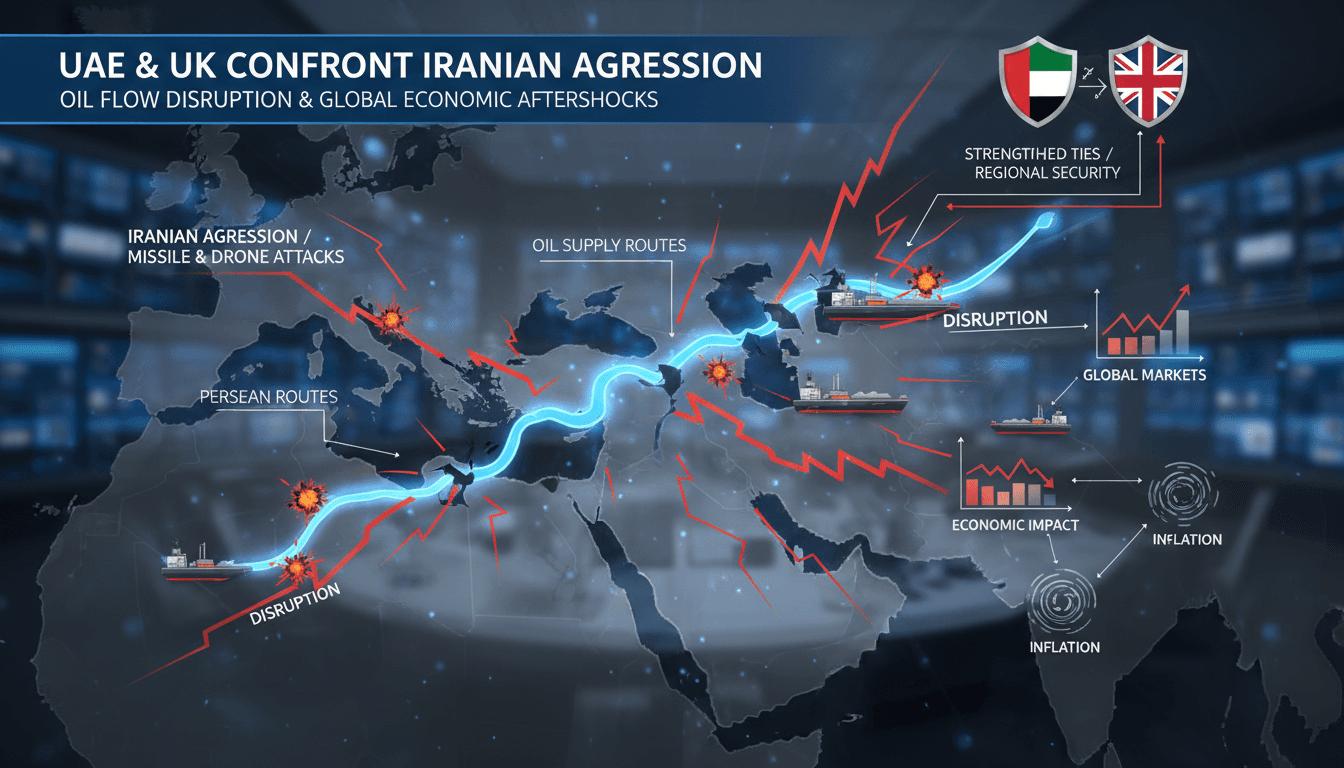
Here's what it means for you.
If you rely on stable energy supplies or regional security, the outcomes of these discussions could directly impact your costs and safety.
Why it matters
The ongoing tensions in the Middle East could disrupt global oil supplies and escalate security risks, affecting economies worldwide.
What happened (in 30 seconds)
- UAE President Sheikh Mohamed bin Zayed Al Nahyan met UK Prime Minister Keir Starmer in Abu Dhabi to discuss Iranian aggression and regional security challenges.
- Starmer condemned Iranian attacks on UAE infrastructure and reaffirmed UK support for UAE's defensive measures.
- The leaders explored opportunities for bilateral cooperation amid rising tensions and economic impacts from the conflict.
The context you actually need
- Iran has increased missile and drone attacks on UAE and Gulf states since late February 2026, following US and Israeli strikes on Iran.
- The Strait of Hormuz blockade by Iran has disrupted 20% of global oil supplies, pushing oil prices above $115 per barrel.
- A recent US-Iran ceasefire was announced, but the UAE is demanding accountability and reparations for damages to its energy infrastructure.
What's really happening
The meeting between UAE President Sheikh Mohamed and UK Prime Minister Keir Starmer on April 9, 2026, comes at a critical juncture in Middle Eastern geopolitics. Since February 28, 2026, Iran has escalated its military aggression against the UAE and other Gulf states, launching a series of missile and drone attacks that have raised alarms about regional stability. This aggression is a direct response to US and Israeli military actions against Iran, creating a volatile environment that jeopardizes international navigation and energy supplies.
The UAE's air defenses have intercepted 519 ballistic missiles since the onset of these attacks, demonstrating the severity of the threat. The UK, under Starmer's leadership, has positioned itself as a key ally to the UAE, reaffirming its commitment to support UAE sovereignty and self-defense. This diplomatic engagement is not merely symbolic; it reflects a broader strategy to counter Iranian influence in the region and maintain stability in global energy markets.
The discussions also touched on the economic implications of the ongoing conflict. With oil prices surging due to supply disruptions, the global economy is feeling the strain. The UAE's demand for clarification and reparations from Iran highlights the complexities of accountability in international conflicts. While a ceasefire was announced around April 8, the UAE's insistence on reparations indicates a desire for a more comprehensive resolution that addresses the damages incurred.
For Dubai residents, the impact has been palpable. Repeated air raid alerts and interceptions have heightened security concerns, leading to disruptions in flights and fluctuations in the property market. Although there have been no direct hits on populated areas, the psychological and economic effects of living under such threats cannot be understated.
As the UAE and UK strengthen their ties, the potential for enhanced military and economic cooperation could reshape the security landscape in the region. This partnership may also influence global energy strategies, as both nations seek to mitigate the risks posed by Iranian aggression and ensure the stability of oil supplies.
Who feels it first (and how)
- Energy sector professionals: Increased oil prices and supply chain disruptions could affect job stability and operational costs.
- Investors in the UAE: Heightened security risks may lead to volatility in property markets and investment returns.
- Local residents in Dubai: Ongoing security alerts and potential military actions could create anxiety and impact daily life.
What to watch next
- Iran's response to the ceasefire: Monitoring Iran's military actions will be crucial in assessing the likelihood of further escalations or a return to negotiations.
- Oil price fluctuations: Watch for changes in oil prices as they can signal market reactions to geopolitical developments and affect global economies.
- UAE-UK military cooperation: Any announcements regarding joint military exercises or defense agreements could indicate a shift in regional power dynamics.
The UAE is experiencing ongoing Iranian aggression, leading to heightened security measures.
Oil prices will remain volatile as geopolitical tensions continue to evolve.
The long-term effectiveness of the ceasefire and its impact on regional stability.
Frequently Asked Questions
- Why it matters?
- The ongoing tensions in the Middle East could disrupt global oil supplies and escalate security risks, affecting economies worldwide.
- What happened (in 30 seconds)?
- UAE President Sheikh Mohamed bin Zayed Al Nahyan met UK Prime Minister Keir Starmer in Abu Dhabi to discuss Iranian aggression and regional security challenges. Starmer condemned Iranian attacks on UAE infrastructure and reaffirmed UK support for UAE's defensive measures. The leaders explored opportunities for bilateral cooperation amid rising tensions and economic impacts from the conflict.
- What's really happening?
- The meeting between UAE President Sheikh Mohamed and UK Prime Minister Keir Starmer on April 9, 2026, comes at a critical juncture in Middle Eastern geopolitics. Since February 28, 2026, Iran has escalated its military aggression against the UAE and other Gulf states, launching a series of missile and drone attacks that have raised alarms about regional stability. This aggression is a direct response to US and Israeli military actions against Iran, creating a volatile environment that jeopardize
- Who feels it first (and how)?
- Energy sector professionals: Increased oil prices and supply chain disruptions could affect job stability and operational costs. Investors in the UAE: Heightened security risks may lead to volatility in property markets and investment returns. Local residents in Dubai: Ongoing security alerts and potential military actions could create anxiety and impact daily life.
- What to watch next?
- Iran's response to the ceasefire: Monitoring Iran's military actions will be crucial in assessing the likelihood of further escalations or a return to negotiations. Oil price fluctuations: Watch for changes in oil prices as they can signal market reactions to geopolitical developments and affect global economies. UAE-UK military cooperation: Any announcements regarding joint military exercises or defense agreements could indicate a shift in regional power dynamics.
Arabic-language local coverage focused on UAE domestic issues, civic affairs, and community reporting.
"Emarat Al Youm local coverage emphasizes UAE institutions, public services, and community-level developments."
— A47 Editor
رئيس الدولة ورئيس وزراء بريطانيا يبحثان العدوان الإيراني الإرهابي رئيس الدولة ورئيس وزراء بريطانيا يبحثان العدوان الإيراني الإرهابي
Sheikh Mohammed bin Zayed Al Nahyan, President of the UAE, received UK Prime Minister Keir Starmer to discuss the Iranian terrorist aggression and its implications for regional and international security. The meeting highlighted the ongoing tensions ...
Arabic-language coverage of international news and geopolitics.
"RT Arabic is a Russian state-funded outlet often criticized for promoting Kremlin-aligned narratives."
— A47 Editor
بن زايد وستارمر يبحثان تأثير الحرب على الملاحة الدولية وإمدادات الطاقة
The President of the United Arab Emirates, Mohammed bin Zayed Al Nahyan, and British Prime Minister Keir Starmer met in Abu Dhabi to discuss developments in the Middle East and their implications for international navigation security and energy suppl...
Arabic-language coverage of international news and geopolitics.
"RT Arabic is a Russian state-funded outlet often criticized for promoting Kremlin-aligned narratives."
— A47 Editor
محمد بن زايد آل نهيان يستقبل رئيس الوزراء البريطاني في أبو ظبي
Sheikh Mohammed bin Zayed Al Nahyan, the President of the United Arab Emirates, met with British Prime Minister Keir Starmer in Abu Dhabi on Thursday. This meeting highlights the ongoing diplomatic relations between the UAE and the UK, focusing on co...
Arabic-language UAE newspaper coverage focused on domestic affairs, public institutions, business, society, and regional developments.
"Al Khaleej coverage generally reflects a mainstream UAE editorial lens with strong attention to public affairs, institutions, and regional developments."
— A47 Editor
محمد بن زايد وستارمر يبحثان العدوان الإيراني الإرهابي المتواصل (فيديو)
Sheikh Mohammed bin Zayed Al Nahyan, President of the UAE, received Keir Starmer, Prime Minister of the United Kingdom, to discuss ongoing Iranian aggression and terrorism. The meeting highlights the collaboration between the two nations in addressin...