
Japan Revises Arms Export Policy to Allow Lethal Weapons Sales
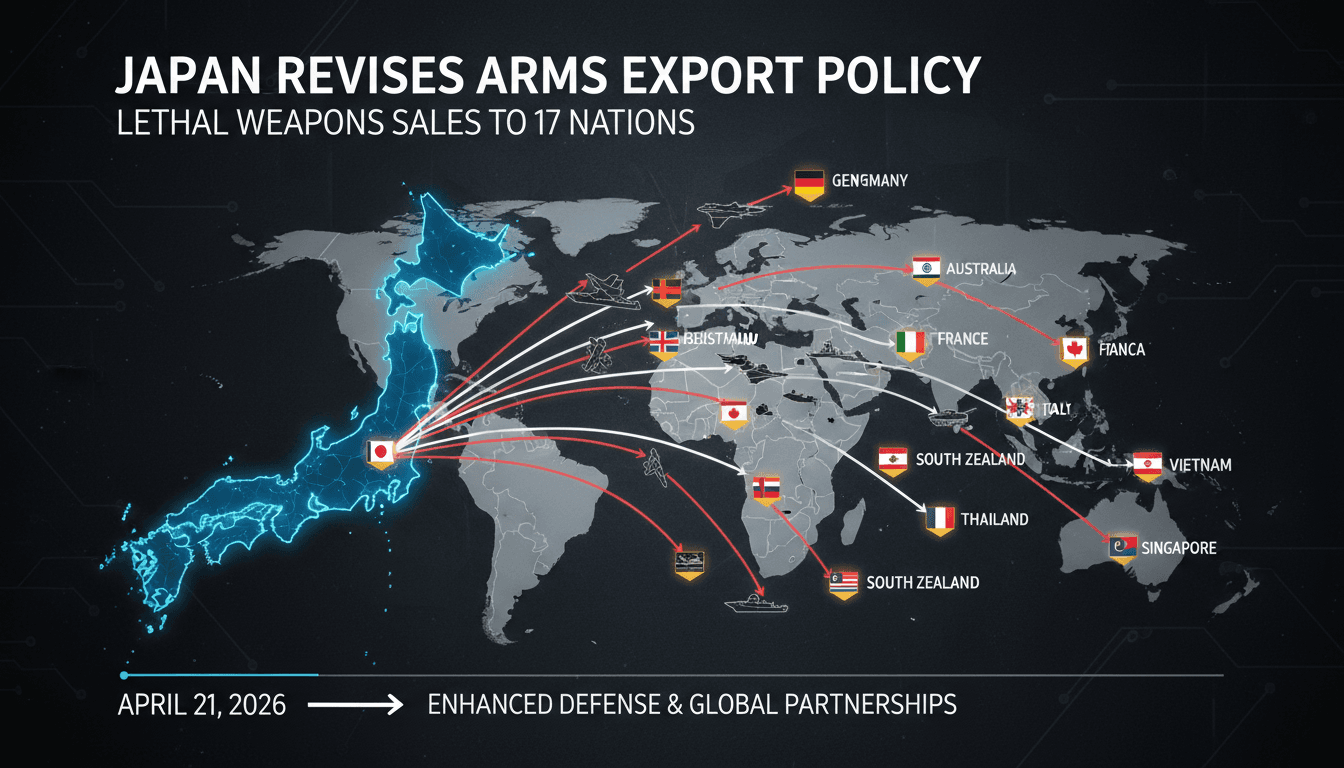
Here's what it means for you.
If you operate in defense or international trade, this policy shift could reshape supply chains and partnerships.
Why it matters
This change signals a significant shift in Japan's defense posture, impacting global arms markets and regional security dynamics.
What happened (in 30 seconds)
- On April 21, 2026, Japan's Cabinet approved revisions to its Three Principles on Defense Equipment and Technology, easing restrictions on lethal arms exports.
- Seventeen countries are now eligible for these exports, including key allies like the United States and the United Kingdom.
- The policy aims to bolster Japan's defense capabilities amid rising regional threats from China, Russia, and North Korea.
The context you actually need
- Japan's post-World War II constitution, particularly Article 9, has historically limited its military capabilities and arms exports, promoting a pacifist stance.
- The Three Principles, established in 2014, initially allowed only non-lethal transfers, with limited exceptions for lethal arms introduced in 2023.
- The 2026 amendments reflect a response to a "severe security environment," aiming to strengthen alliances and enhance Japan's defense industry viability.
What's really happening
The recent amendments to Japan's arms export policy represent a pivotal moment in the country's defense strategy, moving away from decades of strict pacifism. The revisions classify military equipment into two categories: lethal and non-lethal, lifting previous categorical restrictions that confined Japan's defense exports to non-lethal items. This change allows Japan to sell advanced military hardware, including warships, missiles, and fighter jets, to 17 partner nations that have established defense information protection agreements with Japan.
The driving force behind this policy shift is the escalating security threats posed by regional powers such as China, Russia, and North Korea. Japan's leadership, particularly under Prime Minister Sanae Takaichi, recognizes the need to bolster its defense capabilities and enhance cooperation with allies. The National Security Council (NSC) will now evaluate lethal arms transfers on a case-by-case basis, ensuring that exports are monitored post-transfer through on-site inspections. This mechanism aims to maintain accountability while expanding Japan's role in global defense.
The implications of this policy are multifaceted. For Japan, it opens avenues for increased collaboration with allies, particularly in joint defense projects like the Global Combat Air Programme. It also aims to enhance the viability of Japan's defense industry by allowing for economies of scale in production. Domestic defense firms, such as Mitsubishi Heavy Industries and IHI, anticipate production boosts as they adapt to the new export landscape.
However, the policy has not been without controversy. Domestic polls indicate that nearly half of the Japanese population opposes the easing of arms export restrictions, with calls for parliamentary oversight gaining traction. Additionally, neighboring countries, particularly South Korea, have expressed concerns about Japan's militarization, citing historical grievances. China's Foreign Ministry has also voiced "grave concern," pledging vigilance against Japan's military expansion.
In summary, Japan's easing of lethal arms export restrictions is a calculated response to a changing security environment, aiming to strengthen alliances and enhance its defense capabilities while navigating domestic and regional sensitivities.
Who feels it first (and how)
- Defense contractors: Companies like Mitsubishi Heavy Industries may see increased production and export opportunities.
- Government officials: Policymakers will need to navigate public sentiment and international relations carefully.
- Regional allies: Countries like the Philippines and the US may benefit from enhanced military cooperation and access to Japanese technology.
- Local populations: Citizens may experience shifts in national security policy and potential impacts on regional stability.
What to watch next
- Defense contracts: Monitor new agreements between Japan and the 17 eligible countries, as these will indicate the pace of Japan's arms exports.
- Public opinion: Watch for shifts in domestic sentiment regarding military exports, which could influence future policy decisions.
- Regional responses: Keep an eye on reactions from neighboring countries, particularly China and South Korea, as they may adjust their defense strategies in response.
Japan has officially amended its arms export policy to allow lethal weapons sales to 17 countries.
Increased defense cooperation with allies and potential boosts in production for Japanese defense firms.
The long-term impact on regional security dynamics and public sentiment regarding militarization.
Frequently Asked Questions
- Why it matters?
- This change signals a significant shift in Japan's defense posture, impacting global arms markets and regional security dynamics.
- What happened (in 30 seconds)?
- On April 21, 2026, Japan's Cabinet approved revisions to its Three Principles on Defense Equipment and Technology, easing restrictions on lethal arms exports. Seventeen countries are now eligible for these exports, including key allies like the United States and the United Kingdom. The policy aims to bolster Japan's defense capabilities amid rising regional threats from China, Russia, and North Korea.
- What's really happening?
- The recent amendments to Japan's arms export policy represent a pivotal moment in the country's defense strategy, moving away from decades of strict pacifism. The revisions classify military equipment into two categories: lethal and non-lethal, lifting previous categorical restrictions that confined Japan's defense exports to non-lethal items. This change allows Japan to sell advanced military hardware, including warships, missiles, and fighter jets, to 17 partner nations that have established d
- Who feels it first (and how)?
- Defense contractors: Companies like Mitsubishi Heavy Industries may see increased production and export opportunities. Government officials: Policymakers will need to navigate public sentiment and international relations carefully. Regional allies: Countries like the Philippines and the US may benefit from enhanced military cooperation and access to Japanese technology. Local populations: Citizens may experience shifts in national security policy and potential impacts on regional stability
- What to watch next?
- Defense contracts: Monitor new agreements between Japan and the 17 eligible countries, as these will indicate the pace of Japan's arms exports. Public opinion: Watch for shifts in domestic sentiment regarding military exports, which could influence future policy decisions. Regional responses: Keep an eye on reactions from neighboring countries, particularly China and South Korea, as they may adjust their defense strategies in response.
Arabic-language political and world news coverage for UAE readers.
"Emarat Al Youm world coverage usually presents international developments through a UAE and Arab audience lens."
— A47 Editor
اليابان تُخفّف القيود على تصدير الأسلحة اليابان تُخفّف القيود على تصدير الأسلحة
Japan announced a historic easing of its long-standing restrictions on arms exports, marking a significant shift in its defense policy. This change opens the door for the country to engage in the international arms market, which has been largely rest...
24/7 international news from a French perspective in multiple languages.
"France 24 is viewed as a globally focused outlet with balanced coverage and a European perspective."
— A47 Editor
Japan scraps a ban on lethal weapons exports in a change of its postwar pacifist policy
Japan has officially lifted its ban on lethal weapons exports, marking a significant shift in its postwar pacifist policy. This decision allows Japan to engage in the international arms market and sell advanced military equipment, responding to growi...
RT is a Russian state-funded network covering global events from a Russian perspective.
"RT is widely criticized for promoting pro-Kremlin narratives and is considered by many to be a state propaganda outlet."
— A47 Editor
Japan makes major shift from pacificism policy
Japan has officially lifted its ban on lethal weapons exports, allowing sales to 17 partner nations, including the US, UK, and Australia. This marks a significant shift from its postwar pacifist policy, enabling Japan to engage in the international a...
Global political, business, and cultural coverage from WSJ international desks.
"The Wall Street Journal offers extensive international reporting with a reputation for financial insight and a center-right editorial stance."
— A47 Editor
Japan Lifts Ban on Arms Exports
Japan has officially lifted its ban on arms exports, a significant policy shift announced by Prime Minister Sanae Takaichi. This decision allows Japan to transfer defense technology to allied nations, enhancing its own security and contributing to gl...
Arabic-language coverage of political affairs and current events.
"Okaz political coverage typically follows mainstream Saudi framing on national and regional affairs."
— A47 Editor
اليابان تكسر قيود عقود من السلمية وتفتح باب تصدير الأسلحة
Japan has announced a significant easing of decades-long restrictions on arms exports, marking a major shift in its post-World War II pacifist defense policy. The new policy allows Tokyo to export weapons to over 17 countries with which it has defens...
International stories from NPR’s global desk.
"NPR is an American public media organization known for thoughtful reporting and a slightly left-leaning editorial tone."
— A47 Editor
Japan approves removing ban on lethal weapons exports
Japan has officially approved the removal of its ban on lethal weapons exports, marking a significant shift in its postwar pacifist policy. This decision allows Japan to engage in the international arms market and sell advanced military equipment to ...
International coverage of politics, culture, and current affairs.
"BBC News is widely regarded as a reputable international news organization, known for its impartial tone and public service mandate."
— A47 Editor
Japan loosens arms export rules in break from post-WW2 pacifism
Japan has officially loosened its arms export rules, marking a significant departure from its post-World War II pacifist stance. This change allows Japan to sell weapons to over a dozen countries, including advanced military equipment, which had prev...
International news coverage curated for readers in the UAE and Gulf region.
"Emirates 24|7 world coverage presents global developments through a UAE-facing and Gulf-relevant editorial lens."
— A47 Editor
Japan approves scrapping ban on lethal weapons exports Japan approves scrapping ban on lethal weapons exports
Japan has officially approved the scrapping of its ban on lethal weapons exports, marking a significant shift in its postwar pacifist policy. This decision, endorsed by Prime Minister Sanae Takaichi's Cabinet, aims to bolster Japan's arms industry an...
Global news coverage with extensive reporting on Middle Eastern conflicts and geopolitics.
"Al Jazeera is a Qatar-based broadcaster known for wide regional coverage and alternative perspectives."
— A47 Editor
Japan lifts ban on lethal weapons exports in major shift of pacifist policy
Japan has officially lifted its ban on lethal weapons exports, marking a significant shift from its long-standing pacifist policy. This decision allows Japan to engage in the international arms market, including the potential sale of advanced militar...
Comprehensive coverage of Middle Eastern and global issues.
"Al Jazeera is a prominent voice from the Global South, especially the Middle East, with an emphasis on underreported stories."
— A47 Editor
Japan lifts ban on lethal weapons exports in major shift of pacifist policy
Japan has officially lifted its ban on lethal weapons exports, marking a significant shift from its long-standing pacifist policy. This decision allows Japan to engage in the international arms market, including the potential sale of advanced militar...
International stories from NPR’s global desk.
"NPR is an American public media organization known for thoughtful reporting and a slightly left-leaning editorial tone."
— A47 Editor
Japan approves scrapping a ban on lethal weapons exports
Japan has officially approved the removal of its ban on lethal weapons exports, marking a significant shift in its postwar arms sales policy. This decision paves the way for the country to engage in the sale of advanced military equipment, including ...
Editor-curated FT homepage stories spanning markets, business, world, and opinion.
"The Financial Times is a globally respected business publication with a centrist/center-left tone and strong markets focus."
— A47 Editor
Japan lifts ban on lethal arms exports
Japan has lifted its ban on lethal arms exports, marking a significant shift from its traditionally pacifist stance. This decision allows Japanese defense contractors to pursue international markets, potentially expanding their business opportunities...
Arabic-language coverage of international news and geopolitics.
"RT Arabic is a Russian state-funded outlet often criticized for promoting Kremlin-aligned narratives."
— A47 Editor
لأول مرة بعد الحرب العالمية الثانية.. اليابان تنهي حظر تصدير الأسلحة الفتاكة
Japan has officially approved the lifting of its ban on the export of lethal weapons, marking a significant shift in its post-World War II pacifist policy. This decision was made on Tuesday and reflects a new direction in Japan's defense strategy.
Pan-Arab news coverage spanning politics, business, sports, and regional affairs.
"Asharq Al-Awsat reflects a broad Arab editorial perspective with strong attention to regional geopolitics."
— A47 Editor
اليابان تسمح بتصدير الأسلحة الفتاكة لأول مرة منذ الحرب العالمية الثانية
Japan has approved the lifting of its ban on the export of lethal weapons, marking a significant shift in its pacifist policy that has been in place since the end of World War II. This decision reflects a major change in Japan's defense posture and i...