
Virgin Australia Projects Significant Fuel Cost Increase Amid Middle East Conflict
Here's what it means for you.
If you're planning to fly domestically in Australia or internationally to the Middle East, expect higher airfares and potential service disruptions.
Why it matters
The rising fuel costs and subsequent fare adjustments reflect broader volatility in the aviation market, impacting both consumers and airlines.
What happened (in 30 seconds)
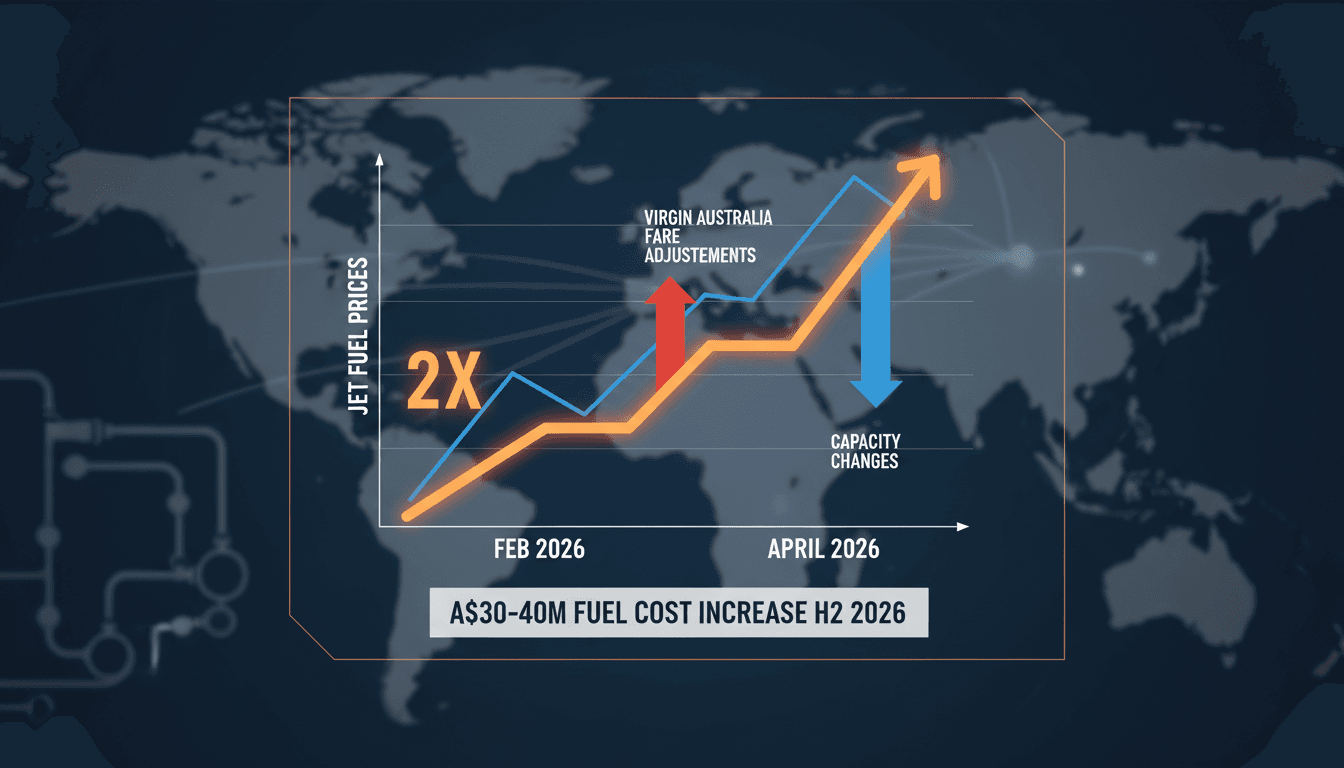
- Virgin Australia announced an expected A$30–40 million increase in fuel costs for the second half of fiscal 2026 due to soaring jet fuel prices.
- Domestic capacity will be trimmed by 1% in the fourth quarter, while airfares are set to rise as a response to the ongoing Middle East conflict.
- Qantas Airways has also adjusted its fuel outlook and fares, indicating a sector-wide trend in response to escalating costs.
The context you actually need
- Jet fuel prices have more than doubled since late February 2026, driven by the ongoing conflict in the Middle East, particularly the Iran war.
- Virgin Australia had already raised fares on March 20, 2026, amid initial price surges, and is now implementing further adjustments.
- Regulatory bodies like the Australian Competition and Consumer Commission (ACCC) are monitoring the situation for excessive pricing and cancellations.
What's really happening
The recent spike in jet fuel prices is a direct consequence of geopolitical tensions in the Middle East, particularly the escalation of the Iran war that began on February 28, 2026. Following U.S.-Israeli airstrikes that killed Iranian Supreme Leader Ali Khamenei, Iran's retaliatory actions disrupted the Strait of Hormuz, a critical chokepoint for global oil transit. This disruption has caused jet fuel prices to soar from $85–90 per barrel to over $150–200, significantly impacting airline operating costs.
Virgin Australia, as Australia's second-largest airline, is feeling the pressure. The company has projected an increase in fuel costs of A$30–40 million for the second half of fiscal 2026. In response, it has adjusted domestic airfares upward and reduced its domestic capacity by 1% for the fourth quarter. This decision is part of a broader strategy to manage the financial impact of rising fuel costs while maintaining a projected 5% revenue growth per available seat kilometre.
The airline's hedging strategy, which covers 92% of its Brent crude exposure, has partially mitigated the impact of these rising costs. However, the adjustments reflect a necessary response to the volatile market conditions. Virgin Australia's peers, including Qantas, are also adjusting their fare structures and capacity in light of these developments, indicating a sector-wide trend.
As airlines globally impose surcharges and cancel flights due to increased operational costs, the Australian aviation market is under scrutiny. The ACCC is actively monitoring the situation to prevent excessive pricing and misleading fare hike claims. Analysts predict that profit pressures will persist, particularly for the first half of fiscal 2027, as low hedging levels and high refining margins continue to affect profitability.
The implications of these changes extend beyond just the airlines. Consumers will likely face higher airfares and reduced flight options, particularly for domestic travel. Additionally, the ongoing conflict in the Middle East raises concerns about sustained volatility in fuel prices, which could further impact the aviation sector.
Who feels it first (and how)
- Travelers: Domestic and international passengers will face higher airfares and potential service disruptions.
- Airlines: Carriers like Virgin Australia and Qantas are adjusting their operations and pricing strategies to cope with rising costs.
- Regulatory bodies: The ACCC is monitoring the aviation market for compliance with pricing regulations and consumer protection.
What to watch next
- Fuel price trends: Keep an eye on global oil prices and geopolitical developments in the Middle East, as these will directly impact airline operating costs.
- Airfare adjustments: Monitor fare changes from major airlines, as ongoing volatility may lead to further increases or capacity cuts.
- Regulatory actions: Watch for any announcements from the ACCC regarding pricing investigations or consumer protection measures in the aviation sector.
Jet fuel prices have more than doubled since late February 2026.
Airlines will continue to adjust fares and capacity in response to ongoing fuel cost pressures.
The long-term impact of the Middle East conflict on global oil prices and aviation operations remains uncertain.
Frequently Asked Questions
- Why it matters?
- The rising fuel costs and subsequent fare adjustments reflect broader volatility in the aviation market, impacting both consumers and airlines.
- What happened (in 30 seconds)?
- Virgin Australia announced an expected A$30–40 million increase in fuel costs for the second half of fiscal 2026 due to soaring jet fuel prices. Domestic capacity will be trimmed by 1% in the fourth quarter, while airfares are set to rise as a response to the ongoing Middle East conflict. Qantas Airways has also adjusted its fuel outlook and fares, indicating a sector-wide trend in response to escalating costs.
- What's really happening?
- The recent spike in jet fuel prices is a direct consequence of geopolitical tensions in the Middle East, particularly the escalation of the Iran war that began on February 28, 2026. Following U.S.-Israeli airstrikes that killed Iranian Supreme Leader Ali Khamenei, Iran's retaliatory actions disrupted the Strait of Hormuz, a critical chokepoint for global oil transit. This disruption has caused jet fuel prices to soar from $85–90 per barrel to over $150–200, significantly impacting airline operat
- Who feels it first (and how)?
- Travelers: Domestic and international passengers will face higher airfares and potential service disruptions. Airlines: Carriers like Virgin Australia and Qantas are adjusting their operations and pricing strategies to cope with rising costs. Regulatory bodies: The ACCC is monitoring the aviation market for compliance with pricing regulations and consumer protection.
- What to watch next?
- Fuel price trends: Keep an eye on global oil prices and geopolitical developments in the Middle East, as these will directly impact airline operating costs. Airfare adjustments: Monitor fare changes from major airlines, as ongoing volatility may lead to further increases or capacity cuts. Regulatory actions: Watch for any announcements from the ACCC regarding pricing investigations or consumer protection measures in the aviation sector.
Market-moving headlines impacting equities, bonds, and related risk assets.
"Real-time catalysts and volatility drivers across indices and sectors."
— A47 Editor
Virgin Australia flags higher fuel costs, adjusts airfares on Mideast war impact
Virgin Australia has announced an increase in fuel costs and subsequent adjustments to airfares, attributing these changes to the ongoing impact of the Mideast war. The airline's decision reflects the broader economic challenges faced by the aviation...
Market-moving headlines impacting equities, bonds, and related risk assets.
"Real-time catalysts and volatility drivers across indices and sectors."
— A47 Editor
Qantas lifts fuel cost forecast as Middle East war jolts oil markets
Qantas has raised its fuel cost forecast due to the ongoing conflict in the Middle East, which has caused significant volatility in oil markets. This geopolitical instability has led to increased fuel prices, impacting the airline's operational costs...
International coverage from The Guardian's global desks.
"The Guardian is known for its progressive editorial stance and in-depth analysis."
— A47 Editor
Qantas cuts domestic flights and raises fares as travel patterns shift due to Middle East turmoil
Qantas has announced a reduction in domestic flights and an increase in fares, responding to a shift in travel demand influenced by ongoing turmoil in the Middle East. The airline is reallocating its resources to capitalize on heightened interest in ...