
Saudi Arabia Condemns Attack on Kuwaiti Consulate in Iraq
Here's what it means for you.
If you’re in the Gulf region, heightened diplomatic tensions could affect travel safety and expatriate sentiment.
Why it matters
This incident underscores the fragility of diplomatic relations in the Gulf, which can directly impact regional stability and economic conditions.
What happened (in 30 seconds)
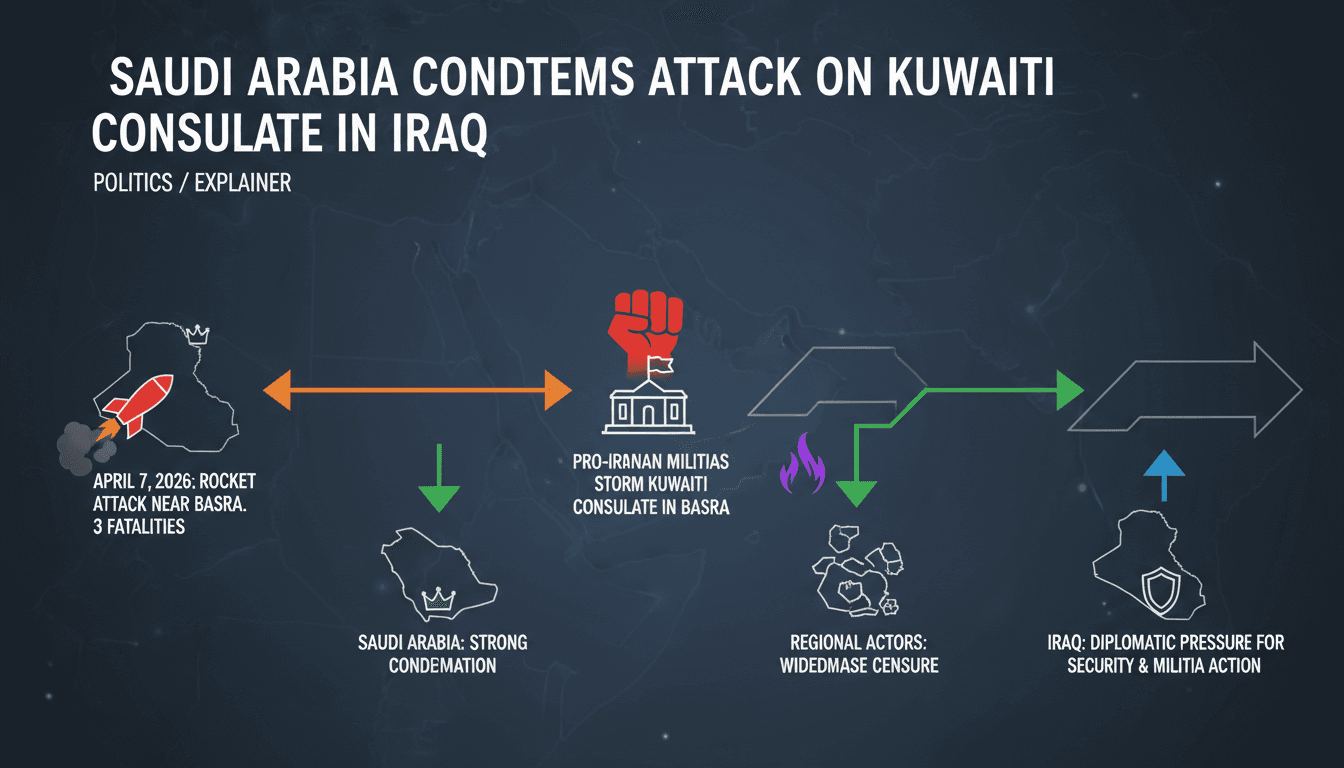
- On April 7, 2026, pro-Iranian militias stormed the Kuwaiti General Consulate in Basra, Iraq, following a rocket attack that reportedly killed three.
- Saudi Arabia's Ministry of Foreign Affairs condemned the actions, emphasizing Iraq's responsibility under international law to protect diplomatic missions.
- Regional reactions included condemnations from Kuwait, UAE, Qatar, Bahrain, and the GCC Secretary-General, highlighting a unified stance against the violence.
The context you actually need
- Escalating regional tensions: The storming of the consulate occurred amid rising conflicts, including Iranian missile attacks on Gulf states and a fragile U.S.-Iran ceasefire.
- Diplomatic norms at risk: The incident represents a significant breach of the 1963 Vienna Convention on Consular Relations, which mandates host nations to protect diplomatic missions.
- Potential for broader conflict: The attack could exacerbate existing tensions between Iran and Gulf states, potentially leading to further instability in the region.
What's really happening
The storming of the Kuwaiti General Consulate in Basra is a stark reminder of the volatile dynamics in the Middle East, particularly the influence of pro-Iranian militias. These groups, including Hezbollah loyalists and the Popular Mobilization Forces, have increasingly asserted their presence in Iraq, often acting independently of the Iraqi government. This incident was triggered by a preceding rocket attack near Basra, which reportedly resulted in three fatalities. While conflicting reports exist regarding the nature of these casualties, the attack served as a catalyst for the subsequent violence against the consulate.
Saudi Arabia's condemnation reflects its ongoing efforts to counter Iranian influence in the region. The Kingdom's Ministry of Foreign Affairs emphasized Iraq's obligations under international law to safeguard diplomatic missions, a sentiment echoed by other Gulf Cooperation Council (GCC) states. This collective response indicates a unified front against actions perceived as destabilizing, reinforcing the importance of diplomatic norms in maintaining regional order.
The Iraqi government's response has been to denounce the storming and confirm that security forces contained the situation. However, the incident raises questions about Iraq's ability to manage militia groups operating within its borders. Kuwait's demand for accountability and enhanced protection for its diplomatic staff signals potential strains in bilateral relations, which could have broader implications for regional diplomacy.
As tensions escalate, the potential for retaliatory actions or further violence increases. The incident not only highlights the immediate risks to diplomatic missions but also reflects the underlying power struggles in the region, particularly between Iran and its adversaries. The GCC's unified condemnation of the attack may serve to strengthen regional alliances, but it also risks escalating confrontations if not managed carefully.
Who feels it first (and how)
- Kuwaiti diplomats: Directly affected by the breach of their consulate and potential threats to their safety.
- Saudi Arabia: Engaged in a regional power struggle with Iran, feeling the need to respond to protect its interests.
- Expatriates in the Gulf: Increased tensions may lead to heightened travel advisories and concerns about safety.
- Iraqi security forces: Tasked with maintaining order and managing militia groups, facing scrutiny over their effectiveness.
What to watch next
- Travel advisories: Monitor updates from Gulf states regarding travel safety in Iraq, which could impact expatriate movements and business operations.
- Diplomatic engagements: Watch for any shifts in diplomatic relations among GCC states and Iraq, particularly regarding security cooperation.
- Militia activities: Keep an eye on the actions of pro-Iranian militias in Iraq, as further provocations could lead to escalated military responses.
The storming of the Kuwaiti consulate has been internationally condemned, and Iraq has confirmed security containment.
Strained diplomatic relations between Kuwait and Iraq may lead to increased security measures for diplomatic missions.
The long-term implications for regional stability and the potential for further militia actions remain uncertain.
Frequently Asked Questions
- Why it matters?
- This incident underscores the fragility of diplomatic relations in the Gulf, which can directly impact regional stability and economic conditions.
- What happened (in 30 seconds)?
- On April 7, 2026, pro-Iranian militias stormed the Kuwaiti General Consulate in Basra, Iraq, following a rocket attack that reportedly killed three. Saudi Arabia's Ministry of Foreign Affairs condemned the actions, emphasizing Iraq's responsibility under international law to protect diplomatic missions. Regional reactions included condemnations from Kuwait, UAE, Qatar, Bahrain, and the GCC Secretary-General, highlighting a unified stance against the violence.
- What's really happening?
- The storming of the Kuwaiti General Consulate in Basra is a stark reminder of the volatile dynamics in the Middle East, particularly the influence of pro-Iranian militias. These groups, including Hezbollah loyalists and the Popular Mobilization Forces, have increasingly asserted their presence in Iraq, often acting independently of the Iraqi government. This incident was triggered by a preceding rocket attack near Basra, which reportedly resulted in three fatalities. While conflicting reports ex
- Who feels it first (and how)?
- Kuwaiti diplomats: Directly affected by the breach of their consulate and potential threats to their safety. Saudi Arabia: Engaged in a regional power struggle with Iran, feeling the need to respond to protect its interests. Expatriates in the Gulf: Increased tensions may lead to heightened travel advisories and concerns about safety. Iraqi security forces: Tasked with maintaining order and managing militia groups, facing scrutiny over their effectiveness.
- What to watch next?
- Travel advisories: Monitor updates from Gulf states regarding travel safety in Iraq, which could impact expatriate movements and business operations. Diplomatic engagements: Watch for any shifts in diplomatic relations among GCC states and Iraq, particularly regarding security cooperation. Militia activities: Keep an eye on the actions of pro-Iranian militias in Iraq, as further provocations could lead to escalated military responses.
Arabic-language coverage of international news and geopolitics.
"RT Arabic is a Russian state-funded outlet often criticized for promoting Kremlin-aligned narratives."
— A47 Editor
الكويت تدين بشدة اقتحام قنصليتها في البصرة وتدعو العراق لاتخاذ إجراءات فورية وحاسمة
Kuwait has strongly condemned the storming and vandalism of its consulate in Basra, which included the lowering of its flag and blatant assaults on the consulate's sanctity. This incident highlights escalating tensions and security concerns in the re...
Jordanian news and regional updates.
"Roya News is a Jordanian outlet focused on breaking news and local affairs."
— A47 Editor
الكويت تدين بأشد العبارات اقتحام قنصليتها في البصرة وتحمل الحكومة العراقية المسؤولية
The State of Kuwait has strongly condemned the storming of its consulate in Basra, as stated in a press release from its Ministry of Foreign Affairs on Tuesday. The statement emphasized that the Iraqi government bears responsibility for this incident...