
Iranians form human chains around critical infrastructure amid U.S. strike threats
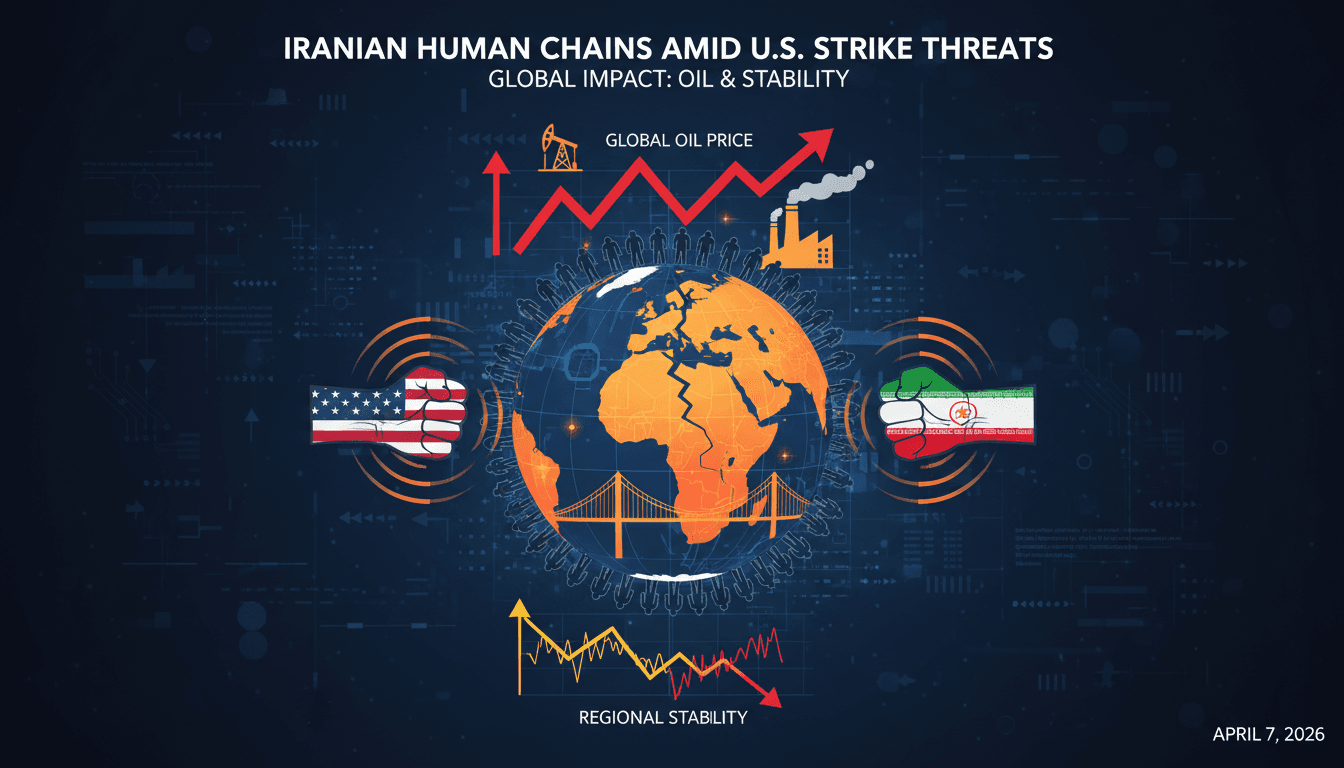
Here's what it means for you.
The escalating tensions in Iran could disrupt global oil markets and impact energy prices worldwide.
Why it matters
The conflict has the potential to destabilize oil supply chains, affecting economies reliant on energy imports.
What happened (in 30 seconds)
- On April 7, 2026, Iranian civilians formed human chains around critical infrastructure in response to U.S. threats of airstrikes.
- President Trump's ultimatum demanded Iran reopen the Strait of Hormuz or face destruction, escalating tensions further.
- Negotiations have stalled, with Iran rejecting ceasefire proposals and continuing its symbolic demonstrations.
The context you actually need
- The U.S.-Iran conflict escalated dramatically in late February 2026, involving mutual airstrikes on military and civilian targets.
- Iran's blockade of the Strait of Hormuz has led to significant U.S. and Israeli military responses, targeting oil terminals and nuclear sites.
- Human chains formed by civilians, including youth and artists, signify a collective stand against perceived foreign aggression, reflecting deep national sentiment.
What's really happening
The recent demonstrations in Iran, where civilians formed human chains around power plants and bridges, are a direct response to escalating threats from the U.S. President Donald Trump issued an ultimatum demanding Iran reopen the Strait of Hormuz or face destruction of critical infrastructure. This ultimatum follows a series of military confrontations that began in late February 2026, where both nations engaged in airstrikes targeting military and civilian infrastructure. The situation has reached a boiling point, with Iran's Ministry of Sports and Youth calling for these symbolic demonstrations to protect vital assets.
The Iranian government has mobilized its citizens, appealing to youth, students, athletes, and artists to participate in these demonstrations. This grassroots movement highlights a collective resolve among Iranians to defend their homeland against foreign intervention. Videos circulating on social media show formations at key sites like the Ahvaz White Bridge and Kazerun Power Plant, emphasizing the urgency and seriousness of the situation.
As the U.S. deadline looms, the Iranian leadership has rejected a 45-day ceasefire proposal, instead presenting a 10-point counterproposal demanding guarantees against further military action. This rejection signals a hardening of Iran's stance, as the government seeks to portray strength and unity in the face of external threats. The rhetoric from both sides has intensified, with Trump warning that "a whole civilization will die tonight" if a resolution is not reached.
The implications of this conflict extend beyond Iran. The blockade of the Strait of Hormuz, a critical chokepoint for global oil supply, could lead to significant disruptions in energy markets. With oil prices already fluctuating around $110 per barrel, any escalation in hostilities could further destabilize the regional economy and impact global energy supplies. Additionally, the fallout from this conflict could have humanitarian implications, as warned by international observers, including the Pope and WHO, who have highlighted potential radiological risks.
Who feels it first (and how)
- Energy sector professionals: Fluctuating oil prices could impact jobs and investments.
- Middle Eastern residents: Increased military activity and potential missile threats could affect safety and daily life.
- Global consumers: Rising energy prices may lead to higher costs for goods and services.
What to watch next
- Negotiation outcomes: The effectiveness of mediation efforts through Pakistan could determine the trajectory of U.S.-Iran relations.
- Oil price fluctuations: Monitor how market reactions to the conflict could impact global energy prices and economic stability.
- Humanitarian responses: Watch for international reactions to the humanitarian risks posed by the conflict, which could influence diplomatic efforts.
Iranian civilians are actively protesting against U.S. threats.
Oil prices will remain volatile as tensions escalate.
The outcome of indirect negotiations and their impact on the conflict remains uncertain.
Frequently Asked Questions
- Why it matters?
- The conflict has the potential to destabilize oil supply chains, affecting economies reliant on energy imports.
- What happened (in 30 seconds)?
- On April 7, 2026, Iranian civilians formed human chains around critical infrastructure in response to U.S. threats of airstrikes. President Trump's ultimatum demanded Iran reopen the Strait of Hormuz or face destruction, escalating tensions further. Negotiations have stalled, with Iran rejecting ceasefire proposals and continuing its symbolic demonstrations.
- What's really happening?
- The recent demonstrations in Iran, where civilians formed human chains around power plants and bridges, are a direct response to escalating threats from the U.S. President Donald Trump issued an ultimatum demanding Iran reopen the Strait of Hormuz or face destruction of critical infrastructure. This ultimatum follows a series of military confrontations that began in late February 2026, where both nations engaged in airstrikes targeting military and civilian infrastructure. The situation has reac
- Who feels it first (and how)?
- Energy sector professionals: Fluctuating oil prices could impact jobs and investments. Middle Eastern residents: Increased military activity and potential missile threats could affect safety and daily life. Global consumers: Rising energy prices may lead to higher costs for goods and services.
- What to watch next?
- Negotiation outcomes: The effectiveness of mediation efforts through Pakistan could determine the trajectory of U.S.-Iran relations. Oil price fluctuations: Monitor how market reactions to the conflict could impact global energy prices and economic stability. Humanitarian responses: Watch for international reactions to the humanitarian risks posed by the conflict, which could influence diplomatic efforts.
Comprehensive coverage of Middle Eastern and global issues.
"Al Jazeera is a prominent voice from the Global South, especially the Middle East, with an emphasis on underreported stories."
— A47 Editor
Iranians form human chains across bridges, at power plants
Iranians formed human chains across bridges and in front of power plants nationwide, a demonstration reflecting their solidarity and resilience amid ongoing conflicts. This act of unity comes as tensions escalate due to threats of military action aga...
International coverage of politics, culture, and current affairs.
"BBC News is widely regarded as a reputable international news organization, known for its impartial tone and public service mandate."
— A47 Editor
Iranians form human chains at bridges and power plants
Iranians formed human chains across bridges and in front of power plants nationwide in response to escalating tensions following threats from U.S. President Donald Trump to target critical infrastructure if Iran does not comply with demands regarding...
Global business headlines with AI angles.
"General business outlet that frequently covers AI."
— A47 Editor
Iranians Forming Human Chains In Bridges And Power Plants Ahead Of Trump's Deadline To Regime
Iranians are forming human chains on bridges and at power plants nationwide in a show of defiance against President Donald Trump's ultimatum, which threatens military action against Iranian infrastructure if a deal is not reached by the end of the da...