
Bittensor TAO Token Drops 25% Amid Governance Crisis Following Covenant AI Exit
Here's what it means for you.
If you're invested in cryptocurrency, the recent turmoil surrounding Bittensor's TAO token could impact your portfolio and trading strategies.
Why it matters
This incident highlights the fragility of decentralized governance structures in the cryptocurrency space and their direct impact on market confidence.
What happened (in 30 seconds)
- Covenant AI exited Bittensor on April 8, 2026, accusing co-founder Jacob Steeves of centralized control and punitive practices.
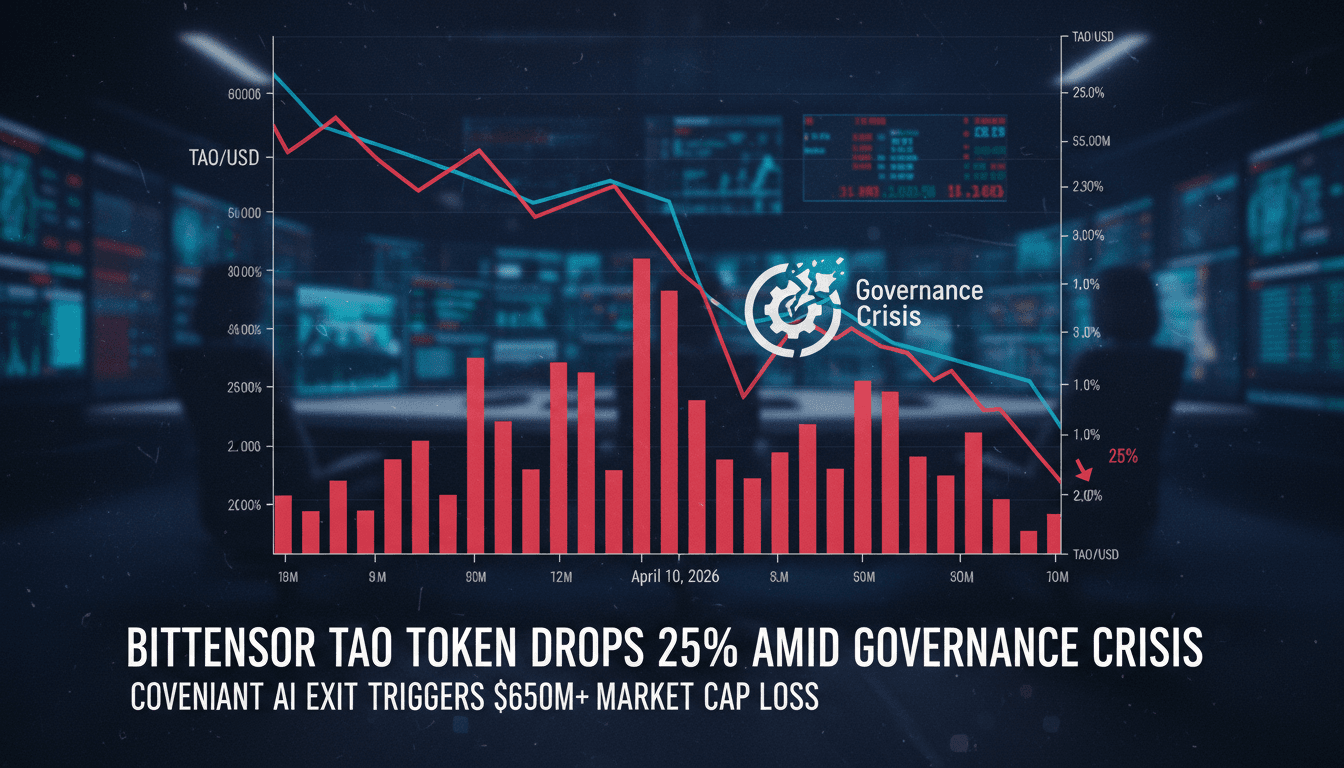
- TAO token price dropped 25% in just six hours, erasing over $650 million in market capitalization.
- Community governance proposals are emerging in response to allegations of mismanagement and centralized decision-making.
The context you actually need
- Bittensor's mission is to create a decentralized AI protocol that incentivizes machine intelligence through competing subnets, aiming to counter centralized AI dominance.
- Covenant AI, a significant subnet, had previously contributed top models but claimed that Bittensor's governance contradicted its decentralization ethos.
- Jacob Steeves retains control over the protocol's governance structure, which has led to accusations of unilateral decision-making and punitive measures against dissenting subnets.
What's really happening
On April 8, 2026, Covenant AI's founder, Sam Dare, publicly announced the subnet's exit from Bittensor, citing serious governance issues. The accusations against Jacob Steeves included claims of centralized decision-making and the use of token sales as punitive measures to enforce compliance among subnets. This announcement sent shockwaves through the market, leading to a rapid decline in TAO's price.
In just six hours, the TAO token plummeted by 25%, translating to a loss of over $650 million in market capitalization. The trading volume surged to $1.72 billion, indicating heightened market activity and investor anxiety. Long liquidations reached $9.1 million, further exacerbating the price drop as traders scrambled to exit their positions.
Steeves responded to the allegations by denying the ability to unilaterally suspend emissions and clarified that token sales represented less than 1% of his holdings. Despite these denials, the damage was done, and the market reacted swiftly. Over the following week, TAO's performance continued to decline, falling 12.8% despite a prior monthly gain of 37%.
The incident has sparked a broader conversation within the Bittensor community about governance and the potential need for structural changes. Proposals for lock-based subnet ownership are emerging, aimed at mitigating the influence of founders and ensuring a more decentralized governance model. This reflects a growing concern about the balance of power within decentralized networks and the potential risks of centralization.
The fallout from this governance dispute is not just a matter of internal Bittensor dynamics; it raises questions about the sustainability of decentralized protocols in an increasingly competitive landscape. As more players enter the decentralized AI space, the need for robust governance frameworks becomes critical to maintaining investor confidence and market stability.
Who feels it first (and how)
- Investors in TAO: Immediate financial impact due to the sharp decline in token value.
- Bittensor community members: Increased scrutiny and debate over governance practices and future direction.
- Competing decentralized AI networks: Opportunity to attract disillusioned investors and developers from Bittensor.
What to watch next
- Community governance proposals: Monitor the development and acceptance of new governance structures within Bittensor, as they could reshape the network's future.
- Market response to Steeves' denials: Watch how the market reacts to ongoing statements from Steeves and whether confidence in TAO can be restored.
- Emergence of competing protocols: Keep an eye on other decentralized AI networks that may capitalize on Bittensor's governance issues to attract talent and investment.
TAO's price dropped 25% following Covenant AI's exit.
Continued community discourse on governance reforms within Bittensor.
The long-term impact on Bittensor's market position and investor confidence.
Frequently Asked Questions
- Why it matters?
- This incident highlights the fragility of decentralized governance structures in the cryptocurrency space and their direct impact on market confidence.
- What happened (in 30 seconds)?
- Covenant AI exited Bittensor on April 8, 2026, accusing co-founder Jacob Steeves of centralized control and punitive practices. TAO token price dropped 25% in just six hours, erasing over $650 million in market capitalization. Community governance proposals are emerging in response to allegations of mismanagement and centralized decision-making.
- What's really happening?
- On April 8, 2026, Covenant AI's founder, Sam Dare, publicly announced the subnet's exit from Bittensor, citing serious governance issues. The accusations against Jacob Steeves included claims of centralized decision-making and the use of token sales as punitive measures to enforce compliance among subnets. This announcement sent shockwaves through the market, leading to a rapid decline in TAO's price. In just six hours, the TAO token plummeted by 25%, translating to a loss of over $650 million
- Who feels it first (and how)?
- Investors in TAO: Immediate financial impact due to the sharp decline in token value. Bittensor community members: Increased scrutiny and debate over governance practices and future direction. Competing decentralized AI networks: Opportunity to attract disillusioned investors and developers from Bittensor.
- What to watch next?
- Community governance proposals: Monitor the development and acceptance of new governance structures within Bittensor, as they could reshape the network's future. Market response to Steeves' denials: Watch how the market reacts to ongoing statements from Steeves and whether confidence in TAO can be restored. Emergence of competing protocols: Keep an eye on other decentralized AI networks that may capitalize on Bittensor's governance issues to attract talent and investment.
Covers Bitcoin plus altcoin news, market updates, and educational resources.
"Bitcoin.com provides news, market data, and guides focused on Bitcoin and the wider crypto industry."
— A47 Editor
TAO Plummets 25% as Bittensor Co-Founder Accused of Using Token Sales to Coerce Compliance
The value of Bittensor's native token, TAO, has plummeted by 25% following accusations against co-founder Jacob Steeves of using token sales to coerce compliance from partners. This decline comes amid growing concerns regarding the governance and cen...
Real-time updates, analysis, and reports on the blockchain and cryptocurrency sectors.
"Crypto News delivers real-time updates, analysis, and reports on the blockchain and cryptocurrency sectors."
— A47 Editor
Bittensor price outlook as top subnet operator Convent AI exits
Bittensor's native token, TAO, experienced a significant decline of over 25% following the exit of Covenant AI, a major subnet operator, due to concerns regarding centralization within the network. This exit has raised alarms about the stability and ...