
US-Israeli Airstrikes Target Iranian Infrastructure Amid Escalating Conflict
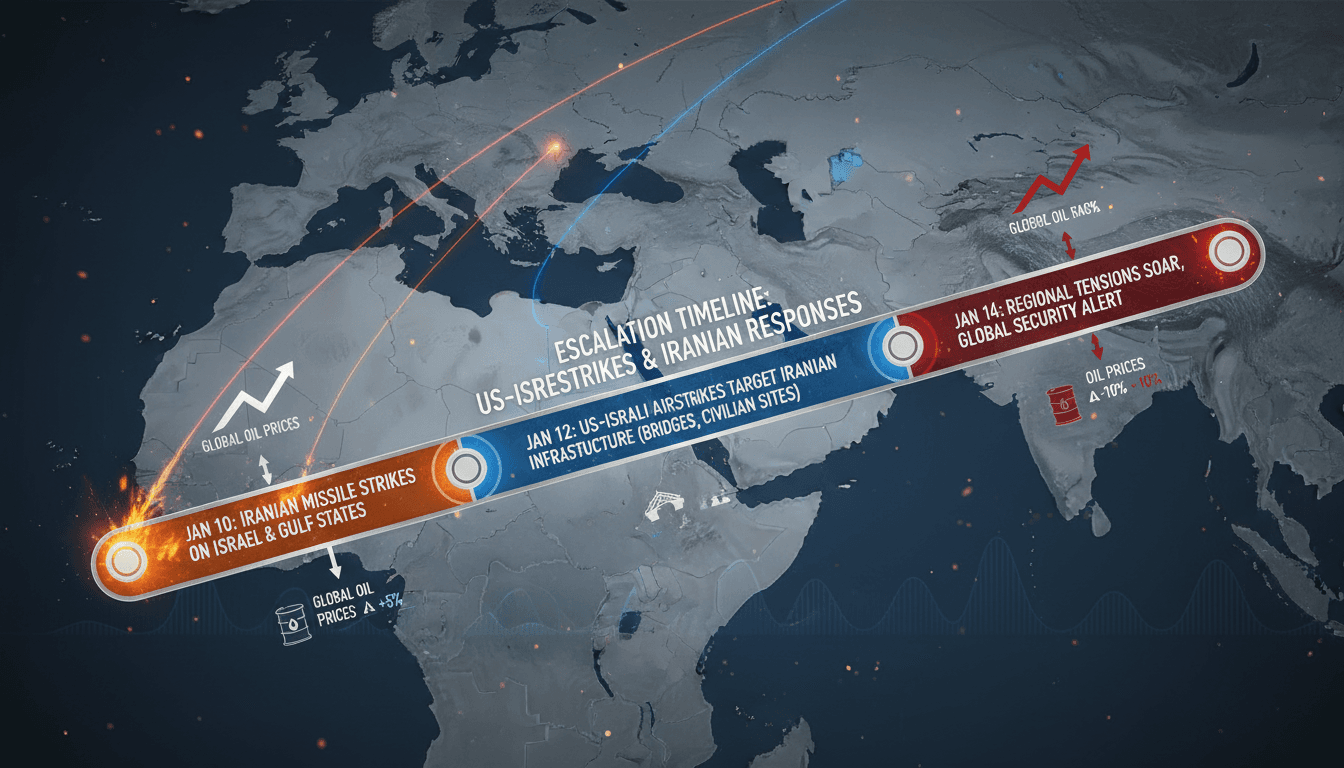
Here's what it means for you.
If you rely on stable oil prices or international travel, the ongoing conflict could significantly affect your costs and availability.
Why it matters
The airstrikes represent a significant escalation in a conflict that threatens global oil supply chains and regional stability.
What happened (in 30 seconds)
- US-Israeli forces launched airstrikes on April 2–3, 2026, targeting key infrastructure in Iran, including the B1 bridge in Karaj.
- Civilian casualties were reported, with 8 killed and 95 wounded during the attacks, which damaged critical transport links.
- Iran vowed retaliation, threatening to target Gulf infrastructure and escalating tensions in the region.
The context you actually need
- Conflict escalation began in late February 2026, following Iranian missile strikes on Israel and US bases in the Gulf.
- Iran's closure of the Strait of Hormuz has already disrupted global oil shipments, leading to rising prices and economic uncertainty.
- US President Trump’s ultimatums have intensified the situation, with threats of further strikes on Iranian infrastructure.
What's really happening
The airstrikes on Iranian infrastructure are part of a broader military strategy by the US and Israel to weaken Iran's capabilities amid escalating tensions. The conflict, ignited by Iranian missile attacks on Israeli and Gulf targets, has led to a rapid deterioration in relations, with both sides engaging in aggressive posturing.
The B1 bridge strike in Karaj, which serves as a vital link between Tehran and Qom, was executed as a double-tap attack, a tactic designed to maximize damage and casualties. This approach not only aims to disrupt transportation but also sends a clear message about the consequences of Iran's military actions. The civilian casualties—8 dead and 95 injured—underscore the risks associated with targeting infrastructure that, while deemed military-related, also serves civilian purposes.
Iran's response has been swift and severe. The Iranian Foreign Minister condemned the strikes as a "moral collapse," promising "crushing" retaliation against US and allied interests in the region. The Islamic Revolutionary Guard Corps (IRGC) has already targeted Gulf infrastructure, indicating a broader strategy to retaliate against perceived aggressors. This cycle of violence is likely to escalate, as both sides are now entrenched in a tit-for-tat dynamic.
The implications of these strikes extend beyond immediate military objectives. The damage to infrastructure, including the Pasteur Institute in Tehran and oil export facilities on Kharg Island, could have long-term effects on Iran's economy and its ability to project power in the region. Furthermore, the closure of the Strait of Hormuz, a critical chokepoint for global oil shipments, has already led to a spike in oil prices, reaching $110 per barrel. This surge is likely to affect global markets, increasing costs for consumers and businesses alike.
As the conflict continues, the potential for further military engagement remains high. US President Trump's threats to target Iranian power plants indicate a willingness to escalate the conflict further, which could provoke even more severe Iranian responses. This environment of uncertainty is likely to keep oil prices volatile and could lead to broader economic repercussions, particularly for nations reliant on stable energy supplies.
Who feels it first (and how)
- Consumers: Higher fuel prices and increased costs for goods due to rising oil prices.
- Travelers: Flight cancellations and increased airfares due to jet fuel shortages.
- Businesses: Companies with ties to the Gulf may face disruptions and increased operational costs.
- Investors: Volatility in oil markets could impact investment strategies and portfolio values.
What to watch next
- Oil price fluctuations: Continued instability in the region could lead to further increases in oil prices, impacting global markets.
- Iran's retaliatory actions: Watch for Iranian strikes on Gulf infrastructure, which could escalate tensions further.
- International diplomatic responses: The reaction of Gulf states and global powers to the conflict will be crucial in shaping future developments.
Civilian casualties and infrastructure damage from the airstrikes.
Continued escalation of military actions between the US-Israel alliance and Iran.
The long-term impact on global oil markets and international relations.
Frequently Asked Questions
- Why it matters?
- The airstrikes represent a significant escalation in a conflict that threatens global oil supply chains and regional stability.
- What happened (in 30 seconds)?
- US-Israeli forces launched airstrikes on April 2–3, 2026, targeting key infrastructure in Iran, including the B1 bridge in Karaj. Civilian casualties were reported, with 8 killed and 95 wounded during the attacks, which damaged critical transport links. Iran vowed retaliation, threatening to target Gulf infrastructure and escalating tensions in the region.
- What's really happening?
- The airstrikes on Iranian infrastructure are part of a broader military strategy by the US and Israel to weaken Iran's capabilities amid escalating tensions. The conflict, ignited by Iranian missile attacks on Israeli and Gulf targets, has led to a rapid deterioration in relations, with both sides engaging in aggressive posturing. The B1 bridge strike in Karaj, which serves as a vital link between Tehran and Qom, was executed as a double-tap attack, a tactic designed to maximize damage and casu
- Who feels it first (and how)?
- Consumers: Higher fuel prices and increased costs for goods due to rising oil prices. Travelers: Flight cancellations and increased airfares due to jet fuel shortages. Businesses: Companies with ties to the Gulf may face disruptions and increased operational costs. Investors: Volatility in oil markets could impact investment strategies and portfolio values.
- What to watch next?
- Oil price fluctuations: Continued instability in the region could lead to further increases in oil prices, impacting global markets. Iran's retaliatory actions: Watch for Iranian strikes on Gulf infrastructure, which could escalate tensions further. International diplomatic responses: The reaction of Gulf states and global powers to the conflict will be crucial in shaping future developments.
Arabic-language digital news outlet covering UAE, regional, and international developments with broad general-news coverage.
"Al Ain News coverage typically blends UAE-focused reporting with wider Arab regional and international news."
— A47 Editor
من قم إلى خرج.. قصف يستهدف جسور إيران وبنيتها التحتية
The United States and Israel conducted extensive strikes across various regions in Iran on Tuesday, just hours before the deadline set by President Donald Trump. These attacks targeted bridges and critical infrastructure, indicating a significant esc...
Arabic-language UAE newspaper coverage focused on domestic affairs, public institutions, business, society, and regional developments.
"Al Khaleej coverage generally reflects a mainstream UAE editorial lens with strong attention to public affairs, institutions, and regional developments."
— A47 Editor
هجمات أمريكية إسرائيلية مكثفة تستهدف الجسور الإيرانية
The U.S. and Israeli air forces have intensified their attacks on bridges in several Iranian cities, coinciding with the imminent expiration of a deadline set by President Donald Trump. This escalation highlights the ongoing tensions in the region an...