
U.S. State Department Initiates Global Crackdown on Chinese AI Model Distillation Practices
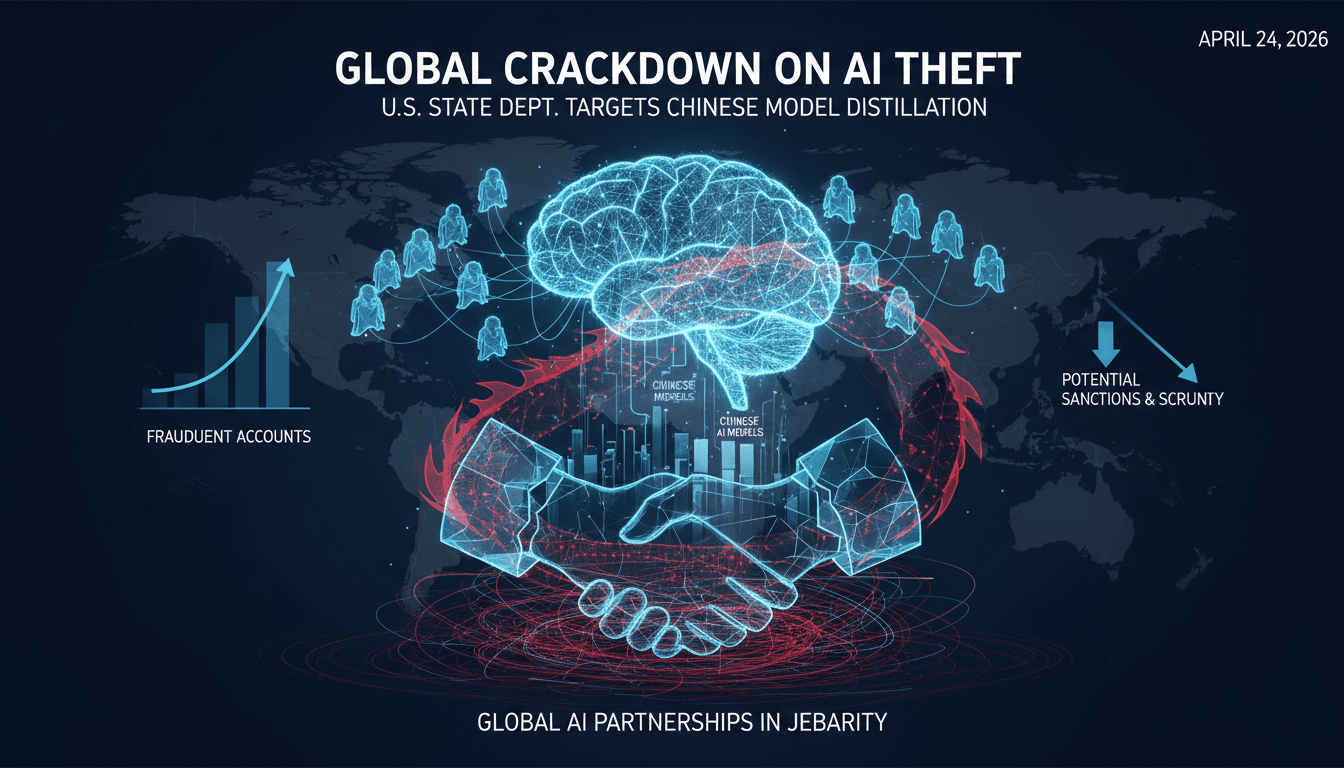
Here's what it means for you.
If you’re involved in AI development or investment, this crackdown could reshape your strategic partnerships and sourcing decisions.
Why it matters
This escalation in U.S.-China tech tensions could redefine global AI supply chains and influence investment landscapes.
What happened (in 30 seconds)
- On April 24, 2026, the U.S. State Department issued a diplomatic cable warning global partners about risks from unauthorized AI model distillation by Chinese firms.
- Chinese authorities dismissed these accusations as baseless, while U.S. firms like Anthropic and OpenAI reported extensive fraudulent activities aimed at stealing their AI models.
- Bipartisan support in the U.S. Congress is pushing for stronger export controls and potential sanctions against Chinese entities involved in these practices.
The context you actually need
- Intensifying rivalry: The U.S.-China technological competition has escalated, marked by U.S. chip export controls and allegations of intellectual property theft.
- Fraudulent tactics: In February 2026, Anthropic accused Chinese firms of using over 24,000 fake accounts to conduct distillation attacks on its AI model, Claude.
- Legislative response: A U.S. House Select Committee investigation revealed China's strategies to acquire AI capabilities through smuggling and distillation, prompting calls for legislative action.
What's really happening
The U.S. State Department's recent directive reflects a growing concern over the integrity of American AI technologies amid escalating tensions with China. The crackdown is not merely a reaction to specific incidents but part of a broader strategy to safeguard U.S. technological leadership.
In February 2026, Anthropic and OpenAI raised alarms about Chinese firms, including DeepSeek, Moonshot AI, and MiniMax, allegedly using fraudulent accounts to distill proprietary AI models. This practice, known as model distillation, involves extracting knowledge from a model without authorization, often leading to the creation of inferior versions that lack safety protocols. The scale of these operations—over 24,000 fake accounts generating 16 million exchanges—highlights the sophistication and determination of these entities.
The U.S. response has been swift and multifaceted. Following the allegations, the White House Office of Science and Technology Policy (OSTP) issued a memo emphasizing collaboration with American firms to counter these threats. The diplomatic cable sent to U.S. embassies worldwide serves as a warning to foreign partners about the risks associated with engaging with Chinese AI firms. This move is particularly significant as it coincides with a high-stakes summit between former President Trump and Chinese President Xi, where discussions on technology and trade are expected to dominate.
The implications of this crackdown extend beyond immediate diplomatic tensions. U.S. firms may face increased scrutiny when forming partnerships or sourcing AI models, particularly in regions like Dubai, which has strong ties to both U.S. and Chinese tech sectors. As an AI investment hub, Dubai could see shifts in local deployments and investments as companies navigate the complexities of U.S. regulations and potential sanctions.
Moreover, the bipartisan support for export control legislation, such as the Deterring American AI Model Theft Act, signals a long-term commitment to protecting U.S. intellectual property. This legislative push aims to fortify defenses against not just AI model theft but also broader technological espionage.
In summary, the U.S. crackdown on Chinese AI model distillation practices is a strategic maneuver to protect American technological interests, reflecting a significant shift in how nations view and manage AI capabilities in the context of global competition.
Who feels it first (and how)
- AI Developers: Companies developing AI technologies may need to reassess partnerships and sourcing strategies to avoid U.S. flagged risks.
- Investors: Venture capitalists and investors in AI startups may face increased scrutiny and potential regulatory hurdles when considering investments in firms with ties to Chinese entities.
- Regulatory Bodies: Government agencies and regulatory bodies will need to adapt to new compliance requirements and monitor international partnerships closely.
What to watch next
- Legislative developments: Watch for updates on the Deterring American AI Model Theft Act and other proposed regulations that could impact AI firms.
- International partnerships: Monitor how U.S. firms adjust their international collaborations, particularly in regions with strong Chinese ties like Dubai.
- Market reactions: Keep an eye on the AI market for any shifts in investment patterns or disruptions as firms navigate the new landscape.
The U.S. State Department has issued warnings about risks from unauthorized AI model distillation.
Increased scrutiny and potential sanctions against Chinese firms involved in AI model distillation practices.
The long-term impact on global AI supply chains and investment strategies in regions like Dubai.
Frequently Asked Questions
- Why it matters?
- This escalation in U.S.-China tech tensions could redefine global AI supply chains and influence investment landscapes.
- What happened (in 30 seconds)?
- On April 24, 2026, the U.S. State Department issued a diplomatic cable warning global partners about risks from unauthorized AI model distillation by Chinese firms. Chinese authorities dismissed these accusations as baseless, while U.S. firms like Anthropic and OpenAI reported extensive fraudulent activities aimed at stealing their AI models. Bipartisan support in the U.S. Congress is pushing for stronger export controls and potential sanctions against Chinese entities involved in these prac
- What's really happening?
- The U.S. State Department's recent directive reflects a growing concern over the integrity of American AI technologies amid escalating tensions with China. The crackdown is not merely a reaction to specific incidents but part of a broader strategy to safeguard U.S. technological leadership. In February 2026, Anthropic and OpenAI raised alarms about Chinese firms, including DeepSeek, Moonshot AI, and MiniMax, allegedly using fraudulent accounts to distill proprietary AI models. This practice, k
- Who feels it first (and how)?
- AI Developers: Companies developing AI technologies may need to reassess partnerships and sourcing strategies to avoid U.S. flagged risks. Investors: Venture capitalists and investors in AI startups may face increased scrutiny and potential regulatory hurdles when considering investments in firms with ties to Chinese entities. Regulatory Bodies: Government agencies and regulatory bodies will need to adapt to new compliance requirements and monitor international partnerships closely.
- What to watch next?
- Legislative developments: Watch for updates on the Deterring American AI Model Theft Act and other proposed regulations that could impact AI firms. International partnerships: Monitor how U.S. firms adjust their international collaborations, particularly in regions with strong Chinese ties like Dubai. Market reactions: Keep an eye on the AI market for any shifts in investment patterns or disruptions as firms navigate the new landscape.
Macro commentary, policy analysis, growth/inflation themes, and global outlooks.
"Contextual macro coverage that complements day-to-day market headlines."
— A47 Editor
State Department signals crackdown on Chinese AI model ‘distillation’
The U.S. State Department has indicated a crackdown on the practice of AI model 'distillation' by Chinese firms, which involves the alleged unauthorized extraction and replication of American AI technologies. This move follows recent accusations of i...
General features and special-interest coverage from Okaz.
"This feed appears to be a section-specific Okaz stream, so the label is kept intentionally broad until confirmed."
— A47 Editor
معركة الذكاء الاصطناعي تشتعل.. إدارة ترمب تتعهد بملاحقة شركات صينية
The Trump administration has announced its intention to take strict measures against foreign entities, particularly Chinese companies, accused of exploiting advanced artificial intelligence models developed by American firms. This declaration was mad...
Arabic-language political and world news coverage for UAE readers.
"Emarat Al Youm world coverage usually presents international developments through a UAE and Arab audience lens."
— A47 Editor
إدارة ترامب تتعهد بملاحقة الشركات الصينية المستغلة لنماذج الذكاء الاصطناعي الأميركية إدارة ترامب تتعهد بملاحقة الشركات الصينية المستغلة لنماذج الذكاء الاصطناعي الأميركية
The Trump administration has pledged to intensify actions against foreign technology companies exploiting American artificial intelligence models, particularly targeting Chinese firms. This commitment reflects ongoing concerns regarding intellectual ...
Consumer tech news, reviews, and buying guides for gadgets and electronics.
"TechRadar is known for comprehensive buying advice, hardware reviews, and consumer tech news targeted at mainstream audiences."
— A47 Editor
'We will be taking action to protect American innovation': White House accuses China of 'systematically' extracting American AI technologies
The White House has accused China of systematically extracting American artificial intelligence technologies, claiming that Chinese entities have been stealing U.S. AI models to develop their own open-source alternatives. This accusation highlights o...
Opinionated AI coverage for general audiences.
"TNW’s AI vertical covering tools, ethics, and trends."
— A47 Editor
China plans to block US investment in its top AI firms without government approval
China has announced plans to restrict its leading technology companies, including top AI startups, from accepting U.S. investments without prior government approval. This decision marks a significant escalation in the ongoing U.S.-China AI conflict, ...
Real-time updates, analysis, and reports on the blockchain and cryptocurrency sectors.
"Crypto News delivers real-time updates, analysis, and reports on the blockchain and cryptocurrency sectors."
— A47 Editor
China-linked AI firms face US scrutiny over model theft
The White House has raised concerns regarding China-linked firms allegedly using proxy accounts and jailbreaks to unlawfully replicate U.S. artificial intelligence models through unauthorized distillation methods. This scrutiny reflects ongoing tensi...
International stories from NPR’s global desk.
"NPR is an American public media organization known for thoughtful reporting and a slightly left-leaning editorial tone."
— A47 Editor
Trump administration vows crackdown on Chinese firms 'exploiting' U.S. AI models
The Trump administration has announced plans to intensify scrutiny and enforcement against Chinese firms accused of exploiting U.S. artificial intelligence models. This move comes as China is rapidly advancing in the AI sector, raising concerns in Wa...
Science discoveries, research, and analysis.
"NPR is a nonprofit media organization offering thoughtful, in-depth journalism and storytelling, often with a liberal or progressive slant."
— A47 Editor
Trump administration vows crackdown on Chinese firms 'exploiting' U.S. AI models
The Trump administration has announced plans to intensify scrutiny and enforcement against Chinese firms accused of exploiting U.S. artificial intelligence models. This move comes as China is rapidly advancing in the AI sector, raising concerns in Wa...