
Trump Threatens Journalist Over F-15 Fighter Jet Incident Reporting
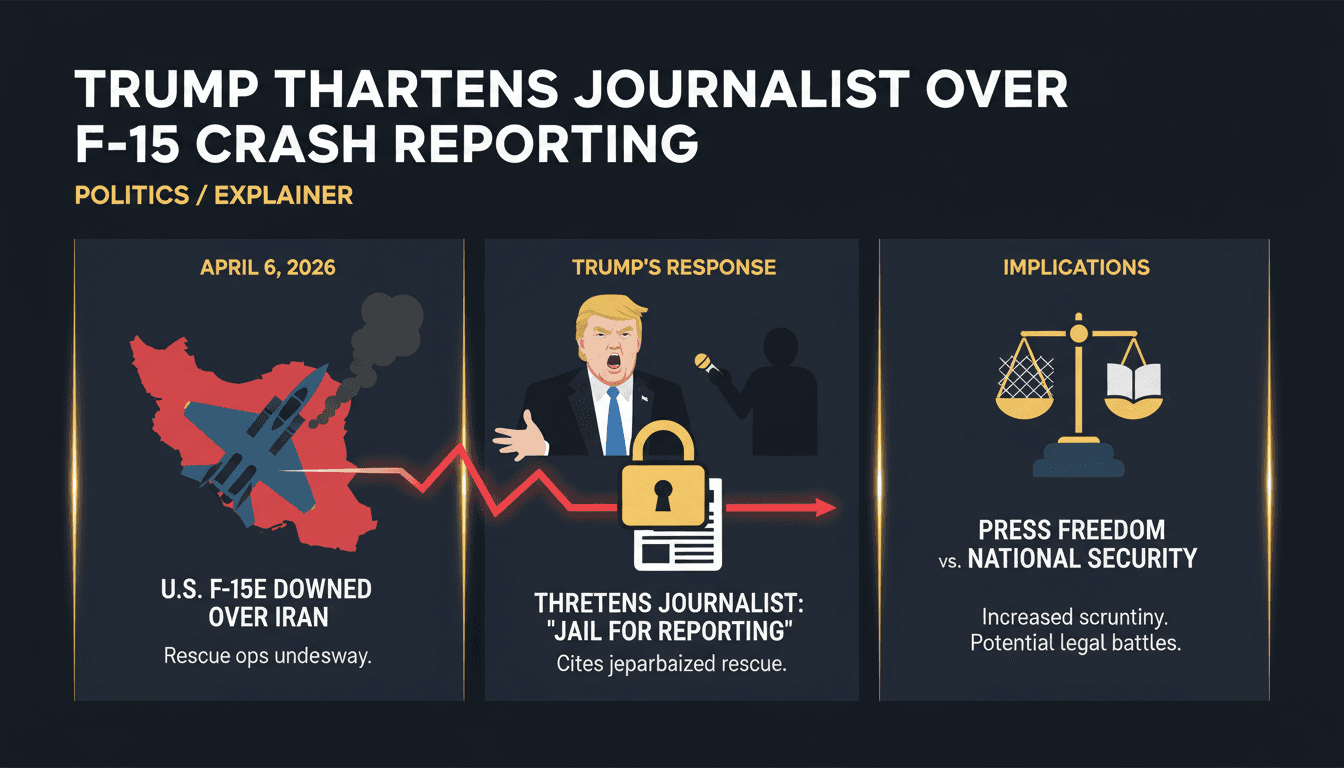
Here's what it means for you.
As tensions rise between the U.S. and Iran, the threat against press freedom could impact how information is reported and consumed globally.
Why it matters
This incident highlights the precarious balance between national security and press freedom, affecting how journalists operate in conflict zones.
What happened (in 30 seconds)
- On April 6, 2026, President Trump threatened to jail a journalist for reporting on a U.S. military operation following the downing of an F-15E fighter jet over Iran.
- The incident occurred amid heightened U.S.-Iran tensions, with one crew member rescued and another still missing.
- Media outlets condemned Trump's remarks as an attack on press freedom, but no prosecutions have been initiated as of April 8, 2026.
The context you actually need
- The F-15E incident occurred during a period of escalating U.S.-Iran confrontations, including nuclear negotiations and proxy conflicts.
- Trump's remarks were made during a White House press conference, emphasizing the administration's stance on national security and media accountability.
- Iranian media has used the incident to portray U.S. vulnerabilities, potentially influencing public perception in the region.
What's really happening
The threat against the journalist stems from a broader context of U.S.-Iran relations, which have been increasingly strained due to ongoing military operations and diplomatic failures. The downing of the F-15E fighter jet is emblematic of these tensions, as it not only represents a military loss but also raises questions about operational security and the safety of U.S. personnel abroad.
Trump's demand for the journalist to reveal their sources reflects a growing trend among political leaders to control narratives and limit the flow of information that could be perceived as damaging to national interests. This is particularly concerning in a landscape where the press plays a critical role in informing the public and holding power accountable.
The implications of such threats are far-reaching. They can create a chilling effect on journalism, particularly in conflict zones where the stakes are high, and the risks to reporters are already significant. Journalists may become more cautious in their reporting, potentially leading to less transparency and fewer checks on government actions. This could ultimately undermine public trust in the media and the government's accountability.
Moreover, the reaction from media outlets and civil rights organizations indicates a robust pushback against such threats. The condemnation of Trump's remarks highlights a collective commitment to defending press freedom, which is essential for a functioning democracy. However, the lack of immediate legal repercussions for Trump's threats raises concerns about the effectiveness of these defenses in the face of aggressive political rhetoric.
As the situation evolves, the interplay between national security and press freedom will likely remain a contentious issue, influencing both domestic and international perceptions of the U.S. government's commitment to democratic values.
Who feels it first (and how)
- Journalists: Increased scrutiny and potential legal repercussions for reporting on sensitive military operations.
- Media organizations: Pressure to self-censor or alter reporting practices to avoid legal challenges.
- U.S. military personnel: Potential impacts on operational security and safety due to leaked information.
- Global audiences: Changes in the availability and reliability of information regarding U.S. military actions and foreign policy.
What to watch next
- Legal actions: Monitor for any formal prosecutions against the journalist or their sources, which could set a precedent for press freedom in the U.S.
- Market reactions: Watch for fluctuations in defense stocks and media companies as investor sentiment responds to the implications of the incident.
- International responses: Observe how foreign governments, particularly in the Middle East, react to U.S. media policies and their portrayal of military actions.
Trump threatened a journalist over reporting on a military incident.
Continued debates over press freedom and national security will emerge, influencing public discourse.
The long-term effects on U.S.-Iran relations and how this incident will shape future military operations and media coverage.
Frequently Asked Questions
- Why it matters?
- This incident highlights the precarious balance between national security and press freedom, affecting how journalists operate in conflict zones.
- What happened (in 30 seconds)?
- On April 6, 2026, President Trump threatened to jail a journalist for reporting on a U.S. military operation following the downing of an F-15E fighter jet over Iran. The incident occurred amid heightened U.S.-Iran tensions, with one crew member rescued and another still missing. Media outlets condemned Trump's remarks as an attack on press freedom, but no prosecutions have been initiated as of April 8, 2026.
- What's really happening?
- The threat against the journalist stems from a broader context of U.S.-Iran relations, which have been increasingly strained due to ongoing military operations and diplomatic failures. The downing of the F-15E fighter jet is emblematic of these tensions, as it not only represents a military loss but also raises questions about operational security and the safety of U.S. personnel abroad. Trump's demand for the journalist to reveal their sources reflects a growing trend among political leaders
- Who feels it first (and how)?
- Journalists: Increased scrutiny and potential legal repercussions for reporting on sensitive military operations. Media organizations: Pressure to self-censor or alter reporting practices to avoid legal challenges. U.S. military personnel: Potential impacts on operational security and safety due to leaked information. Global audiences: Changes in the availability and reliability of information regarding U.S. military actions and foreign policy.
- What to watch next?
- Legal actions: Monitor for any formal prosecutions against the journalist or their sources, which could set a precedent for press freedom in the U.S. Market reactions: Watch for fluctuations in defense stocks and media companies as investor sentiment responds to the implications of the incident. International responses: Observe how foreign governments, particularly in the Middle East, react to U.S. media policies and their portrayal of military actions.
Arabic-language coverage of political affairs and current events.
"Okaz political coverage typically follows mainstream Saudi framing on national and regional affairs."
— A47 Editor
ترمب يعد بملاحقة صحفي ومصادره في "قضية إف-15"
President Donald Trump threatened to imprison a journalist who reported on the U.S. military's search for a weapons officer after an F-15E fighter jet was downed over Iran, unless the journalist reveals their sources. During a press conference, Trump...
RT is a Russian state-funded network covering global events from a Russian perspective.
"RT is widely criticized for promoting pro-Kremlin narratives and is considered by many to be a state propaganda outlet."
— A47 Editor
Trump threatens to jail journalist over Iran rescue raid ‘leak’
President Trump has threatened to jail a journalist who reported on the details of a U.S. military rescue operation for an airman shot down over Iran, following heightened tensions in the region. This threat aims to identify the source of the leak re...
Pan-Arab news coverage spanning politics, business, sports, and regional affairs.
"Asharq Al-Awsat reflects a broad Arab editorial perspective with strong attention to regional geopolitics."
— A47 Editor
ترمب يهدد بسجن صحافي سرب خبر إنقاذ طيار أميركي في إيران
On Monday, U.S. President Donald Trump announced that he would demand the journalist who first reported the rescue of an American Air Force pilot in Iran to disclose their source. This statement reflects Trump's ongoing tensions with the media and hi...