
Apple Reports 30% Recycled Material in 2025 Shipments and Completes Plastic-Free Packaging Transition
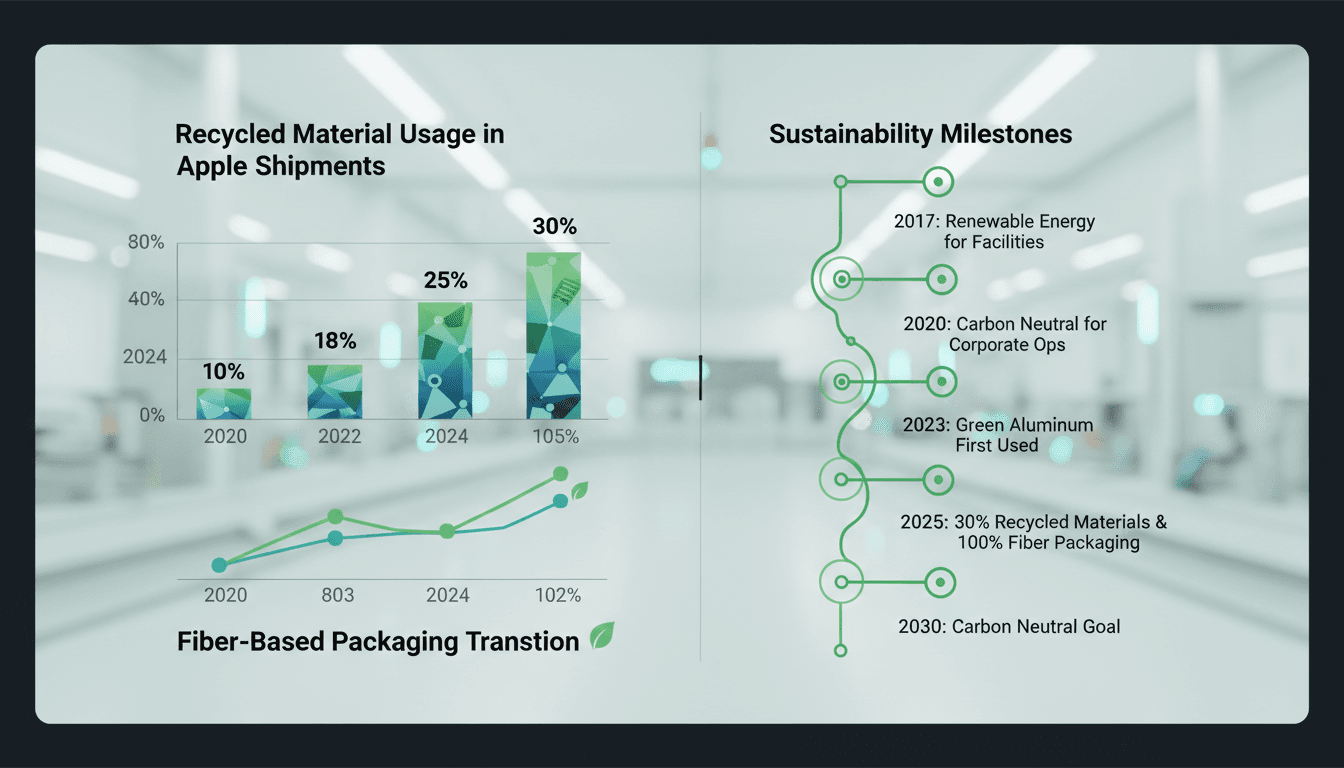
Here's what it means for you.
As a consumer, you can expect more sustainable products from Apple, which may influence your purchasing decisions and environmental impact.
Why it matters
This milestone reflects a significant shift in corporate responsibility and consumer expectations towards sustainability in technology.
What happened (in 30 seconds)
- Apple announced that 30% of materials in its 2025 product shipments came from recycled sources.
- The company completed its transition to 100% fiber-based packaging, eliminating all plastic.
- These achievements are part of Apple's broader commitment to carbon neutrality by 2030.
The context you actually need
- Apple has progressively increased its use of recycled materials, reaching nearly 20% in 2021 and 24% in 2024.
- The company aims to remove all plastic from packaging by the end of 2025 and use 100% recycled critical materials.
- These efforts are driven by geopolitical pressures for sustainable manufacturing and regulatory pushes for circular economies.
What's really happening
Apple's recent announcement marks a pivotal moment in its environmental strategy, showcasing a commitment to sustainability that aligns with global climate goals. The company has set ambitious targets as part of its Apple 2030 initiative, aiming for end-to-end carbon neutrality. The achievement of 30% recycled content in its products is a significant leap from previous years, where the figures were 20% in 2021 and 24% in 2024. This upward trajectory reflects not only Apple's internal innovations but also its response to external pressures, including resource scarcity and regulatory demands for sustainable practices.
The transition to 100% fiber-based packaging is equally noteworthy, as it eliminates over 15,000 metric tons of plastic from the supply chain. This move is part of a broader industry trend towards reducing plastic waste, driven by consumer demand for environmentally friendly products. Apple's fulfillment of this pledge coincides with Earth Day, emphasizing its commitment to reducing emissions, which have decreased by over 60% since 2015.
The implications of these changes extend beyond environmental benefits. By incorporating recycled materials, Apple is also addressing supply chain vulnerabilities associated with rare earth elements and other critical materials. This strategic shift not only enhances the company's sustainability profile but also positions it favorably in a market increasingly focused on circular economies. As consumers become more environmentally conscious, Apple's initiatives may influence purchasing decisions, potentially leading to increased market share among eco-aware demographics.
Moreover, Apple's Reuse and Recycle program, active in regions like the UAE since 2016, allows consumers to participate in material recovery efforts. This program not only promotes recycling but also aligns with local sustainability initiatives, such as Dubai's Clean Energy Strategy 2050. As Apple continues to innovate in sustainable practices, it sets a benchmark for other companies in the tech industry, creating a ripple effect that could lead to broader changes in manufacturing and consumer behavior.
Who feels it first (and how)
- Consumers: Expect more sustainable product options and may prioritize brands with strong environmental commitments.
- Retailers: Local Apple Stores and authorized resellers will need to adapt to new packaging and product offerings.
- Environmental organizations: Increased scrutiny and support for corporate sustainability initiatives may arise.
- Supply chain partners: Companies involved in sourcing recycled materials will see increased demand and potential shifts in operations.
What to watch next
- Consumer response: Monitor how sales of Apple products evolve as consumers react to the sustainability initiatives.
- Regulatory developments: Watch for new regulations that may emerge in response to corporate sustainability efforts, influencing industry standards.
- Competitor actions: Observe how other tech companies respond to Apple's achievements, potentially leading to industry-wide shifts in sustainability practices.
Apple has achieved 30% recycled content in its 2025 product shipments.
Other tech companies will follow suit, increasing their own sustainability efforts in response to consumer demand.
The long-term impact on Apple's market share and consumer loyalty as sustainability becomes a key purchasing factor.
Frequently Asked Questions
- Why it matters?
- This milestone reflects a significant shift in corporate responsibility and consumer expectations towards sustainability in technology.
- What happened (in 30 seconds)?
- Apple announced that 30% of materials in its 2025 product shipments came from recycled sources. The company completed its transition to 100% fiber-based packaging, eliminating all plastic. These achievements are part of Apple's broader commitment to carbon neutrality by 2030.
- What's really happening?
- Apple's recent announcement marks a pivotal moment in its environmental strategy, showcasing a commitment to sustainability that aligns with global climate goals. The company has set ambitious targets as part of its Apple 2030 initiative, aiming for end-to-end carbon neutrality. The achievement of 30% recycled content in its products is a significant leap from previous years, where the figures were 20% in 2021 and 24% in 2024. This upward trajectory reflects not only Apple's internal innovations
- Who feels it first (and how)?
- Consumers: Expect more sustainable product options and may prioritize brands with strong environmental commitments. Retailers: Local Apple Stores and authorized resellers will need to adapt to new packaging and product offerings. Environmental organizations: Increased scrutiny and support for corporate sustainability initiatives may arise. Supply chain partners: Companies involved in sourcing recycled materials will see increased demand and potential shifts in operations.
- What to watch next?
- Consumer response: Monitor how sales of Apple products evolve as consumers react to the sustainability initiatives. Regulatory developments: Watch for new regulations that may emerge in response to corporate sustainability efforts, influencing industry standards. Competitor actions: Observe how other tech companies respond to Apple's achievements, potentially leading to industry-wide shifts in sustainability practices.
Latest tech news, product reviews, and analysis for consumers and professionals.
"CNET delivers accessible and detailed technology reporting, including trusted product reviews and how-to guides."
— A47 Editor
Apple Products Now Contain 30% Recycled Materials. Their Packaging Boasts Zero Plastic
Apple has announced that its products now contain 30% recycled materials, and its packaging is entirely free of plastic, as highlighted in its 2025 Environmental Report. This achievement marks a significant step towards the company's goal of reaching...
Curated tech headlines including AI stories.
"Influential aggregator surfacing the day’s top tech/AI links."
— A47 Editor
Apple says a record 30% of material across all products it shipped in 2025 came from recycled content; all Apple-designed batteries now use 100% recycled cobalt (Hartley Charlton/MacRumors)
Apple has announced that in 2025, a record 30% of the materials used in all its shipped products came from recycled content, marking a significant milestone in its sustainability efforts. Additionally, all Apple-designed batteries now utilize 100% re...
Tech startup news, programming trends, and discussions shared by the developer community.
"Hacker News is a community-driven source highlighting influential tech discussions, startup launches, and programming insights."
— A47 Editor
Apple accelerates eco progress with highest-ever recycled materials
Apple has announced a significant advancement in its environmental initiatives by achieving the highest-ever use of recycled materials in its products. This milestone reflects the company's ongoing commitment to sustainability and reducing its ecolog...