
Polymarket Faces Scrutiny Over Millions Wagered on Geopolitical Conflicts
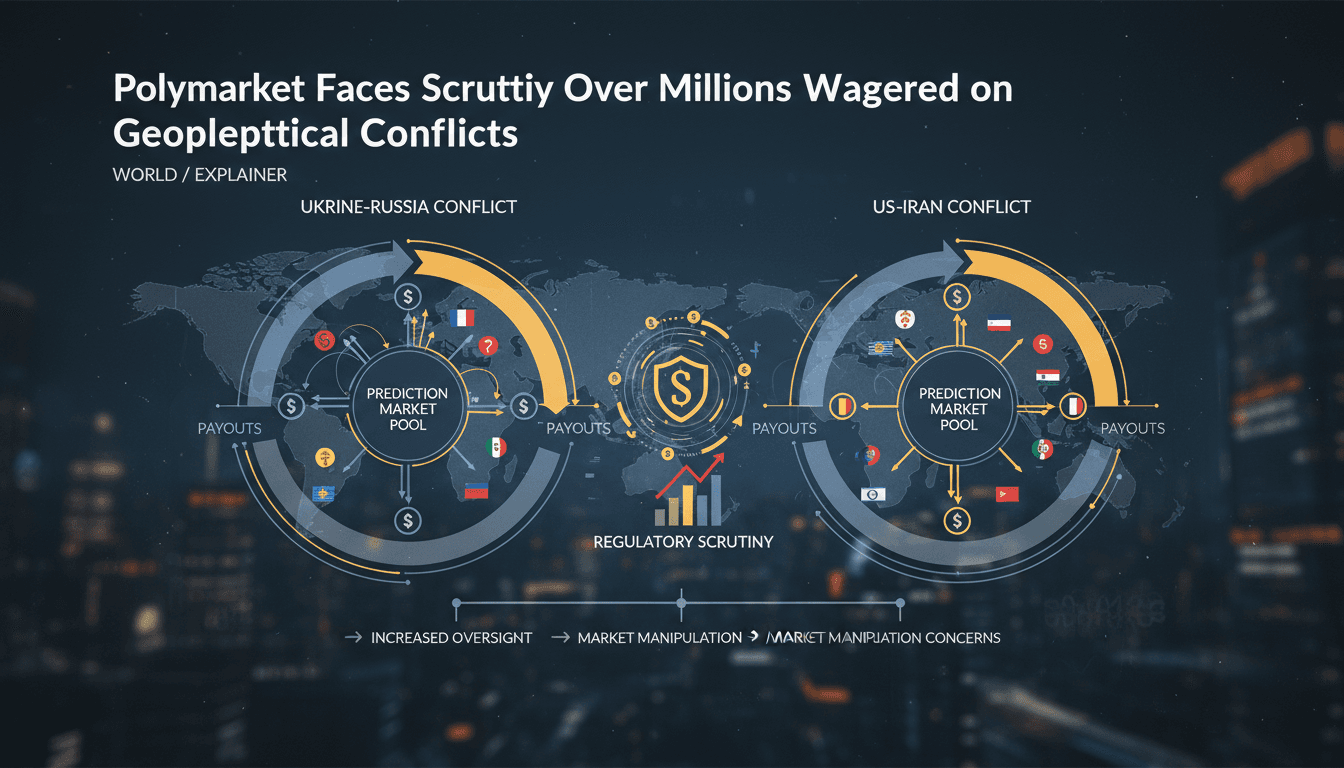
Here's what it means for you.
As global tensions rise, understanding the implications of prediction markets like Polymarket can help you navigate potential economic shifts.
Why it matters
Polymarket's rise in war-related betting highlights the intersection of finance, ethics, and geopolitical risk, potentially influencing market behavior and public perception.
What happened (in 30 seconds)
- Polymarket users wagered millions on outcomes of the Ukraine-Russia conflict and US-Iran tensions, with $280 million on a ceasefire by May 2026.
- Regulatory scrutiny intensified as US Senators raised concerns over insider trading and the ethical implications of betting on war.
- The platform's trading volume surged to over $400 million daily, with markets resolving through potentially manipulable oracles.
The context you actually need
- Polymarket launched pre-2024 and gained traction during the US election forecasting, evolving to include war-related markets amid ongoing global conflicts.
- The platform resolves bets using oracles like maps from the Institute for the Study of War (ISW), raising concerns about the accuracy and potential manipulation of information.
- Criticism from experts and lawmakers highlights the ethical dilemmas of profiting from human suffering, with calls for regulatory oversight to prevent exploitation.
What's really happening
Polymarket, a blockchain-based prediction market, has become a focal point for betting on geopolitical events, particularly in the context of the ongoing Russia-Ukraine war and escalating tensions between the US and Iran. Since its inception, the platform has seen a dramatic increase in trading volumes, particularly in 2026, where users wagered significant amounts on various outcomes, including a potential ceasefire in the US-Iran conflict and military actions in Ukraine.
The mechanics of these prediction markets involve users betting on specific outcomes, which are resolved based on predetermined criteria, often using oracles. In Polymarket's case, these oracles include maps from the ISW and votes from UMA token holders. This structure raises concerns about the accuracy of information and the potential for manipulation, especially in fast-moving conflict scenarios where real-time data can be scarce or unreliable.
The ethical implications are profound. Critics argue that betting on war outcomes commodifies human suffering and can incentivize misinformation, as traders may manipulate news to influence market outcomes. For instance, the ISW condemned the exploitation of their maps for gambling purposes, highlighting the moral quandary of profiting from war. Furthermore, lawmakers like Senators Chris Murphy and Mike Levin have called for investigations into insider trading, citing instances where new accounts profited significantly from timely bets on Iran.
Despite these criticisms, proponents of prediction markets argue they can serve as "truth signals," providing insights into public sentiment and potential outcomes based on collective intelligence. This perspective was echoed by notable figures like Nate Silver, who praised the accuracy of prediction markets in electoral forecasting. However, the juxtaposition of financial gain against the backdrop of war raises critical questions about the role of such platforms in society.
As the platform continues to operate amidst regulatory scrutiny, the implications for financial markets and public discourse are significant. The potential for financial distortions and ethical dilemmas will likely shape the future of prediction markets, especially as more individuals engage in betting on global events.
Who feels it first (and how)
- Traders and investors: Those actively participating in Polymarket will experience direct financial impacts based on market outcomes.
- Regulators and lawmakers: Increased scrutiny and potential regulatory changes will affect how prediction markets operate.
- Media and analysts: Coverage of geopolitical events may shift as the influence of betting markets on public perception and narrative becomes more pronounced.
What to watch next
- Regulatory developments: Watch for potential new regulations from the Commodity Futures Trading Commission (CFTC) that could reshape prediction market operations.
- Market response to geopolitical events: Monitor how changes in conflict dynamics influence betting volumes and market sentiment on Polymarket.
- Public sentiment shifts: Keep an eye on how public perception of betting on war evolves, particularly in response to ethical concerns raised by lawmakers and experts.
Polymarket is facilitating millions in bets on geopolitical outcomes, with significant trading volumes.
Increased regulatory scrutiny and calls for ethical oversight will impact the future of prediction markets.
The long-term effects of betting on war outcomes on public discourse and market behavior remain to be seen.
Frequently Asked Questions
- Why it matters?
- Polymarket's rise in war-related betting highlights the intersection of finance, ethics, and geopolitical risk, potentially influencing market behavior and public perception.
- What happened (in 30 seconds)?
- Polymarket users wagered millions on outcomes of the Ukraine-Russia conflict and US-Iran tensions, with $280 million on a ceasefire by May 2026. Regulatory scrutiny intensified as US Senators raised concerns over insider trading and the ethical implications of betting on war. The platform's trading volume surged to over $400 million daily, with markets resolving through potentially manipulable oracles.
- What's really happening?
- Polymarket, a blockchain-based prediction market, has become a focal point for betting on geopolitical events, particularly in the context of the ongoing Russia-Ukraine war and escalating tensions between the US and Iran. Since its inception, the platform has seen a dramatic increase in trading volumes, particularly in 2026, where users wagered significant amounts on various outcomes, including a potential ceasefire in the US-Iran conflict and military actions in Ukraine. The mechanics of these
- Who feels it first (and how)?
- Traders and investors: Those actively participating in Polymarket will experience direct financial impacts based on market outcomes. Regulators and lawmakers: Increased scrutiny and potential regulatory changes will affect how prediction markets operate. Media and analysts: Coverage of geopolitical events may shift as the influence of betting markets on public perception and narrative becomes more pronounced.
- What to watch next?
- Regulatory developments: Watch for potential new regulations from the Commodity Futures Trading Commission (CFTC) that could reshape prediction market operations. Market response to geopolitical events: Monitor how changes in conflict dynamics influence betting volumes and market sentiment on Polymarket. Public sentiment shifts: Keep an eye on how public perception of betting on war evolves, particularly in response to ethical concerns raised by lawmakers and experts.
Tech startup news, programming trends, and discussions shared by the developer community.
"Hacker News is a community-driven source highlighting influential tech discussions, startup launches, and programming insights."
— A47 Editor
’Abhorrent’: the inside story of the Polymarket gamblers betting millions on war
The prediction market Polymarket has come under scrutiny for allowing users to place bets on geopolitical events, including wars, raising ethical concerns about profiting from conflict. This has led to significant backlash, with the platform's founde...
UK and international business news, economics, and corporate coverage.
"The Guardian’s business section covers finance and markets with a progressive editorial tone."
— A47 Editor
‘Abhorrent’: the inside story of the Polymarket gamblers betting millions on war
A recent investigation by The Guardian has unveiled the controversial practices of Polymarket, an online prediction market where users are betting millions on geopolitical events, including the war in Ukraine. The platform has faced significant backl...
News from the United States including domestic politics, society, and culture.
"The Guardian is known for its progressive editorial stance and in-depth analysis, often advocating for social justice, environmental issues, and liberal values."
— A47 Editor
‘Abhorrent’: the inside story of the Polymarket gamblers betting millions on war
A recent investigation by The Guardian has unveiled the controversial practices of Polymarket, an online prediction market where users are betting millions on geopolitical events, including the war in Ukraine. The platform has faced significant backl...
Top international stories selected by The Guardian editors.
"The Guardian is known for its progressive editorial stance and in-depth analysis."
— A47 Editor
‘Abhorrent’: the inside story of the Polymarket gamblers betting millions on war
A recent investigation by The Guardian has unveiled the controversial practices of Polymarket, an online prediction market where users are betting millions on geopolitical events, including the war in Ukraine. The platform has faced significant backl...
Global political, business, and cultural coverage from WSJ international desks.
"The Wall Street Journal offers extensive international reporting with a reputation for financial insight and a center-right editorial stance."
— A47 Editor
Polymarket’s $269 Million Question: Did U.S. Forces ‘Enter’ Iran?
The prediction market platform Polymarket is currently embroiled in a significant dispute following the rescue of a missing airman, which has raised questions about whether U.S. forces have entered Iran. This situation has led to heightened trading a...
Real-time updates, analysis, and reports on the blockchain and cryptocurrency sectors.
"Crypto News delivers real-time updates, analysis, and reports on the blockchain and cryptocurrency sectors."
— A47 Editor
Polymarket Investigation Demanded by Congress After 50 New Accounts Bet on Iran Ceasefire Before Trump Announced It
Congress has demanded an investigation into Polymarket after over 50 new accounts placed bets on a U.S.-Iran ceasefire moments before President Trump announced it on social media on April 9. This incident raises concerns about potential insider tradi...