
SEC and CFTC unify US crypto and financial market oversight under new memorandum
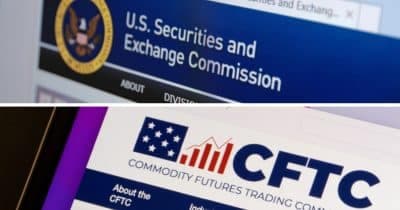
Here's what it means for you.
If you work in crypto, finance, or tech, the U.S. just made it harder to justify offshoring operations—regulatory clarity is now the new competitive edge.
Why it matters
The end of U.S. regulatory turf wars over crypto assets could redraw the global map for digital finance, shifting incentives for companies, investors, and entire markets.
What happened (in 30 seconds)
- Historic pact signed: On March 11, 2026, the SEC and CFTC signed a Memorandum of Understanding (MOU) to coordinate oversight of crypto assets and financial markets.
- Joint initiative launched: The agencies created a Joint Harmonization Initiative to streamline policymaking, enforcement, and definitions, led by Robert Teply (SEC) and Meghan Tente (CFTC).
- Immediate market reaction: Bitcoin rose 1.2% to $70,400 following the announcement, signaling industry optimism.
The context you actually need
- Decades of conflict: The SEC and CFTC have clashed for years over who regulates what, causing duplicative rules and pushing crypto firms offshore.
- Old rules, new tech: U.S. frameworks lagged behind digital asset innovation, making compliance costly and unpredictable for market participants.
- Dubai’s edge at risk: Dubai’s VARA regime attracted U.S. crypto players fleeing uncertainty—this new clarity could slow that flow.
What's really happening
The March 2026 SEC–CFTC Memorandum of Understanding is more than bureaucratic housekeeping—it’s a structural reset for how the world’s largest capital market treats digital assets. For years, the U.S. regulatory environment for crypto was defined by ambiguity. The SEC (Securities and Exchange Commission) and CFTC (Commodity Futures Trading Commission) both claimed jurisdiction over overlapping asset classes, leading to conflicting guidance, duplicative registration requirements, and high compliance costs. This “turf war” didn’t just create headaches for lawyers; it actively pushed startups, exchanges, and institutional players to friendlier jurisdictions, with Dubai among the biggest beneficiaries.
The new MOU, signed by SEC Chairman Paul S. Atkins and CFTC Chairman Michael S. Selig, aims to end that era. It establishes formal mechanisms for the two agencies to coordinate on policymaking, examinations, enforcement, and information sharing. Critically, it aligns definitions for digital assets—so a token isn’t a “security” in one context and a “commodity” in another. This harmonization is designed to eliminate duplicative oversight, reduce regulatory friction for dually registered entities, and streamline reporting. The Joint Harmonization Initiative, co-led by Robert Teply (SEC) and Meghan Tente (CFTC), will implement these changes and solicit public input.
The incentives are clear: The U.S. wants to keep its financial innovation onshore. By reducing uncertainty and compliance costs, the MOU makes it more attractive for crypto firms to operate domestically. This is a direct response to years of capital and talent flight to places like Dubai, which built its Virtual Assets Regulatory Authority (VARA) framework to capture the business fleeing U.S. ambiguity. Now, with the U.S. signaling a unified, technology-neutral approach, the relative advantage of offshore hubs could diminish.
For professionals, this means the calculus is shifting. U.S. regulatory clarity lowers the risk premium for launching or scaling crypto ventures stateside. Investors can expect more predictable enforcement and reporting requirements. For global hubs like Dubai, the move may prompt a strategic rethink: their competitive edge was always regulatory certainty, not just tax or lifestyle perks.
The market’s reaction was immediate—Bitcoin’s price climbed 1.2% to $70,400, and broader crypto assets firmed up. Industry observers see this as the end of the “regulatory fog” era. However, the MOU doesn’t change statutory jurisdiction: Congress still sets the boundaries, and the agencies must operate within them. The real test will be how quickly and effectively the Joint Harmonization Initiative can translate this agreement into practical, day-to-day regulatory relief.
Who feels it first (and how)
- Crypto exchanges and fintech startups: Lower compliance costs and clearer U.S. rules may prompt relocation or expansion back to the U.S.
- Institutional investors: Greater regulatory certainty reduces legal risk and could unlock new capital flows into U.S.-based digital assets.
- Legal and compliance professionals: Demand for cross-jurisdictional expertise may shift as U.S. rules become less fragmented.
- Dubai-based crypto firms: The relative draw of Dubai’s regulatory regime may weaken if U.S. clarity holds.
What to watch next
- Implementation speed of the Joint Harmonization Initiative: Fast, practical rule changes will determine if the MOU delivers real-world benefits.
- Shifts in crypto firm registrations: Watch for U.S.-bound moves or expansions, especially from companies previously based in Dubai or other hubs.
- Public input and industry feedback: The agencies’ call for comments will reveal where friction remains and what further reforms are needed.
The SEC and CFTC have formally agreed to coordinate oversight and align definitions for crypto assets.
U.S. regulatory clarity will slow the outflow of crypto business to offshore hubs like Dubai.
How quickly harmonized rules will be implemented—and whether Congress will further clarify statutory boundaries.
Frequently Asked Questions
- Why it matters?
- The end of U.S. regulatory turf wars over crypto assets could redraw the global map for digital finance, shifting incentives for companies, investors, and entire markets.
- What happened (in 30 seconds)?
- Historic pact signed: On March 11, 2026, the SEC and CFTC signed a Memorandum of Understanding (MOU) to coordinate oversight of crypto assets and financial markets. Joint initiative launched: The agencies created a Joint Harmonization Initiative to streamline policymaking, enforcement, and definitions, led by Robert Teply (SEC) and Meghan Tente (CFTC). Immediate market reaction: Bitcoin rose 1.2% to $70,400 following the announcement, signaling industry optimism.
- What's really happening?
- The March 2026 SEC–CFTC Memorandum of Understanding is more than bureaucratic housekeeping—it’s a structural reset for how the world’s largest capital market treats digital assets. For years, the U.S. regulatory environment for crypto was defined by ambiguity. The SEC (Securities and Exchange Commission) and CFTC (Commodity Futures Trading Commission) both claimed jurisdiction over overlapping asset classes, leading to conflicting guidance, duplicative registration requirements, and high complia
- Who feels it first (and how)?
- Crypto exchanges and fintech startups: Lower compliance costs and clearer U.S. rules may prompt relocation or expansion back to the U.S. Institutional investors: Greater regulatory certainty reduces legal risk and could unlock new capital flows into U.S.-based digital assets. Legal and compliance professionals: Demand for cross-jurisdictional expertise may shift as U.S. rules become less fragmented. Dubai-based crypto firms: The relative draw of Dubai’s regulatory regime may weaken if U.S. clari
- What to watch next?
- Implementation speed of the Joint Harmonization Initiative: Fast, practical rule changes will determine if the MOU delivers real-world benefits. Shifts in crypto firm registrations: Watch for U.S.-bound moves or expansions, especially from companies previously based in Dubai or other hubs. Public input and industry feedback: The agencies’ call for comments will reveal where friction remains and what further reforms are needed.
Covers Bitcoin plus altcoin news, market updates, and educational resources.
"Bitcoin.com provides news, market data, and guides focused on Bitcoin and the wider crypto industry."
— A47 Editor
SEC and CFTC Strike Historic Pact to Align US Financial and Crypto Market Rules
The SEC and CFTC have signed a historic agreement to align regulatory approaches for US financial and cryptocurrency markets, ending years of rivalry and aiming for coordinated oversight.
Covers blockchain, cryptocurrency news, project analysis, and market insights.
"Cointelegraph is a leading crypto-focused media outlet known for timely news, analysis, and educational content related to blockchain and digital assets."
— A47 Editor
SEC, CFTC sign memo to regulate crypto, other markets in harmony
The SEC and CFTC have signed a memorandum to coordinate regulation of cryptocurrencies and other markets, aiming for a "minimum effective dose" approach that balances innovation with market integrity and global competitiveness.
Research, news, and analysis on blockchain startups, DeFi, and regulations.
"Crypto Briefing provides research, news, and analysis on blockchain startups, DeFi, and crypto regulations with investor-focused coverage."
— A47 Editor
SEC and CFTC sign agreement to coordinate crypto and market oversight
The SEC and CFTC have signed an agreement to coordinate regulation and oversight of cryptocurrencies and broader financial markets, aiming to clarify responsibilities and reduce duplicative rules in the US.
Covers blockchain, cryptocurrency news, project analysis, and market insights.
"CoinDesk is a well-established cryptocurrency and blockchain news provider, offering comprehensive insights, market data, and industry research."
— A47 Editor
SEC, CFTC end years of rivalry with deal that will mean combined crypto oversight
The SEC and CFTC have ended years of rivalry by signing a memorandum of understanding to coordinate their overlapping work, aiming for joint oversight of the cryptocurrency sector.