
Pakistan Seeks Two-Week Extension for U.S. Ultimatum on Strait of Hormuz Amid Iran Conflict
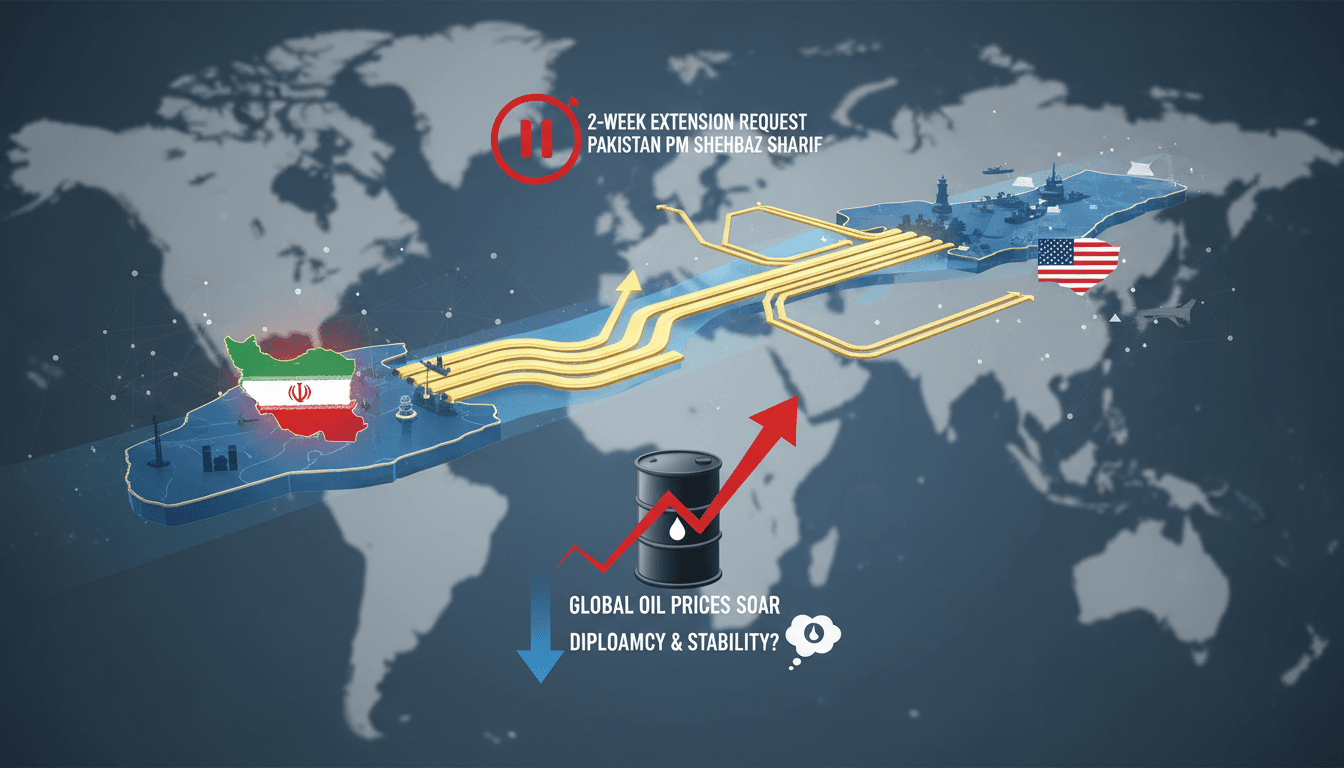
Here's what it means for you.
If you rely on global oil markets, this diplomatic maneuver could impact fuel prices and supply chains.
Why it matters
The reopening of the Strait of Hormuz is critical as it handles approximately 20% of global oil trade, affecting energy prices worldwide.
What happened (in 30 seconds)
- Pakistan's Prime Minister Shehbaz Sharif requested a two-week extension to the U.S. ultimatum for Iran to reopen the Strait of Hormuz.
- President Donald Trump conditionally accepted the request, agreeing to suspend attacks if Iran facilitates safe passage.
- Negotiations are set to begin in Islamabad, aiming for a ceasefire amid ongoing U.S.-Israeli military operations against Iran.
The context you actually need
- The Strait of Hormuz closure was a direct result of escalating military tensions between the U.S.-Israeli coalition and Iran, disrupting a significant portion of global oil trade.
- Trump's initial ultimatum has been extended multiple times, reflecting ongoing diplomatic efforts from mediators like Pakistan, Egypt, and Turkey.
- Pakistan's proposal includes a phased truce, which could lead to sanctions relief and nuclear commitments from Iran, indicating a complex geopolitical landscape.
What's really happening
The request for a two-week extension by Pakistan is a strategic move aimed at de-escalating a volatile situation that has far-reaching implications for global oil markets and regional stability. The Strait of Hormuz is a crucial chokepoint for oil shipments, and its closure has already led to a spike in oil prices, with Brent crude reaching $118 per barrel during the conflict. This spike is a direct consequence of disrupted supply, affecting not just oil producers but also consumers and businesses worldwide.
President Trump's conditional acceptance of Pakistan's request signals a willingness to explore diplomatic avenues rather than immediate military action. By agreeing to halt offensive operations for two weeks, Trump is providing Iran with a window to negotiate terms for reopening the strait. This could lead to a temporary stabilization of oil prices, which have been highly volatile due to the conflict. However, the situation remains precarious; Iran's willingness to facilitate safe passage under its oversight suggests that tensions could resurface if negotiations falter.
Moreover, the geopolitical implications extend beyond the immediate conflict. Gulf states, particularly the UAE, are already reporting Iranian missile attacks, indicating that while a ceasefire may be in place, hostilities could continue in other forms. The U.S. response, including a sharp drop in oil prices by over 14% following the ceasefire announcement, reflects market sensitivity to these developments. Investors and businesses are closely monitoring the situation, as any escalation could lead to renewed price spikes and supply chain disruptions.
The proposed negotiations in Islamabad will be critical in determining the future of U.S.-Iran relations and the broader Middle East landscape. The outcome will likely influence not only energy markets but also the strategic calculations of other regional players, including Saudi Arabia and Israel, who have vested interests in the stability of the Strait of Hormuz.
Who feels it first (and how)
- Oil producers: Fluctuations in oil prices directly impact revenue and investment strategies.
- Consumers: Increased fuel prices affect transportation costs and everyday expenses.
- Businesses: Companies reliant on stable energy prices may face increased operational costs.
- Gulf states: Nations like the UAE are on high alert for potential military escalations and economic impacts.
What to watch next
- Negotiation outcomes: The success or failure of talks in Islamabad will dictate the immediate future of U.S.-Iran relations and oil market stability.
- Oil price movements: Watch for fluctuations in Brent crude prices as market reactions to geopolitical developments unfold.
- Regional military activities: Any resurgence of military operations or missile attacks could signal a breakdown in negotiations, leading to further instability.
The Strait of Hormuz is vital for global oil trade, with 20% of oil passing through it.
Diplomatic negotiations will continue, but tensions may persist, affecting regional stability.
The long-term implications of the ceasefire on U.S.-Iran relations and broader Middle Eastern geopolitics remain uncertain.
Frequently Asked Questions
- Why it matters?
- The reopening of the Strait of Hormuz is critical as it handles approximately 20% of global oil trade, affecting energy prices worldwide.
- What happened (in 30 seconds)?
- Pakistan's Prime Minister Shehbaz Sharif requested a two-week extension to the U.S. ultimatum for Iran to reopen the Strait of Hormuz. President Donald Trump conditionally accepted the request, agreeing to suspend attacks if Iran facilitates safe passage. Negotiations are set to begin in Islamabad, aiming for a ceasefire amid ongoing U.S.-Israeli military operations against Iran.
- What's really happening?
- The request for a two-week extension by Pakistan is a strategic move aimed at de-escalating a volatile situation that has far-reaching implications for global oil markets and regional stability. The Strait of Hormuz is a crucial chokepoint for oil shipments, and its closure has already led to a spike in oil prices, with Brent crude reaching $118 per barrel during the conflict. This spike is a direct consequence of disrupted supply, affecting not just oil producers but also consumers and business
- Who feels it first (and how)?
- Oil producers: Fluctuations in oil prices directly impact revenue and investment strategies. Consumers: Increased fuel prices affect transportation costs and everyday expenses. Businesses: Companies reliant on stable energy prices may face increased operational costs. Gulf states: Nations like the UAE are on high alert for potential military escalations and economic impacts.
- What to watch next?
- Negotiation outcomes: The success or failure of talks in Islamabad will dictate the immediate future of U.S.-Iran relations and oil market stability. Oil price movements: Watch for fluctuations in Brent crude prices as market reactions to geopolitical developments unfold. Regional military activities: Any resurgence of military operations or missile attacks could signal a breakdown in negotiations, leading to further instability.
U.S. business news, corporate developments, and economy.
"The Wall Street Journal is respected for deep financial and economic reporting with a center-right editorial perspective."
— A47 Editor
Pakistan Seeks Two-Week Extension to Trump’s Iran Deadline
Pakistan has formally requested a two-week extension from President Trump regarding the deadline for Iran to reopen the Strait of Hormuz, which is currently set for 8 p.m. ET on Tuesday. This request arises amidst escalating tensions and military thr...
Global news coverage with extensive reporting on Middle Eastern conflicts and geopolitics.
"Al Jazeera is a Qatar-based broadcaster known for wide regional coverage and alternative perspectives."
— A47 Editor
Pakistan appeals to Trump to extend deadline, Iran to reopen Hormuz Strait
Pakistan's Prime Minister Shehbaz Sharif has appealed to U.S. President Donald Trump for a two-week extension on a deadline for Iran to reopen the strategic Strait of Hormuz, emphasizing the importance of allowing diplomatic efforts to proceed. This ...
Comprehensive coverage of Middle Eastern and global issues.
"Al Jazeera is a prominent voice from the Global South, especially the Middle East, with an emphasis on underreported stories."
— A47 Editor
Pakistan appeals to Trump to extend deadline, Iran to reopen Hormuz Strait
Pakistan's Prime Minister, Shehbaz Sharif, has appealed to U.S. President Donald Trump to extend the deadline for Iran to reopen the strategic Strait of Hormuz, emphasizing the progress made in diplomatic efforts for a peaceful resolution to the ongo...
Business, investment, entrepreneurship, leadership, and innovation.
"Forbes is known for its coverage of business leaders, market trends, and entrepreneurial ventures with a pro-business editorial stance."
— A47 Editor
Pakistan Requests Trump To Extend Iran Deadline By Two Weeks (Live Updates)
Pakistan has requested a two-week extension from President Trump regarding the deadline for Iran to reopen the Strait of Hormuz, which is set for 8 p.m. ET on Tuesday. This request comes amid escalating tensions and military threats from the U.S. tow...
Regional coverage and analysis focused on politics, diplomacy, and business across the Middle East.
"Al-Monitor is known for analytical reporting on Middle East politics and policy developments."
— A47 Editor
Trump aware of Pakistani proposal and will respond, White House says
U.S. President Donald Trump has acknowledged a proposal from Pakistan for a two-week extension on a deadline he set for Iran, with the White House confirming that a response will be forthcoming. This development comes amid ongoing tensions regarding ...
Focused political reporting and governmental affairs.
"NBC News is a mainstream media outlet known for comprehensive national and international news coverage with a centrist to slightly left-leaning editorial tone."
— A47 Editor
Trump ‘aware’ of Pakistan proposal to extend deadline for Iran by two weeks
President Trump is aware of a proposal from Pakistan to extend the deadline for Iran to negotiate a deal regarding the reopening of the Strait of Hormuz by two weeks. This comes as tensions escalate, with Trump warning that failure to reach an agreem...