
Tisza Party Wins Supermajority in Hungarian Election Leading to Market Rally
Here's what it means for you.
If you have investments tied to European markets or are involved in international trade, the recent political shift in Hungary could influence your financial landscape.
Why it matters
The Tisza Party's supermajority signals a potential thaw in EU relations, which could unlock billions in recovery funds and stabilize the Hungarian economy.
What happened (in 30 seconds)
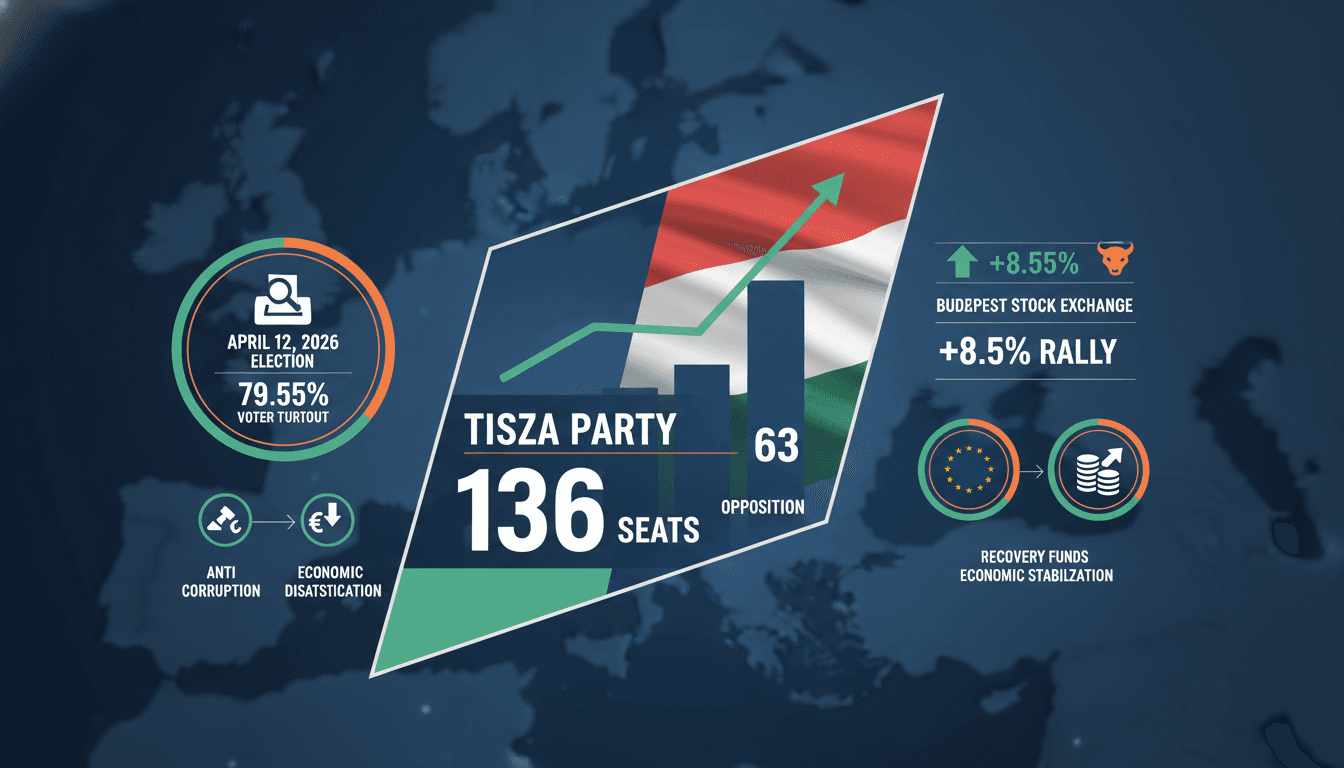
- Tisza Party achieved a landslide victory in the April 12, 2026, parliamentary election, securing 136 seats and a supermajority.
- Viktor Orbán's Fidesz-KDNP alliance was ousted, winning only 56 seats amid record voter turnout of 79.55%.
- Hungarian markets rallied post-election, with stocks hitting record highs and the forint strengthening significantly against the euro.
The context you actually need
- Viktor Orbán's Fidesz party had dominated Hungarian politics since 2010, implementing controversial reforms that strained EU relations and led to frozen recovery funds exceeding €17 billion.
- Economic dissatisfaction fueled the Tisza Party's rise, as high inflation and corruption scandals eroded public support for the incumbent government.
- Péter Magyar, a former Fidesz insider, launched the Tisza Party in 2024, leveraging social media and unified opposition support to challenge the regime effectively.
What's really happening
The Tisza Party's victory represents a significant shift in Hungary's political landscape, with implications that extend beyond national borders. The election results reflect a broader anti-corruption sentiment and a desire for economic reform among the Hungarian populace. With a supermajority of 136 seats, the Tisza Party is positioned to implement constitutional amendments and pursue reforms that could realign Hungary's relationship with the European Union.
Historically, Hungary's relationship with the EU has been strained due to Orbán's controversial policies, including judicial reforms and media controls. These actions led to the freezing of substantial recovery funds, which have been a critical lifeline for the Hungarian economy. The Tisza Party's commitment to reform and EU integration is expected to unlock these funds, potentially amounting to €17-20 billion. This financial influx could stimulate economic growth, reduce the national deficit, and improve investor confidence.
The immediate market reaction post-election underscores this optimism. The BUX index, which tracks Hungarian stocks, reached record highs, while the forint strengthened to its highest level against the euro since February 2022. This rally indicates that investors are betting on a more stable and reform-oriented government, which could lead to improved economic conditions.
Moreover, the Tisza Party's agenda includes pledges for constitutional reforms, accession to the European Public Prosecutor's Office (EPPO), and a reset of Hungary's EU relations. These initiatives are crucial for demonstrating Hungary's commitment to the rule of law and democratic principles, which are prerequisites for accessing EU funds.
As the Tisza Party begins the government formation process, the focus will be on how quickly and effectively they can implement these reforms. The Kremlin's labeling of Hungary as "unfriendly" following the election results highlights the geopolitical implications of this shift, as Hungary may pivot away from its previous alignment with Russia.
In summary, the Tisza Party's victory is not just a political change; it represents a potential economic turnaround for Hungary, with implications for investors and businesses both within and outside the country.
Who feels it first (and how)
- Investors: Increased market confidence could lead to higher returns on Hungarian assets.
- Businesses: Companies with ties to Hungary may benefit from improved economic conditions and access to EU funds.
- Consumers: A stabilized economy could lead to lower inflation and improved purchasing power.
- Hungarian expatriates: Those living abroad may see changes in remittance flows and investment opportunities back home.
What to watch next
- Implementation of reforms: Monitor how quickly the Tisza Party enacts promised reforms and their impact on EU relations.
- Market reactions: Keep an eye on the BUX index and the forint's performance as indicators of investor confidence.
- EU negotiations: Watch for developments in Hungary's negotiations with the EU regarding the release of frozen funds.
The Tisza Party secured a supermajority in the Hungarian parliament.
Hungary will pursue reforms aimed at improving EU relations and unlocking recovery funds.
The long-term impact of these changes on Hungary's geopolitical stance and economic stability.
Frequently Asked Questions
- Why it matters?
- The Tisza Party's supermajority signals a potential thaw in EU relations, which could unlock billions in recovery funds and stabilize the Hungarian economy.
- What happened (in 30 seconds)?
- Tisza Party achieved a landslide victory in the April 12, 2026, parliamentary election, securing 136 seats and a supermajority. Viktor Orbán's Fidesz-KDNP alliance was ousted, winning only 56 seats amid record voter turnout of 79.55%. Hungarian markets rallied post-election, with stocks hitting record highs and the forint strengthening significantly against the euro.
- What's really happening?
- The Tisza Party's victory represents a significant shift in Hungary's political landscape, with implications that extend beyond national borders. The election results reflect a broader anti-corruption sentiment and a desire for economic reform among the Hungarian populace. With a supermajority of 136 seats, the Tisza Party is positioned to implement constitutional amendments and pursue reforms that could realign Hungary's relationship with the European Union. Historically, Hungary's relationshi
- Who feels it first (and how)?
- Investors: Increased market confidence could lead to higher returns on Hungarian assets. Businesses: Companies with ties to Hungary may benefit from improved economic conditions and access to EU funds. Consumers: A stabilized economy could lead to lower inflation and improved purchasing power. Hungarian expatriates: Those living abroad may see changes in remittance flows and investment opportunities back home.
- What to watch next?
- Implementation of reforms: Monitor how quickly the Tisza Party enacts promised reforms and their impact on EU relations. Market reactions: Keep an eye on the BUX index and the forint's performance as indicators of investor confidence. EU negotiations: Watch for developments in Hungary's negotiations with the EU regarding the release of frozen funds.
Global political, business, and cultural coverage from WSJ international desks.
"The Wall Street Journal offers extensive international reporting with a reputation for financial insight and a center-right editorial stance."
— A47 Editor
Hungarian Assets Rally After Opposition Party’s Landslide Election Victory
The BUX index of the Budapest Stock Exchange surged to a record high following the decisive victory of opposition leader Péter Magyar in Hungary's parliamentary elections, which marked the end of Viktor Orbán's 16-year rule. The Hungarian currency al...
Market-moving headlines impacting equities, bonds, and related risk assets.
"Real-time catalysts and volatility drivers across indices and sectors."
— A47 Editor
Hungarian stocks, forint surge as Tisza party wins election
Hungarian stocks and the forint experienced a significant surge following the Tisza party's victory in the recent parliamentary elections held on April 12, 2026. This outcome marks a pivotal shift in Hungary's political landscape, as the Tisza party'...
International coverage of politics, culture, and current affairs.
"BBC News is widely regarded as a reputable international news organization, known for its impartial tone and public service mandate."
— A47 Editor
Katya Adler: Jubilation in Budapest will be felt in Europe but leaves Moscow cold
In a landmark parliamentary election held on April 12, 2026, Péter Magyar defeated long-serving Prime Minister Viktor Orbán, marking the end of his 16-year rule. The election was characterized by record voter turnout and widespread celebrations in Bu...