
Iran Closes Strait of Hormuz Disrupting Fertilizer and Fuel Supplies for Asia
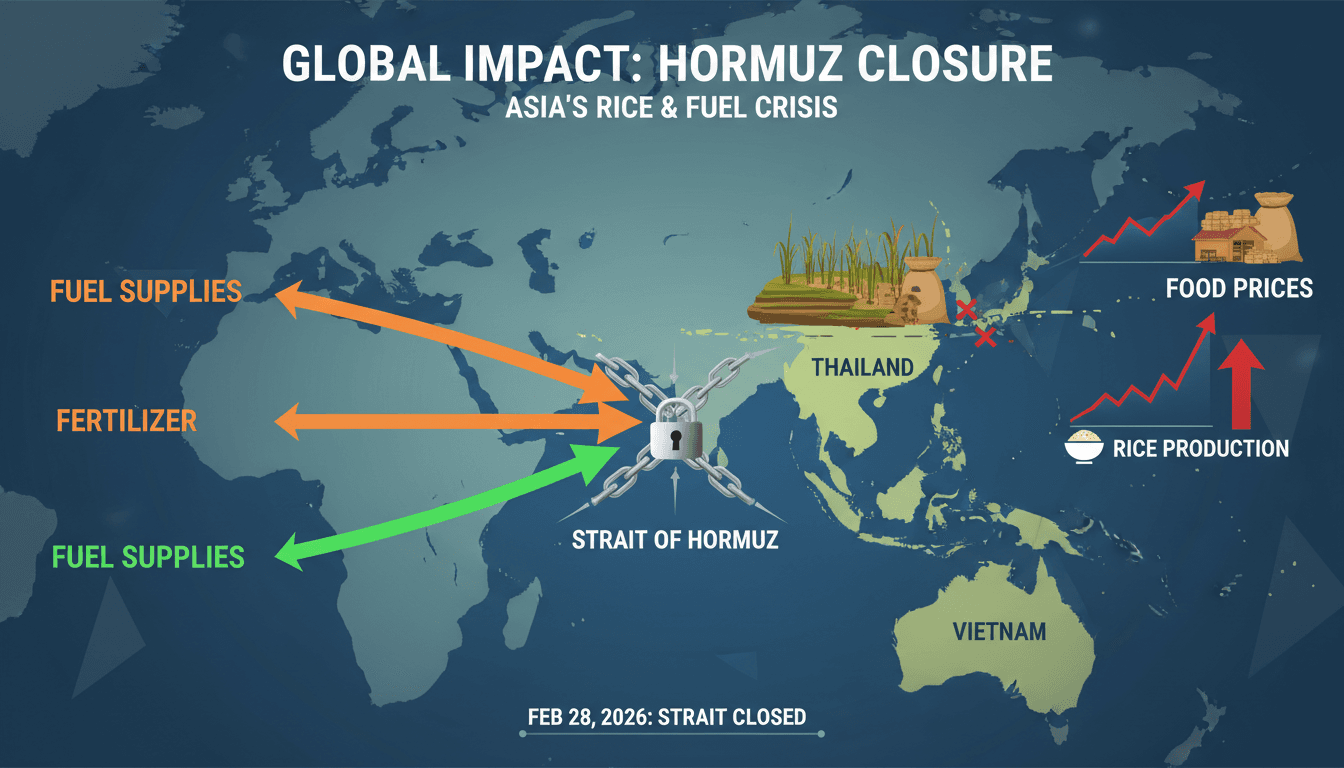
Here's what it means for you.
If you rely on rice or related products, expect rising prices and potential shortages due to disrupted supply chains.
Why it matters
The closure of the Strait of Hormuz threatens the stability of global food supplies, particularly in Asia, where rice production is crucial.
What happened (in 30 seconds)
- Iran closed the Strait of Hormuz on February 28, 2026, amid escalating military tensions with the U.S. and Israel.
- U.S. naval blockade of Iranian ports began on April 13, 2026, in response to the closure, further restricting maritime traffic.
- Fertilizer and fuel prices surged, jeopardizing rice production in major Asian countries during the critical planting season.
The context you actually need
- The Strait of Hormuz is a vital maritime chokepoint, facilitating approximately 20% of global oil trade and 30% of internationally traded fertilizers.
- Urea fertilizers, essential for rice farming, are primarily exported from Gulf states like Qatar, making the closure particularly impactful for Asian producers.
- A fragile cease-fire was briefly established in early April 2026, but shipping volumes remained critically low due to ongoing risks and Iranian restrictions.
What's really happening
The closure of the Strait of Hormuz has triggered a complex chain reaction affecting global agricultural supply chains. This strategic waterway is not just a passage for oil; it is also a critical route for fertilizers, particularly urea and ammonia, which are essential for rice cultivation. With Iran's military actions leading to the closure, the immediate impact was felt in the form of skyrocketing prices for both fuel and fertilizers.
As countries like Thailand, Vietnam, and India prepare for their April-May rice planting season, the lack of diesel for irrigation pumps and urea fertilizers poses a significant threat to their agricultural output. The U.S. response, a naval blockade of Iranian ports, aims to pressure Iran into reopening the strait, but this has further complicated the situation. The blockade has led to increased tensions and uncertainty in the region, causing shipping companies to avoid the area altogether, which exacerbates the supply chain disruptions.
The agricultural sector is particularly vulnerable, as rice is a staple food for billions and a key economic driver in many Asian countries. The potential yield reductions could lead to food insecurity, prompting governments to initiate stockpiling and rationing measures. The UN has already warned of a looming global agrifood catastrophe, highlighting the severity of the situation.
Moreover, the economic implications extend beyond agriculture. In Dubai, for instance, residents are facing fuel price surges of up to 72%, with Super 98 gasoline reaching AED 3.39 per liter. This spike in fuel prices not only affects transportation costs but also raises grocery prices, as the cost of importing goods increases due to heightened insurance premiums for regional shipping.
The ongoing conflict and its repercussions on global supply chains underscore the interconnectedness of geopolitical events and everyday life. As the situation evolves, the ripple effects will likely be felt across various sectors, from agriculture to transportation, impacting consumers worldwide.
Who feels it first (and how)
- Rice farmers in Thailand, Vietnam, and India facing shortages of diesel and fertilizers.
- Consumers in Asia experiencing rising rice prices and potential shortages.
- Shipping companies grappling with increased insurance costs and rerouted shipping lanes.
- Residents in Dubai facing higher fuel prices affecting transportation and grocery costs.
What to watch next
- Shipping traffic levels through the Strait of Hormuz: Monitoring changes can indicate whether tensions are easing or escalating.
- Global fertilizer prices: A sustained increase could signal long-term agricultural impacts and food price inflation.
- Government responses in major rice-producing countries: Look for stockpiling measures or subsidies aimed at stabilizing food supplies.
The Strait of Hormuz closure is severely restricting maritime traffic and impacting global fertilizer and fuel supplies.
Rice production in Asia will decline, leading to higher prices and potential food insecurity.
The duration of the U.S. blockade and its effectiveness in reopening the Strait of Hormuz.
Frequently Asked Questions
- Why it matters?
- The closure of the Strait of Hormuz threatens the stability of global food supplies, particularly in Asia, where rice production is crucial.
- What happened (in 30 seconds)?
- Iran closed the Strait of Hormuz on February 28, 2026, amid escalating military tensions with the U.S. and Israel. U.S. naval blockade of Iranian ports began on April 13, 2026, in response to the closure, further restricting maritime traffic. Fertilizer and fuel prices surged, jeopardizing rice production in major Asian countries during the critical planting season.
- What's really happening?
- The closure of the Strait of Hormuz has triggered a complex chain reaction affecting global agricultural supply chains. This strategic waterway is not just a passage for oil; it is also a critical route for fertilizers, particularly urea and ammonia, which are essential for rice cultivation. With Iran's military actions leading to the closure, the immediate impact was felt in the form of skyrocketing prices for both fuel and fertilizers. As countries like Thailand, Vietnam, and India prepare f
- Who feels it first (and how)?
- Rice farmers in Thailand, Vietnam, and India facing shortages of diesel and fertilizers. Consumers in Asia experiencing rising rice prices and potential shortages. Shipping companies grappling with increased insurance costs and rerouted shipping lanes. Residents in Dubai facing higher fuel prices affecting transportation and grocery costs.
- What to watch next?
- Shipping traffic levels through the Strait of Hormuz: Monitoring changes can indicate whether tensions are easing or escalating. Global fertilizer prices: A sustained increase could signal long-term agricultural impacts and food price inflation. Government responses in major rice-producing countries: Look for stockpiling measures or subsidies aimed at stabilizing food supplies.
Global markets, investing, and macroeconomics from a premier financial newsroom.
"Bloomberg is respected for in-depth financial reporting and data-driven analysis."
— A47 Editor
Hormuz Closure Sets Clock Ticking for Asia’s Rice Farmers
The ongoing conflict in Iran has raised significant concerns for Asia's rice farmers, as the closure of the Strait of Hormuz threatens to disrupt supply chains and impact harvests. This situation is exacerbated by rising inflation and economic instab...
UAE-based English-language newspaper covering regional politics, economics, and global affairs.
"The National reflects Emirati policy perspectives while maintaining international editorial standards."
— A47 Editor
Food insecurity rises in global South as Strait of Hormuz remains closed
Food insecurity is escalating in the global South as the Strait of Hormuz remains closed due to ongoing geopolitical tensions, particularly involving Iran's threats against maritime traffic. This blockade has significant implications for internationa...
Global news coverage with extensive reporting on Middle Eastern conflicts and geopolitics.
"Al Jazeera is a Qatar-based broadcaster known for wide regional coverage and alternative perspectives."
— A47 Editor
World faces food ‘catastrophe’ if Strait of Hormuz disruption persists: FAO
The Food and Agriculture Organization (FAO) has warned of a potential global food catastrophe if disruptions in the Strait of Hormuz continue, highlighting the vulnerability of global agriculture to maritime blockages.
Comprehensive coverage of Middle Eastern and global issues.
"Al Jazeera is a prominent voice from the Global South, especially the Middle East, with an emphasis on underreported stories."
— A47 Editor
World faces food ‘catastrophe’ if Strait of Hormuz disruption persists: FAO
The Food and Agriculture Organization (FAO) has warned of a potential global food catastrophe if disruptions in the Strait of Hormuz continue, highlighting the vulnerability of global agriculture to maritime blockages.
Sports reporting with a focus on Saudi and regional competitions.
"Okaz sports coverage is broad and audience-friendly, with strong attention to Saudi teams and leagues."
— A47 Editor
«الفاو»: أزمة «هرمز» تؤدي لكارثة عالمية في الغذاء والزراعة
The United Nations Food and Agriculture Organization (FAO) has warned that the ongoing crisis in the Strait of Hormuz could lead to a global disaster in food and agriculture by disrupting fertilizer and energy exports, raising food prices, and reduci...