
UN Women Reports Over 38,000 Women and Girls Killed in Gaza During Israel-Hamas War
Here's what it means for you.
The ongoing humanitarian crisis in Gaza could influence global humanitarian policies and aid strategies, impacting international relations and economic stability.
Why it matters
The staggering loss of life among women and girls in Gaza highlights the urgent need for gender-focused humanitarian responses in conflict zones.
What happened (in 30 seconds)
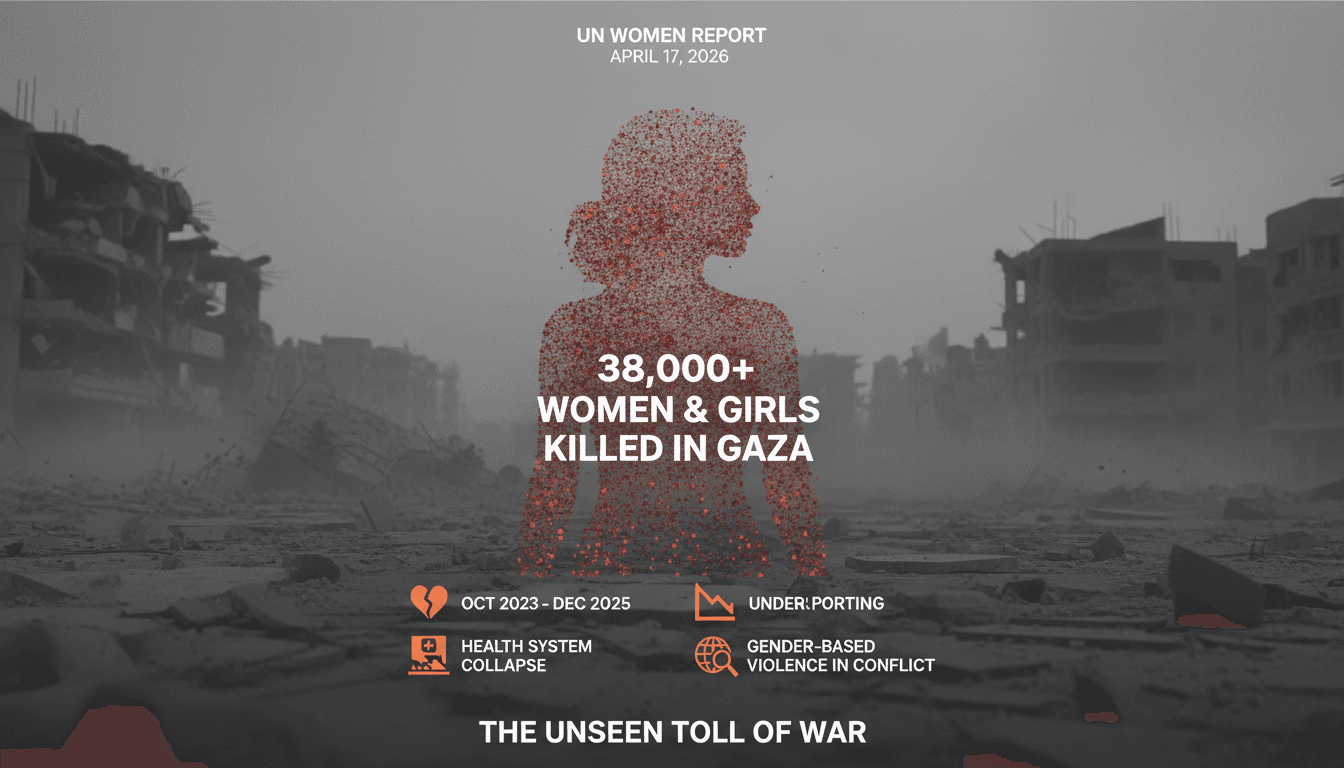
- UN Women reported that over 38,000 women and girls were killed in Gaza between October 2023 and December 2025 amid the Israel-Hamas war.
- The analysis revealed an average of at least 47 female fatalities per day, surpassing previous conflicts' proportions.
- A ceasefire was established in October 2025, but violations and humanitarian challenges persist.
The context you actually need
- The Israel-Hamas war began on October 7, 2023, following a Hamas-led assault that resulted in significant casualties and hostages.
- Widespread destruction displaced nearly all of Gaza's 2.3 million residents, exacerbating humanitarian needs.
- UN Women’s report emphasizes the need for gender-sensitive recovery efforts amid ongoing risks for survivors.
What's really happening
The recent report from UN Women, titled "The Cost of War in Gaza on Women and Girls," sheds light on the devastating impact of the Israel-Hamas conflict on female populations. The staggering figure of over 38,000 women and girls killed between October 2023 and December 2025 underscores a critical humanitarian crisis that has emerged from the war. This analysis, based on data from the Palestinian Ministry of Health and other reputable sources, indicates that the average daily fatalities for women and girls reached at least 47, a figure that exceeds those from previous conflicts in the region.
The report highlights that the initial phases of bombardment saw peaks in casualties, with many deaths likely underreported due to the chaotic conditions on the ground, including rubble-trapped bodies and a collapsed health system. The ongoing humanitarian crisis is compounded by the fact that nearly all of Gaza's residents have been displaced, leading to severe food insecurity and health risks for survivors. The report calls for immediate international attention to the plight of women and girls, advocating for a gender-sensitive approach to humanitarian aid and recovery efforts.
Critics of the report, including Israeli analysts, have raised concerns about the methodology and the accuracy of the figures, suggesting that the total deaths reported by the Gaza Ministry of Health may be higher. However, the emphasis on the gendered impact of the conflict is crucial, as it highlights the specific vulnerabilities faced by women and girls in war zones. The report serves as a call to action for international organizations and governments to prioritize gender-focused strategies in their humanitarian responses.
As the ceasefire holds, albeit with reported violations, the need for scaled aid and recovery efforts remains urgent. The international community is urged to comply with ceasefire agreements and ensure that humanitarian assistance reaches those most affected, particularly women and girls who face heightened risks of violence and exploitation in conflict settings. The structural implications of this crisis extend beyond Gaza, influencing global humanitarian policies and the allocation of resources in future conflicts.
Who feels it first (and how)
- Women and girls in Gaza: Directly impacted by violence, displacement, and loss of life.
- Humanitarian organizations: Facing increased pressure to address gender-specific needs in aid efforts.
- International policymakers: Required to reassess humanitarian strategies and funding allocations in conflict zones.
What to watch next
- International aid responses: Monitor how global humanitarian organizations adapt their strategies to address the specific needs of women and girls in conflict zones.
- Ceasefire compliance: Watch for any violations of the ceasefire agreement and their implications for humanitarian access and safety in Gaza.
- Public awareness campaigns: Observe the rise of social media movements advocating for gendered violence awareness and support for affected populations.
Over 38,000 women and girls were killed in Gaza during the conflict.
Continued humanitarian challenges and the need for gender-sensitive recovery efforts will persist.
The long-term impact of the conflict on international humanitarian policies and funding strategies.
Frequently Asked Questions
- Why it matters?
- The staggering loss of life among women and girls in Gaza highlights the urgent need for gender-focused humanitarian responses in conflict zones.
- What happened (in 30 seconds)?
- UN Women reported that over 38,000 women and girls were killed in Gaza between October 2023 and December 2025 amid the Israel-Hamas war. The analysis revealed an average of at least 47 female fatalities per day, surpassing previous conflicts' proportions. A ceasefire was established in October 2025, but violations and humanitarian challenges persist.
- What's really happening?
- The recent report from UN Women, titled "The Cost of War in Gaza on Women and Girls," sheds light on the devastating impact of the Israel-Hamas conflict on female populations. The staggering figure of over 38,000 women and girls killed between October 2023 and December 2025 underscores a critical humanitarian crisis that has emerged from the war. This analysis, based on data from the Palestinian Ministry of Health and other reputable sources, indicates that the average daily fatalities for women
- Who feels it first (and how)?
- Women and girls in Gaza: Directly impacted by violence, displacement, and loss of life. Humanitarian organizations: Facing increased pressure to address gender-specific needs in aid efforts. International policymakers: Required to reassess humanitarian strategies and funding allocations in conflict zones.
- What to watch next?
- International aid responses: Monitor how global humanitarian organizations adapt their strategies to address the specific needs of women and girls in conflict zones. Ceasefire compliance: Watch for any violations of the ceasefire agreement and their implications for humanitarian access and safety in Gaza. Public awareness campaigns: Observe the rise of social media movements advocating for gendered violence awareness and support for affected populations.
Arabic-language coverage of international news and geopolitics.
"RT Arabic is a Russian state-funded outlet often criticized for promoting Kremlin-aligned narratives."
— A47 Editor
الأمم المتحدة: 38 ألف امرأة وفتاة قتلن في غزة
The United Nations has reported that over 38,000 women and girls were killed in Gaza between October 2023 and the end of 2025 due to Israeli operations, averaging at least 47 casualties daily. This alarming statistic highlights the severe impact of o...
Regional and international reporting focused on Middle Eastern politics, diplomacy, and economics.
"Asharq Al-Awsat is a Saudi-owned international newspaper reflecting mainstream Gulf political perspectives."
— A47 Editor
UN: Average of 47 Women and Girls Killed Daily During Gaza War
The United Nations has reported that an average of 47 women and girls are killed daily during the ongoing conflict in Gaza, highlighting the severe toll the war is taking on vulnerable populations. This alarming statistic underscores the urgent human...
Arabic-language UAE newspaper coverage focused on domestic affairs, public institutions, business, society, and regional developments.
"Al Khaleej coverage generally reflects a mainstream UAE editorial lens with strong attention to public affairs, institutions, and regional developments."
— A47 Editor
الأمم المتحدة: 47 امرأة وفتاة قُتلن يومياً خلال حرب غزة
The United Nations reported that at least 47 women and girls are killed daily during the ongoing conflict in Gaza, highlighting the severe impact of the war on vulnerable populations. This alarming statistic was released by UN Women, emphasizing the ...
UAE-based English-language newspaper covering regional politics, economics, and global affairs.
"The National reflects Emirati policy perspectives while maintaining international editorial standards."
— A47 Editor
Women and girls comprise more than half of Gaza war dead
Recent reports indicate that women and girls make up more than half of the fatalities in the ongoing conflict in Gaza, highlighting the severe impact of the violence on vulnerable populations. This alarming statistic underscores the urgent humanitari...