
World Bank Group Launches Water Forward Initiative to Enhance Global Water Security
Here's what it means for you.
If you rely on water-intensive industries or live in water-scarce regions, this initiative could reshape your economic landscape.
Why it matters
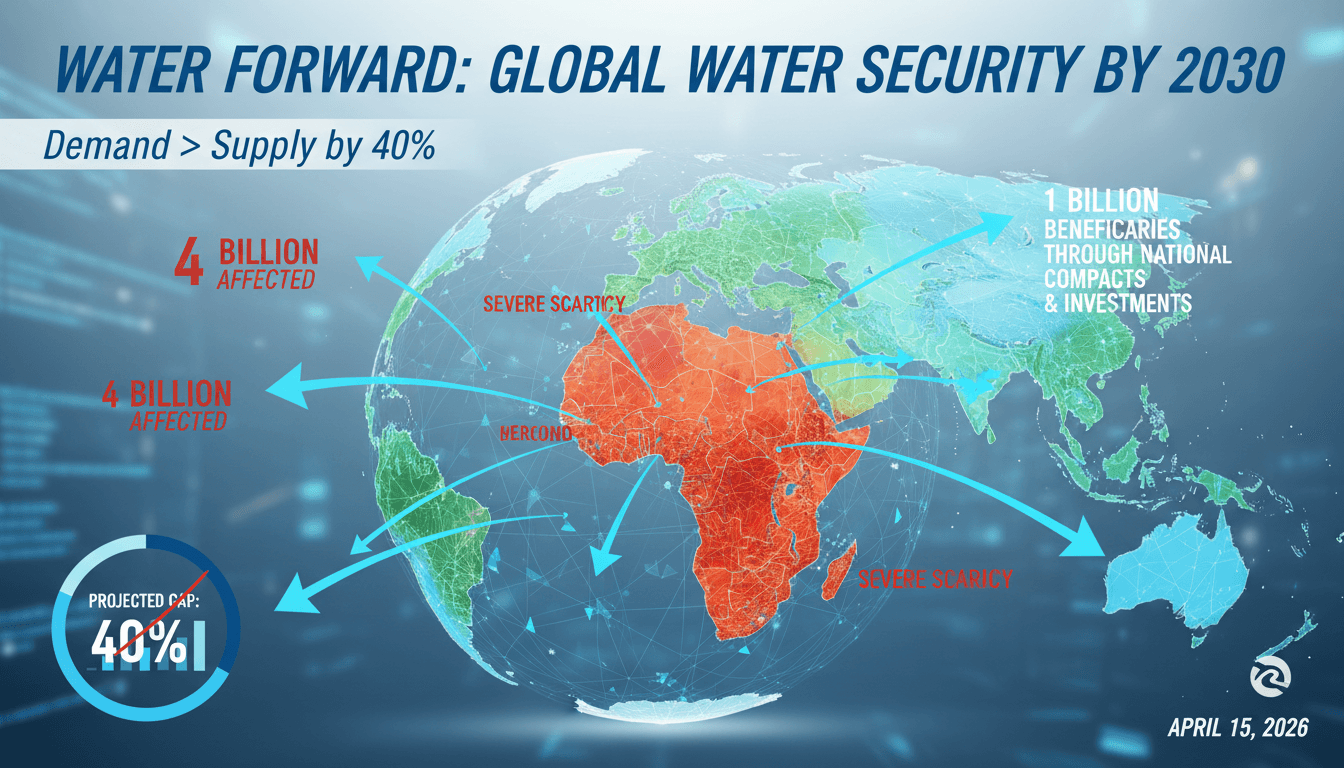
The 'Water Forward' initiative addresses a critical global challenge, as 4 billion people face severe water scarcity, impacting economic stability and growth.
What happened (in 30 seconds)
- On April 15, 2026, the World Bank Group launched the 'Water Forward' initiative during its Spring Meetings in Washington, D.C.
- The initiative aims to improve water security for up to 1 billion people by 2030 through national water compacts and multilateral partnerships.
- 14 countries signed commitments to policy reforms and investment mobilization to tackle acute water stress.
The context you actually need
- 4 billion people experience severe water scarcity at least one month per year, driven by climate change, population growth, and urbanization.
- Water supports 1.7 billion jobs across agriculture, energy, and industry, yet inadequate infrastructure leads to significant economic losses.
- The World Bank's December 2025 Water Strategy Implementation Plan set the stage for 'Water Forward' to align reforms and financing.
What's really happening
The 'Water Forward' initiative represents a strategic response to escalating global water stress, which is projected to worsen as demand for freshwater may exceed supply by 40% by 2030. This initiative is not merely a reaction to immediate crises; it is a proactive framework designed to mobilize resources and reform policies across multiple sectors.
At its core, 'Water Forward' emphasizes the importance of country-led water compacts, which are agreements between governments and stakeholders to commit to specific reforms and investments. The initiative has garnered support from various multilateral development banks, including the Asian Development Bank and the European Investment Bank, indicating a broad consensus on the need for collaborative action.
The focus areas of the initiative—urban leakage reduction, irrigation modernization, wastewater reuse, and data-driven planning—highlight the multifaceted approach required to tackle water scarcity. For instance, urban leakage reduction can significantly enhance water availability in cities, where demand is often highest. Similarly, modernizing irrigation practices can improve agricultural productivity while conserving water resources.
The initiative also aims to attract private sector investment, which is crucial for scaling solutions. The call for doubling private capital to 20% of expenditures reflects an understanding that public funding alone will not suffice to meet the ambitious goals set forth. By de-risking investments in water infrastructure, the initiative seeks to create an environment where private entities feel confident to invest in water-related projects.
Moreover, the involvement of 14 compact countries—ranging from Albania to Vietnam—demonstrates a commitment to localized solutions tailored to specific regional challenges. Each country will implement reforms that align with their unique water needs, thereby fostering a sense of ownership and accountability.
As the initiative unfolds, it is expected to catalyze a shift in how water resources are managed globally, with implications for economic growth, job creation, and environmental sustainability. The emphasis on integrated solutions will likely lead to a more resilient water economy, benefiting both people and ecosystems.
Who feels it first (and how)
- Agricultural sectors in compact countries will see immediate impacts from irrigation modernization and policy reforms.
- Urban residents in water-scarce regions may experience improved water services and reduced costs due to urban leakage reduction efforts.
- Private investors in water infrastructure will be incentivized to engage in projects, potentially leading to new business opportunities.
What to watch next
- Implementation of national water compacts: Monitoring how quickly and effectively countries implement their commitments will indicate the initiative's success.
- Private sector investment trends: An increase in private capital directed towards water projects will signal growing confidence in the water economy.
- Impact assessments: Evaluating the initiative's effects on water security and economic growth in participating countries will provide insights into its long-term viability.
4 billion people currently experience severe water scarcity.
Increased collaboration between public and private sectors in water management.
The full extent of economic impacts across different regions and sectors as the initiative unfolds.
Frequently Asked Questions
- Why it matters?
- The 'Water Forward' initiative addresses a critical global challenge, as 4 billion people face severe water scarcity, impacting economic stability and growth.
- What happened (in 30 seconds)?
- On April 15, 2026, the World Bank Group launched the 'Water Forward' initiative during its Spring Meetings in Washington, D.C. The initiative aims to improve water security for up to 1 billion people by 2030 through national water compacts and multilateral partnerships. 14 countries signed commitments to policy reforms and investment mobilization to tackle acute water stress.
- What's really happening?
- The 'Water Forward' initiative represents a strategic response to escalating global water stress, which is projected to worsen as demand for freshwater may exceed supply by 40% by 2030. This initiative is not merely a reaction to immediate crises; it is a proactive framework designed to mobilize resources and reform policies across multiple sectors. At its core, 'Water Forward' emphasizes the importance of country-led water compacts, which are agreements between governments and stakeholders to
- Who feels it first (and how)?
- Agricultural sectors in compact countries will see immediate impacts from irrigation modernization and policy reforms. Urban residents in water-scarce regions may experience improved water services and reduced costs due to urban leakage reduction efforts. Private investors in water infrastructure will be incentivized to engage in projects, potentially leading to new business opportunities.
- What to watch next?
- Implementation of national water compacts: Monitoring how quickly and effectively countries implement their commitments will indicate the initiative's success. Private sector investment trends: An increase in private capital directed towards water projects will signal growing confidence in the water economy. Impact assessments: Evaluating the initiative's effects on water security and economic growth in participating countries will provide insights into its long-term viability.
Regional coverage and analysis focused on politics, diplomacy, and business across the Middle East.
"Al-Monitor is known for analytical reporting on Middle East politics and policy developments."
— A47 Editor
World Bank launches 'Water Forward' programme to tackle global water stress
The World Bank, alongside other major development lenders, has launched the 'Water Forward' programme, aiming to enhance secure water access for one billion people over the next four years. This initiative emphasizes the importance of treating water ...
Macro commentary, policy analysis, growth/inflation themes, and global outlooks.
"Contextual macro coverage that complements day-to-day market headlines."
— A47 Editor
World Bank launches ’Water Forward’ programme to tackle global water stress
The World Bank has launched the 'Water Forward' programme aimed at addressing global water stress, a critical issue affecting numerous countries. This initiative is part of the institution's broader efforts to enhance water security and sustainabilit...
UAE-based English-language newspaper covering regional politics, economics, and global affairs.
"The National reflects Emirati policy perspectives while maintaining international editorial standards."
— A47 Editor
World Bank taps private capital to build water economy and protect 1.7 billion jobs
The World Bank has initiated a new program aimed at leveraging private capital to enhance water security, targeting the protection of 1.7 billion jobs globally. This initiative is part of a broader strategy to address critical water access issues, pa...