
North Korea Conducts Multiple Ballistic Missile Launches Defying UN Resolutions
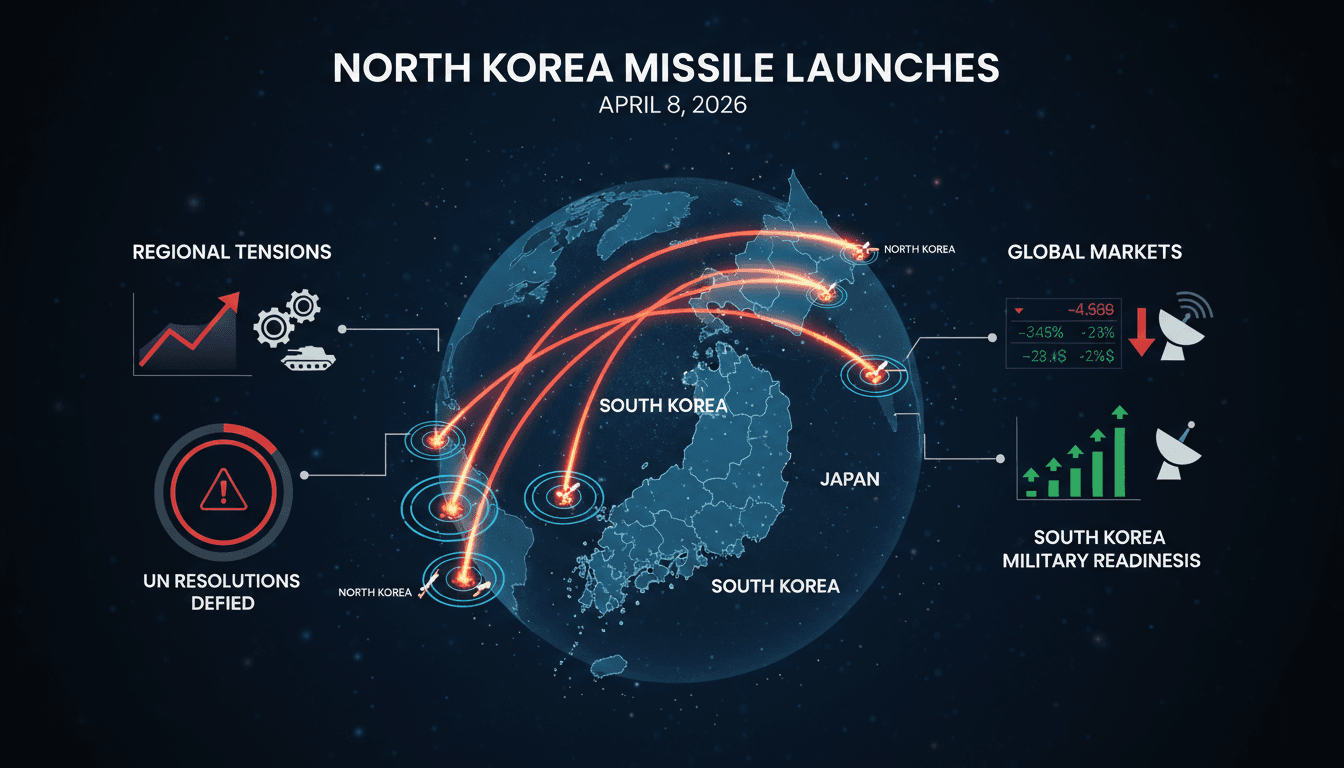
Here's what it means for you.
In an interconnected world, geopolitical tensions can ripple through markets and impact global business operations.
Why it matters
The missile launches challenge regional security dynamics and could influence global economic stability.
What happened (in 30 seconds)
- North Korea launched multiple short-range ballistic missiles toward the East Sea on April 8, 2026, with a total of six launches confirmed this year.
- The missiles traveled approximately 240 kilometers before splashing down in international waters, with no reported damage or incursions.
- South Korea and Japan condemned the actions as provocations that violate UN resolutions, raising military readiness in response.
The context you actually need
- Strained inter-Korean relations have persisted, with recent diplomatic overtures from South Korea met with hostility from North Korea.
- North Korea's missile tests in 2026 have focused on solid-fuel engine advancements, enhancing missile mobility and complicating defense strategies.
- Regional markets, including those in Asia, have shown resilience amid these tensions, with stock indices rising due to unrelated geopolitical de-escalations in the Middle East.
What's really happening
On April 8, 2026, North Korea's missile launches marked a significant escalation in its ongoing military provocations against South Korea and Japan. The launches occurred shortly after a suspected missile failure near Pyongyang on April 7, indicating a pattern of aggressive posturing by the North. This series of actions reflects North Korea's strategic intent to showcase its military capabilities, particularly advancements in solid-fuel missile technology, which allows for quicker launches and greater mobility.
The backdrop of these launches is a complex web of diplomatic failures and rising tensions. South Korean President Lee Jae-myung's recent expressions of regret over drone incursions into North Korea were met with derision from Pyongyang, which labeled South Korea as its "principal enemy state." This dismissal underscores the deep-seated animosity that continues to characterize inter-Korean relations. North Korea's Foreign Ministry has consistently rejected any conciliatory gestures from Seoul, suggesting that the regime is more focused on military demonstrations than diplomatic engagement.
The geopolitical implications of these missile tests extend beyond the Korean Peninsula. Japan's Coast Guard confirmed that the missiles fell outside its territorial waters, yet the threat to regional peace is palpable. Both South Korea and Japan have responded by heightening military readiness, reflecting a shared concern over North Korea's capabilities. The U.S. has also been involved, sharing intelligence with South Korea to monitor North Korean activities closely.
Despite the immediate tensions, the broader market reaction has been muted. Asian stock indices, including the KOSPI and Nikkei, experienced gains, driven by unrelated geopolitical de-escalations in the Middle East and falling oil prices. This suggests that while the missile launches are serious, they have not yet translated into significant economic fallout. However, the situation remains fluid, and continued provocations could alter market perceptions and investor confidence.
Who feels it first (and how)
- Government officials in South Korea and Japan, who must respond to public safety and security concerns.
- Military sectors in both countries, which will see increased readiness and potential budget allocations for defense.
- Investors and businesses in Asia, particularly those involved in trade and finance, who may experience market volatility linked to geopolitical tensions.
What to watch next
- Further missile tests from North Korea: Continued launches could escalate tensions and provoke stronger military responses from South Korea and Japan.
- Diplomatic engagements or failures: Any new attempts at dialogue or further provocations will significantly influence regional stability and market reactions.
- Economic indicators in Asia: Watch for shifts in stock indices and trade flows that could signal investor confidence or anxiety in response to North Korean actions.
North Korea has conducted six ballistic missile launches in 2026 as of April 8.
Continued military provocations from North Korea in response to perceived threats from South Korea and Japan.
The long-term impact of these tensions on regional markets and international relations.
Frequently Asked Questions
- Why it matters?
- The missile launches challenge regional security dynamics and could influence global economic stability.
- What happened (in 30 seconds)?
- North Korea launched multiple short-range ballistic missiles toward the East Sea on April 8, 2026, with a total of six launches confirmed this year. The missiles traveled approximately 240 kilometers before splashing down in international waters, with no reported damage or incursions. South Korea and Japan condemned the actions as provocations that violate UN resolutions, raising military readiness in response.
- What's really happening?
- On April 8, 2026, North Korea's missile launches marked a significant escalation in its ongoing military provocations against South Korea and Japan. The launches occurred shortly after a suspected missile failure near Pyongyang on April 7, indicating a pattern of aggressive posturing by the North. This series of actions reflects North Korea's strategic intent to showcase its military capabilities, particularly advancements in solid-fuel missile technology, which allows for quicker launches and g
- Who feels it first (and how)?
- Government officials in South Korea and Japan, who must respond to public safety and security concerns. Military sectors in both countries, which will see increased readiness and potential budget allocations for defense. Investors and businesses in Asia, particularly those involved in trade and finance, who may experience market volatility linked to geopolitical tensions.
- What to watch next?
- Further missile tests from North Korea: Continued launches could escalate tensions and provoke stronger military responses from South Korea and Japan. Diplomatic engagements or failures: Any new attempts at dialogue or further provocations will significantly influence regional stability and market reactions. Economic indicators in Asia: Watch for shifts in stock indices and trade flows that could signal investor confidence or anxiety in response to North Korean actions.
Pan-Arab news coverage spanning politics, business, sports, and regional affairs.
"Asharq Al-Awsat reflects a broad Arab editorial perspective with strong attention to regional geopolitics."
— A47 Editor
سيول تقول إن بيونغ يانغ أطلقت صاروخاً باليستياً آخر باتجاه البحر الشرقي
The South Korean military reported that North Korea launched another ballistic missile today, following an earlier announcement from Seoul that Pyongyang had fired at least one projectile. This escalation highlights ongoing tensions on the Korean Pen...
Breaking news, politics, business, and entertainment from the U.S. and around the world.
"The New York Post is a tabloid-format newspaper known for its sensationalist headlines and conservative-leaning editorial tone."
— A47 Editor
North Korea fires missiles toward sea after ridiculing South’s hopes for better ties
North Korea has fired an additional ballistic missile toward its eastern waters, following a period of mocking South Korea's aspirations for improved diplomatic relations. This missile launch comes amid heightened tensions and ongoing military exerci...