
Iranian Forces Assert Control in Strait of Hormuz Amid U.S. Naval Blockade
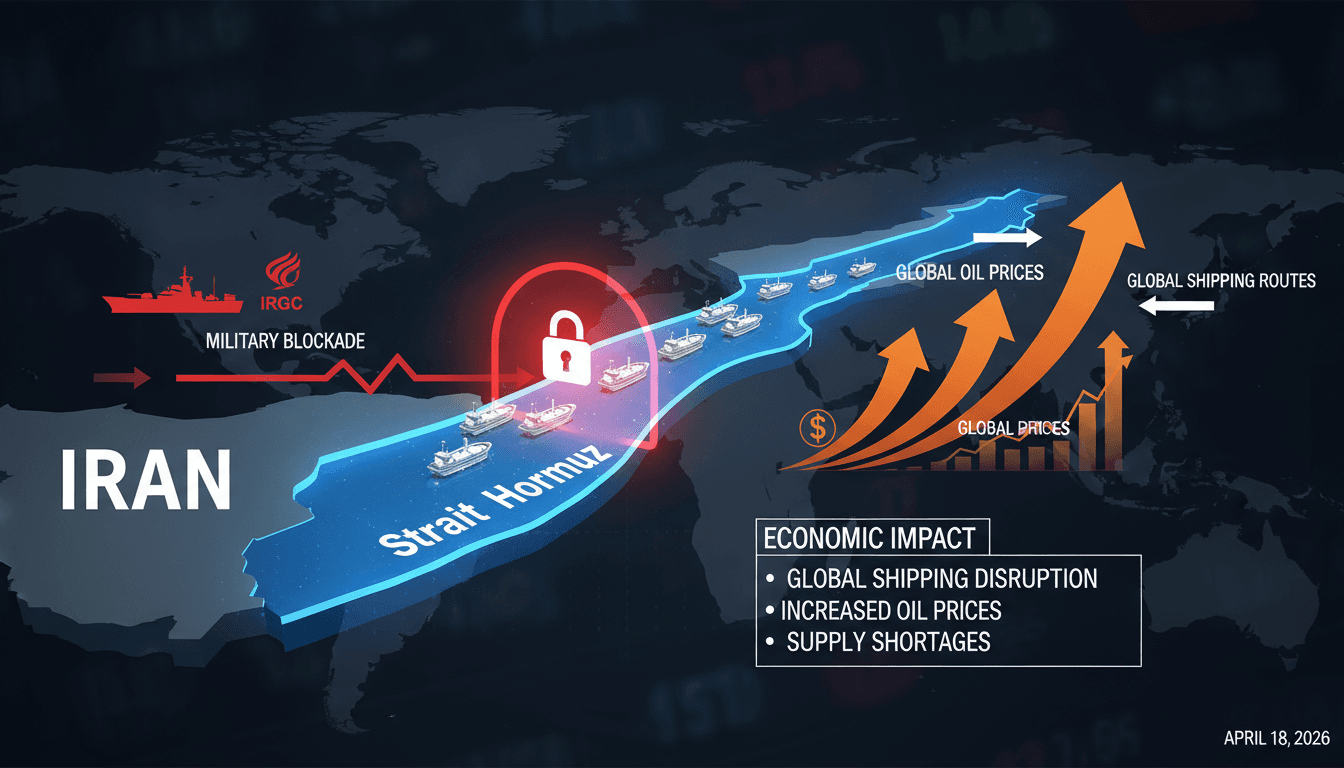
Here's what it means for you.
Rising tensions in the Strait of Hormuz could lead to increased costs for consumers and businesses globally, especially in fuel and shipping.
Why it matters
The Strait of Hormuz is a critical chokepoint for global oil supply, with 20% of the world's oil passing through it, making disruptions highly impactful.
What happened (in 30 seconds)
- On April 18, 2026, Iranian Revolutionary Guard forces attacked commercial ships, asserting control amid a U.S. naval blockade.
- The U.S. blockade, initiated on April 13, has intercepted 23 vessels, targeting Iranian oil exports that are vital to its economy.
- Conflicting claims emerged, with President Trump suggesting Iran agreed to cease hostilities, while Iranian officials denied any new agreements.
The context you actually need
- U.S. sanctions were reimposed on Iran in September 2025, following nuclear advancements and regional aggressions, leading to heightened tensions.
- Iran's economy relies heavily on oil exports, with 90% of its oil going to China, making the Strait a strategic leverage point in negotiations.
- Shipping firms have classified the area as high-risk due to military activity, leading to increased insurance costs and potential shipping delays.
What's really happening
The ongoing standoff in the Strait of Hormuz is a complex interplay of military strategy, economic pressure, and geopolitical maneuvering. The U.S. has enforced a naval blockade to curb Iran's oil exports, which are crucial for its economy, accounting for over 40% of government revenue. This blockade is a response to Iran's nuclear advancements and aggressive regional actions, which have prompted the U.S. to reimpose UN sanctions through a snapback mechanism.
Iran, facing severe economic challenges and reconstruction needs estimated at $270 billion, views the Strait of Hormuz as a vital bargaining chip. The strait is not only a critical transit route for oil but also a symbol of national sovereignty. By asserting control over it, Iran aims to demonstrate resilience against U.S. pressure and maintain leverage in any potential negotiations.
The U.S. blockade has resulted in significant economic losses for Iran, estimated at $435 million daily, with $276 million stemming from foregone oil and petrochemical exports. This economic pain is intended to force Iran to the negotiating table, but it also risks escalating military confrontations, as evidenced by the recent attacks on commercial vessels.
The situation is further complicated by the involvement of China, which is Iran's primary oil buyer. China's reliance on Iranian oil creates a delicate balance, as it must navigate its own interests while responding to U.S. pressures. The potential for increased oil prices and shipping costs could ripple through global markets, affecting everything from fuel prices to consumer goods.
As the U.S. maintains its blockade and Iran continues to assert its control over the strait, the risk of miscalculation or escalation remains high. Shipping firms and insurers are already reacting to the heightened risks, which could lead to broader economic implications if the situation deteriorates further.
Who feels it first (and how)
- Shipping companies: Facing increased insurance costs and potential delays in transit.
- Consumers: Likely to see rising fuel and commodity prices due to supply chain disruptions.
- Businesses in Dubai: Experiencing higher import costs and economic uncertainty, impacting growth and profitability.
What to watch next
- Iran's military actions: Continued aggressive posturing could escalate tensions and disrupt shipping further, impacting global oil prices.
- U.S.-Iran negotiations: Any signs of diplomatic engagement or breakdown could signal shifts in market stability and oil supply.
- Global oil prices: Fluctuations in oil prices will indicate the economic impact of the blockade and geopolitical tensions on global markets.
The U.S. blockade is fully enforced, and Iran maintains strict control over the Strait of Hormuz.
Continued economic pressure on Iran will persist, potentially leading to further military confrontations.
The outcome of any potential negotiations between the U.S. and Iran remains uncertain, as both sides have conflicting narratives.
Frequently Asked Questions
- Why it matters?
- The Strait of Hormuz is a critical chokepoint for global oil supply, with 20% of the world's oil passing through it, making disruptions highly impactful.
- What happened (in 30 seconds)?
- On April 18, 2026, Iranian Revolutionary Guard forces attacked commercial ships, asserting control amid a U.S. naval blockade. The U.S. blockade, initiated on April 13, has intercepted 23 vessels, targeting Iranian oil exports that are vital to its economy. Conflicting claims emerged, with President Trump suggesting Iran agreed to cease hostilities, while Iranian officials denied any new agreements.
- What's really happening?
- The ongoing standoff in the Strait of Hormuz is a complex interplay of military strategy, economic pressure, and geopolitical maneuvering. The U.S. has enforced a naval blockade to curb Iran's oil exports, which are crucial for its economy, accounting for over 40% of government revenue. This blockade is a response to Iran's nuclear advancements and aggressive regional actions, which have prompted the U.S. to reimpose UN sanctions through a snapback mechanism. Iran, facing severe economic challe
- Who feels it first (and how)?
- Shipping companies: Facing increased insurance costs and potential delays in transit. Consumers: Likely to see rising fuel and commodity prices due to supply chain disruptions. Businesses in Dubai: Experiencing higher import costs and economic uncertainty, impacting growth and profitability.
- What to watch next?
- Iran's military actions: Continued aggressive posturing could escalate tensions and disrupt shipping further, impacting global oil prices. U.S.-Iran negotiations: Any signs of diplomatic engagement or breakdown could signal shifts in market stability and oil supply. Global oil prices: Fluctuations in oil prices will indicate the economic impact of the blockade and geopolitical tensions on global markets.
Macro commentary, policy analysis, growth/inflation themes, and global outlooks.
"Contextual macro coverage that complements day-to-day market headlines."
— A47 Editor
U.S. considers plan to board Iranian ships as ceasefire teeters
The U.S. is contemplating a plan to board Iranian ships as tensions escalate and a ceasefire in the region appears to be faltering. This decision comes amid conflicting reports regarding the status of the Strait of Hormuz, which is crucial for global...
Pan-Arab news coverage spanning politics, business, sports, and regional affairs.
"Asharq Al-Awsat reflects a broad Arab editorial perspective with strong attention to regional geopolitics."
— A47 Editor
هرمز بين حصارَين... حرب ترمب الاقتصادية أو عودة إيران إلى الحافة
Recent tensions in the Strait of Hormuz have escalated, resembling a fragile ceasefire over a volatile situation, as observed by analysts. The ongoing geopolitical dynamics involve economic pressures from former President Trump and the potential for ...
International coverage from The Guardian's global desks.
"The Guardian is known for its progressive editorial stance and in-depth analysis."
— A47 Editor
Trump and Tehran’s series of mismanaged posts stall progress towards peace
A series of mismanaged media announcements from U.S. President Donald Trump and Iranian officials have stalled progress towards a peace settlement between the U.S. and Iran. This situation escalated when Iran announced a complete blockade on commerci...
Regional and international reporting focused on Middle Eastern politics, diplomacy, and economics.
"Asharq Al-Awsat is a Saudi-owned international newspaper reflecting mainstream Gulf political perspectives."
— A47 Editor
Trump Says Iran Cannot 'Blackmail Us' with Strait of Hormuz
President Donald Trump stated that Iran cannot 'blackmail' the United States regarding the Strait of Hormuz, emphasizing the U.S. commitment to maintaining freedom of navigation in this critical waterway. This statement comes amid heightened tensions...
Global business headlines with AI angles.
"General business outlet that frequently covers AI."
— A47 Editor
Trump Reacts To Iran's Renewed Closure Of Strait Of Hormuz: 'They Can't Blackmail Us'
President Donald Trump responded to Iran's recent announcement of the closure of the Strait of Hormuz, asserting that the U.S. will not be blackmailed by Iran amid ongoing tensions over alleged ceasefire violations. This strategic waterway is crucial...
Arabic-language UAE newspaper coverage focused on domestic affairs, public institutions, business, society, and regional developments.
"Al Khaleej coverage generally reflects a mainstream UAE editorial lens with strong attention to public affairs, institutions, and regional developments."
— A47 Editor
ترامب: إيران لا تستطيع ابتزازنا.. والمحادثات الجارية جيدة
U.S. President Donald Trump stated that Iran has attempted to threaten the closure of the Strait of Hormuz again, emphasizing that the ongoing negotiations are positive. This statement reflects the ongoing tensions between the U.S. and Iran regarding...
Arabic-language political and world news coverage for UAE readers.
"Emarat Al Youm world coverage usually presents international developments through a UAE and Arab audience lens."
— A47 Editor
ترامب: نجري محادثات جيدة جداً مع الإيرانيين لكنهم لا يستطيعون ابتزازنا ترامب: نجري محادثات جيدة جداً مع الإيرانيين لكنهم لا يستطيعون ابتزازنا
U.S. President Donald Trump stated that he is receiving information regarding the situation in the Strait of Hormuz by the end of the day, emphasizing that the talks with Iran are going very well, but they cannot extort the United States.
European coverage of Middle East politics and security issues.
"France 24 offers international reporting with a European editorial perspective."
— A47 Editor
Middle East : Fragile US-Iran talks hinge on nuclear and Hormuz disputes
US-Iran negotiations are currently marked by limited progress and ongoing tensions, particularly regarding disputes over enriched uranium and the strategic Strait of Hormuz. Despite these challenges, there are indications that compromises may still b...
Coverage of current events and conflicts in the Middle East.
"France 24 is viewed as a globally focused outlet with balanced coverage and a European perspective."
— A47 Editor
Middle East : Fragile US-Iran talks hinge on nuclear and Hormuz disputes
US-Iran negotiations are currently marked by limited progress and ongoing tensions, particularly regarding disputes over enriched uranium and the strategic Strait of Hormuz. Despite these challenges, there are indications that compromises may still b...