
U.S. Defense Secretary Announces Largest Military Strikes Against Iran Since Conflict Began
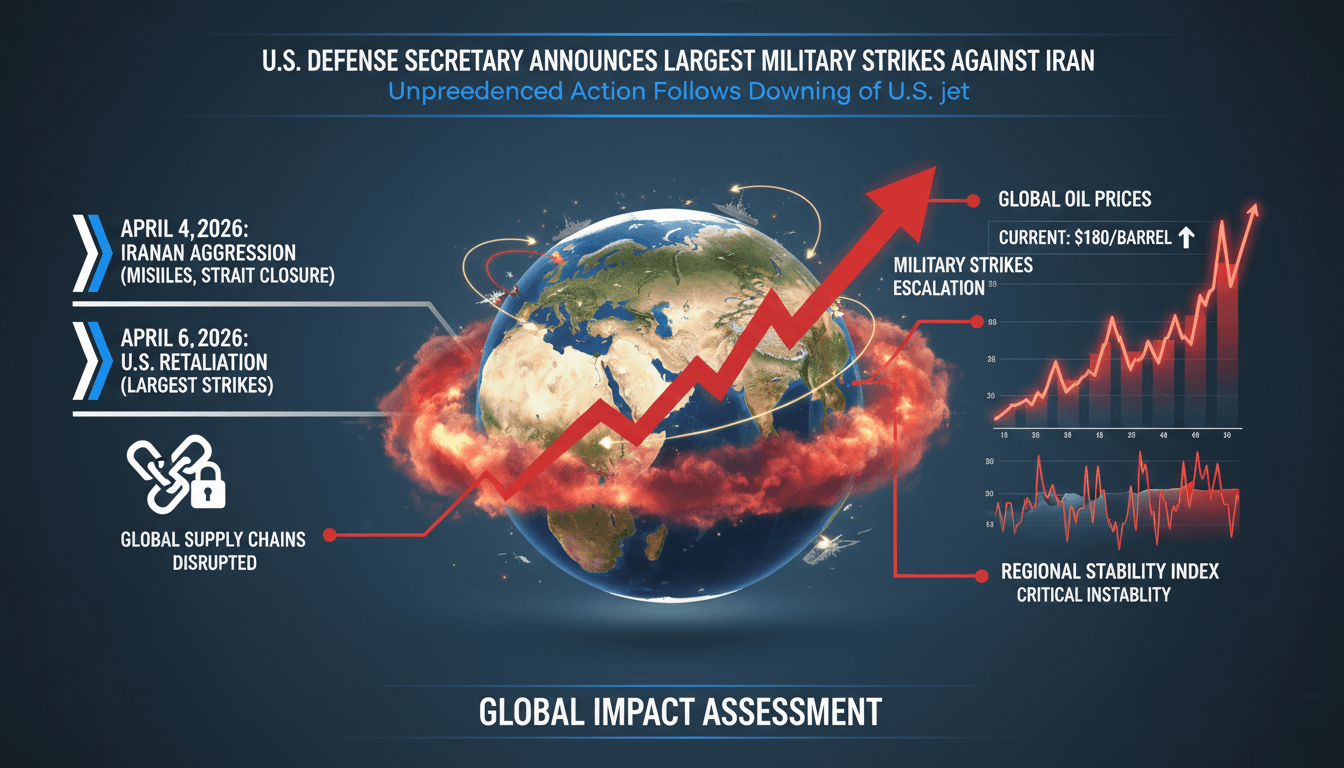
Here's what it means for you.
Rising geopolitical tensions could lead to increased costs and disruptions in global markets, affecting your daily expenses and investment strategies.
Why it matters
The escalation in U.S.-Iran conflict threatens stability in oil markets and global supply chains, impacting economies worldwide.
What happened (in 30 seconds)
- On April 6, 2026, U.S. Secretary of Defense Pete Hegseth announced significant military strikes against Iran following the downing of a U.S. fighter jet.
- The U.S. military launched record sorties, marking the largest volume of strikes since the conflict began, amid heightened tensions over Iran's nuclear ambitions.
- Iran retaliated, injuring U.S. personnel and rejecting ceasefire proposals, further escalating the conflict.
The context you actually need
- The U.S.-Iran conflict reignited in February 2026, driven by Israeli and U.S. military actions against Iranian facilities amid fears of nuclear weaponization.
- Iran's alleged closure of the Strait of Hormuz has disrupted global oil supplies, raising concerns over energy security and prices.
- The geopolitical landscape is shifting, with Gulf states urging diplomacy while grappling with the implications of military escalation.
What's really happening
The recent military strikes against Iran represent a significant escalation in a conflict that has been brewing for months. The U.S. response follows a series of provocations, including Iran's missile strikes on U.S. bases and its downing of a U.S. F-15E fighter jet. This incident not only heightened tensions but also showcased Iran's willingness to engage militarily, prompting a robust U.S. response.
Secretary Hegseth's announcement emphasized the U.S. commitment to maintaining air superiority and protecting its interests in the region. The reference to previous U.S. actions against Iranian figures, such as Qasem Soleimani, illustrates a strategy aimed at deterring further Iranian aggression. The U.S. military's operational readiness was demonstrated through a successful rescue mission, which further solidified its position in the region.
The implications of these strikes extend beyond immediate military objectives. The U.S. aims to compel Iran to make concessions regarding its nuclear program and regional influence. However, the strikes also risk inflaming anti-American sentiment and galvanizing Iranian resistance, potentially leading to a protracted conflict.
Moreover, the disruption of the Strait of Hormuz, a critical chokepoint for global oil supplies, has already begun to impact oil prices, with Brent crude exceeding $110 per barrel. This spike in oil prices can have far-reaching effects on global economies, particularly in oil-dependent regions like the UAE. As fuel costs rise, consumers may face increased prices for goods and services, while businesses may need to adjust their operations to cope with higher energy expenses.
The volatility in the region is further compounded by the reactions of other Gulf states, which are now on high alert and may seek to bolster their defenses. The potential for miscalculation or unintended escalation remains high, as both the U.S. and Iran navigate a complex web of military and diplomatic maneuvers.
Who feels it first (and how)
- Consumers: Increased fuel prices will directly impact transportation and goods costs.
- Investors: Volatile oil markets may lead to fluctuations in stock prices, particularly in energy sectors.
- Shipping companies: Disruptions in the Strait of Hormuz could affect shipping routes and costs.
- Regional governments: Heightened security concerns may lead to increased military spending and diplomatic tensions.
What to watch next
- Oil price fluctuations: Monitor Brent crude prices as they reflect geopolitical tensions and supply chain disruptions.
- U.S. military operations: Watch for updates on U.S. military actions and their implications for regional stability.
- Diplomatic efforts: Observe any shifts in diplomatic negotiations involving Iran, the U.S., and Gulf states, as these could signal potential de-escalation or further conflict.
The U.S. has executed military strikes against Iran, escalating the conflict.
Oil prices will continue to fluctuate due to geopolitical tensions and market reactions.
The long-term impact of these strikes on U.S.-Iran relations and regional stability remains uncertain.
Frequently Asked Questions
- Why it matters?
- The escalation in U.S.-Iran conflict threatens stability in oil markets and global supply chains, impacting economies worldwide.
- What happened (in 30 seconds)?
- On April 6, 2026, U.S. Secretary of Defense Pete Hegseth announced significant military strikes against Iran following the downing of a U.S. fighter jet. The U.S. military launched record sorties, marking the largest volume of strikes since the conflict began, amid heightened tensions over Iran's nuclear ambitions. Iran retaliated, injuring U.S. personnel and rejecting ceasefire proposals, further escalating the conflict.
- What's really happening?
- The recent military strikes against Iran represent a significant escalation in a conflict that has been brewing for months. The U.S. response follows a series of provocations, including Iran's missile strikes on U.S. bases and its downing of a U.S. F-15E fighter jet. This incident not only heightened tensions but also showcased Iran's willingness to engage militarily, prompting a robust U.S. response. Secretary Hegseth's announcement emphasized the U.S. commitment to maintaining air superiority
- Who feels it first (and how)?
- Consumers: Increased fuel prices will directly impact transportation and goods costs. Investors: Volatile oil markets may lead to fluctuations in stock prices, particularly in energy sectors. Shipping companies: Disruptions in the Strait of Hormuz could affect shipping routes and costs. Regional governments: Heightened security concerns may lead to increased military spending and diplomatic tensions.
- What to watch next?
- Oil price fluctuations: Monitor Brent crude prices as they reflect geopolitical tensions and supply chain disruptions. U.S. military operations: Watch for updates on U.S. military actions and their implications for regional stability. Diplomatic efforts: Observe any shifts in diplomatic negotiations involving Iran, the U.S., and Gulf states, as these could signal potential de-escalation or further conflict.
Arabic-language UAE newspaper coverage focused on domestic affairs, public institutions, business, society, and regional developments.
"Al Khaleej coverage generally reflects a mainstream UAE editorial lens with strong attention to public affairs, institutions, and regional developments."
— A47 Editor
هيغسيث متوعداً إيران: «سنضربكم اليوم بشكل غير مسبوق»
U.S. Defense Secretary Pete Hegseth has issued a warning to Iran, stating that the United States will launch an unprecedented number of military strikes against the country on Monday. This announcement underscores escalating tensions between the two ...
Arabic-language coverage of international news and geopolitics.
"RT Arabic is a Russian state-funded outlet often criticized for promoting Kremlin-aligned narratives."
— A47 Editor
هيغسيث: الاثنين والثلاثاء سيشهدان "أكبر عدد من الضربات" على إيران منذ بدء الحرب
U.S. Secretary of Defense Pete Hegseth announced on Tuesday that the United States plans to carry out the largest number of strikes on Iran on Monday and Tuesday since the military operation began on February 28. This escalation indicates a significa...
Arabic-language political and world news coverage for UAE readers.
"Emarat Al Youm world coverage usually presents international developments through a UAE and Arab audience lens."
— A47 Editor
هيغسيث متوعداً: اليوم سيشهد أكبر عدد من الضربات على إيران هيغسيث متوعداً: اليوم سيشهد أكبر عدد من الضربات على إيران
U.S. Secretary of Defense Pete Hegseth announced that Monday will witness the largest number of strikes against Iran since the onset of hostilities. This statement indicates a significant escalation in military actions directed at Iran, reflecting he...