
AFC Committee Advances Slot Allocation Reform for Champions League Favoring Saudi Arabia and Japan
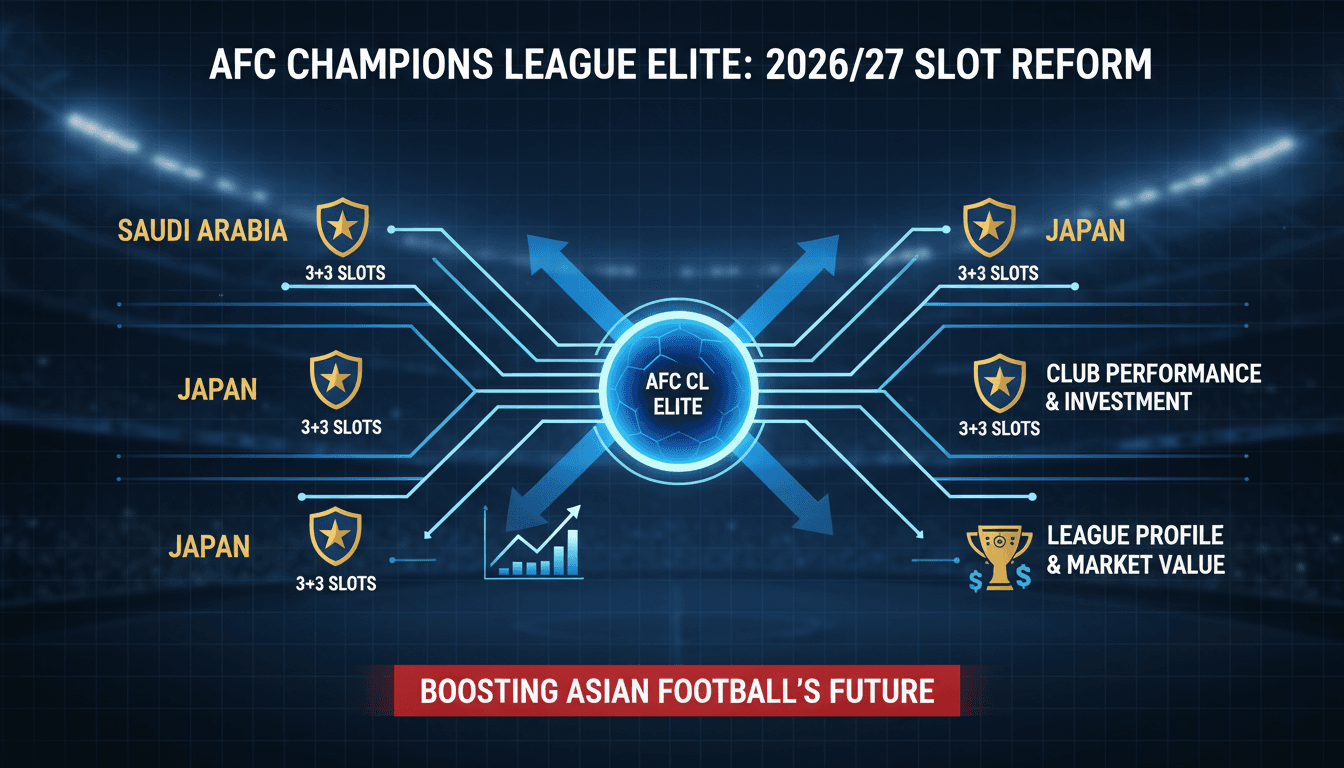
Here's what it means for you.
If you’re a football fan or investor in the Middle East or East Asia, this reform could reshape the competitive landscape of club football in your region.
Why it matters
This allocation reform signals a shift in power dynamics within Asian football, enhancing the visibility and competitiveness of leagues in Saudi Arabia and Japan.
What happened (in 30 seconds)
- On April 20, 2026, the AFC Professional Football Committee proposed increased slot allocations for Saudi Arabia and Japan in the AFC Champions League Elite.
- Both nations are set to receive three direct group stage entries and two playoff spots, effective for the 2026/27 season.
- This reform expands the Elite tournament to 32 teams, rewarding top associations and increasing opportunities for other nations.
The context you actually need
- Saudi Arabian clubs currently lead the AFC club competition coefficient rankings with 119.957 points, while Japanese clubs follow with 107.663 points.
- The AFC's strategic overhaul aims to enhance competitiveness and inclusivity in club competitions, reflecting geopolitical and commercial influences.
- Recent discussions have indicated a trend toward increasing representation for top-ranked nations, with implications for league valuations and investment opportunities.
What's really happening
The proposed slot allocation reform by the AFC is a calculated response to the growing dominance of Saudi Arabian and Japanese clubs in Asian football. With Saudi clubs leading the AFC club competition coefficient rankings, the decision to grant them three direct entries and two playoff spots in the Champions League Elite is a recognition of their performance and potential. This reform is not merely about rewarding success; it is also about strategically positioning these leagues to attract more investment and talent.
The expansion of the Elite tournament from 24 to 32 teams is a significant move aimed at enhancing the overall competitiveness of the league. By increasing the number of slots for top-performing nations, the AFC is fostering a more dynamic environment that encourages clubs to invest in their squads and infrastructure. This is particularly relevant for Saudi Arabia, where the Pro League has seen a surge in investment, leading to higher valuations and increased visibility on the global stage.
Moreover, the allocation reform is likely to have ripple effects across the region. Countries like the UAE, South Korea, and Qatar are also receiving additional slots, which could lead to a more competitive landscape in Asian football. The UAE, for instance, will secure five slots, including three direct entries and one playoff spot, which could enhance the profile of clubs like Shabab Al-Ahli, currently competing in the Elite semifinals. This increased participation not only boosts local fan engagement but also has the potential to drive economic benefits through matchday revenues and sponsorships.
The geopolitical context cannot be overlooked either. The AFC's decision reflects broader trends in sports where regional powers are vying for influence. The increased representation for Saudi Arabia and Japan may be seen as a strategic move to counterbalance the historical dominance of other leagues, particularly in East Asia. This shift could lead to a more competitive environment, encouraging clubs across the continent to elevate their game.
In summary, the AFC's slot allocation reform is a multifaceted initiative that aims to enhance the competitiveness of Asian football while rewarding top-performing leagues. It reflects a broader strategy to attract investment, improve club performance, and elevate the profile of Asian football on the global stage.
Who feels it first (and how)
- Football fans in Saudi Arabia and Japan will experience heightened excitement and engagement with more local clubs participating in prestigious tournaments.
- Investors and sponsors in the Middle East and East Asia may see increased opportunities for partnerships and revenue generation as clubs gain more visibility.
- Local economies in cities hosting matches could benefit from increased tourism and matchday spending as clubs compete in the Champions League.
What to watch next
- Final ratification on April 25, 2026: The official approval of the slot allocations will confirm the changes and set the stage for the upcoming season.
- Performance of Saudi and Japanese clubs in the 2025/26 Elite semifinals: Their success could further validate the allocation and influence future investments.
- Market reactions from sponsors and investors: Watch for shifts in valuations of the Saudi Pro League and J.League as the new allocations take effect.
Saudi Arabia and Japan will receive increased slots in the AFC Champions League Elite.
Enhanced competitiveness and investment in Asian football leagues will follow the allocation reform.
The long-term impact on club valuations and sponsorship deals in the region remains to be seen.
Frequently Asked Questions
- Why it matters?
- This allocation reform signals a shift in power dynamics within Asian football, enhancing the visibility and competitiveness of leagues in Saudi Arabia and Japan.
- What happened (in 30 seconds)?
- On April 20, 2026, the AFC Professional Football Committee proposed increased slot allocations for Saudi Arabia and Japan in the AFC Champions League Elite. Both nations are set to receive three direct group stage entries and two playoff spots, effective for the 2026/27 season. This reform expands the Elite tournament to 32 teams, rewarding top associations and increasing opportunities for other nations.
- What's really happening?
- The proposed slot allocation reform by the AFC is a calculated response to the growing dominance of Saudi Arabian and Japanese clubs in Asian football. With Saudi clubs leading the AFC club competition coefficient rankings, the decision to grant them three direct entries and two playoff spots in the Champions League Elite is a recognition of their performance and potential. This reform is not merely about rewarding success; it is also about strategically positioning these leagues to attract more
- Who feels it first (and how)?
- Football fans in Saudi Arabia and Japan will experience heightened excitement and engagement with more local clubs participating in prestigious tournaments. Investors and sponsors in the Middle East and East Asia may see increased opportunities for partnerships and revenue generation as clubs gain more visibility. Local economies in cities hosting matches could benefit from increased tourism and matchday spending as clubs compete in the Champions League.
- What to watch next?
- Final ratification on April 25, 2026: The official approval of the slot allocations will confirm the changes and set the stage for the upcoming season. Performance of Saudi and Japanese clubs in the 2025/26 Elite semifinals: Their success could further validate the allocation and influence future investments. Market reactions from sponsors and investors: Watch for shifts in valuations of the Saudi Pro League and J.League as the new allocations take effect.
Arabic-language coverage of Saudi, regional, and international affairs.
"Al Bilad offers mainstream Saudi newspaper coverage across domestic and broader Arab topics."
— A47 Editor
زيادة مقاعد السعودية واليابان في نخبة آسيا
The Asian Football Confederation's Professional Football Committee is set to approve a new allocation of spots for the AFC Champions League and AFC Champions League 2, granting Saudi Arabia and Japan three direct spots each in the elite tournament, a...
Regional and international reporting focused on Middle Eastern politics, diplomacy, and economics.
"Asharq Al-Awsat is a Saudi-owned international newspaper reflecting mainstream Gulf political perspectives."
— A47 Editor
Sources: New Allocation Gives Saudi Arabia, Japan Six slots in AFC Champions League Elite, AFC Champions League 2
Recent reports indicate that Saudi Arabia and Japan have been allocated six slots each in the AFC Champions League Elite and AFC Champions League 2, enhancing their representation in this prestigious tournament.