
Israeli Restrictions on Gypsum Imports Deepen Prosthetic Shortages for Gaza Amputees
Here's what it means for you.
The ongoing humanitarian crisis in Gaza highlights the urgent need for international cooperation in addressing medical supply shortages.
Why it matters
The situation underscores the critical intersection of security policies and humanitarian needs, impacting global perceptions of conflict resolution.
What happened (in 30 seconds)
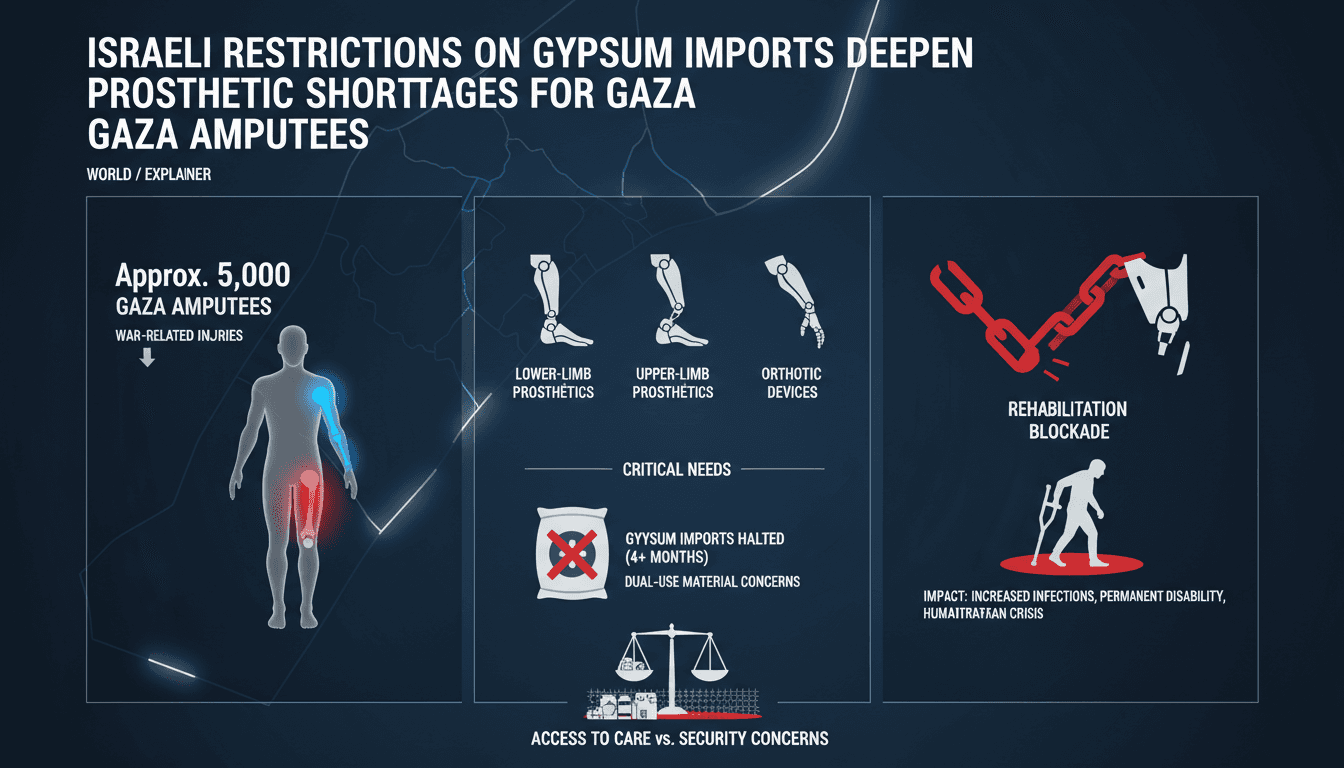
- Israeli restrictions on gypsum imports have led to critical shortages of materials needed for prosthetic limbs in Gaza.
- Approximately 5,000 amputees, including 25% children, are relying on makeshift solutions that pose health risks.
- International efforts are underway to facilitate medical imports and provide support, but challenges remain due to ongoing tensions.
The context you actually need
- The blockade has been justified by Israeli authorities as a security measure against dual-use materials that could aid Hamas.
- Amputations surged during the recent military operations, with Gaza's per capita rate of amputees now exceeding historical highs seen in Cambodia.
- Despite a ceasefire in October 2025, restrictions on essential medical supplies have persisted, complicating rehabilitation efforts for war victims.
What's really happening
The humanitarian crisis in Gaza is deeply intertwined with the Israeli government's security policies, particularly regarding the classification of materials as dual-use. Gypsum, essential for creating custom prosthetics, has been categorized under these restrictions, leading to a halt in imports for over four months. This decision reflects a broader strategy to prevent materials from being diverted for military use, but it has devastating consequences for civilians, particularly the 5,000 amputees in Gaza.
The war has resulted in a staggering number of amputations, with incidents like the December 2024 airstrike and the September 2025 drone strike exemplifying the violence that has led to these injuries. As a result, rehabilitation facilities are overwhelmed, with only eight prosthetists remaining to serve the needs of thousands. The reliance on makeshift prosthetics made from plastic pipes and wooden planks not only compromises mobility but also increases the risk of infections and further complications.
International organizations, including Humanity & Inclusion and the International Committee of the Red Cross, are advocating for exemptions to these restrictions, emphasizing the urgent need for medical supplies. The Trump-led Board of Peace has classified the provision of prosthetics as an urgent civilian obligation, securing over $5 billion in pledges for humanitarian aid. However, these funds are contingent on political conditions, including Hamas disarmament, which complicates the delivery of much-needed assistance.
The situation is further exacerbated by the psychological trauma faced by the amputees, especially children, who are navigating a landscape marked by ongoing violence and instability. The UAE-based Big Heart Foundation has initiated campaigns to deliver prosthetics and rehabilitation services, but the effectiveness of these efforts is hampered by the blockade.
As the international community grapples with the complexities of the Israeli-Palestinian conflict, the plight of Gaza's amputees serves as a stark reminder of the human cost of political decisions. The ongoing dialogue between Israeli authorities and humanitarian organizations may yield some progress, but the fundamental issues surrounding security and civilian needs remain unresolved.
Who feels it first (and how)
- Amputees and their families: Facing immediate health risks and psychological trauma.
- Healthcare providers: Struggling with limited resources and overwhelming demand for services.
- International NGOs: Engaged in advocacy and support efforts, facing bureaucratic hurdles.
- Children: Particularly vulnerable to long-term mobility challenges and emotional distress.
What to watch next
- International negotiations: Watch for developments in discussions between Israeli authorities and humanitarian organizations, which could impact the flow of medical supplies.
- Aid funding: Monitor the effectiveness of the $5 billion in pledges and how they translate into tangible support for Gaza's amputees.
- Public sentiment: Observe shifts in global public opinion regarding the humanitarian crisis, which could influence policy changes.
The number of amputees in Gaza is approximately 5,000, with a significant portion being children.
Continued advocacy from international organizations will push for exemptions to material restrictions.
The long-term impact of the ongoing blockade on the health and rehabilitation of Gaza's amputees remains uncertain.
Frequently Asked Questions
- Why it matters?
- The situation underscores the critical intersection of security policies and humanitarian needs, impacting global perceptions of conflict resolution.
- What happened (in 30 seconds)?
- Israeli restrictions on gypsum imports have led to critical shortages of materials needed for prosthetic limbs in Gaza. Approximately 5,000 amputees, including 25% children, are relying on makeshift solutions that pose health risks. International efforts are underway to facilitate medical imports and provide support, but challenges remain due to ongoing tensions.
- What's really happening?
- The humanitarian crisis in Gaza is deeply intertwined with the Israeli government's security policies, particularly regarding the classification of materials as dual-use. Gypsum, essential for creating custom prosthetics, has been categorized under these restrictions, leading to a halt in imports for over four months. This decision reflects a broader strategy to prevent materials from being diverted for military use, but it has devastating consequences for civilians, particularly the 5,000 amput
- Who feels it first (and how)?
- Amputees and their families: Facing immediate health risks and psychological trauma. Healthcare providers: Struggling with limited resources and overwhelming demand for services. International NGOs: Engaged in advocacy and support efforts, facing bureaucratic hurdles. Children: Particularly vulnerable to long-term mobility challenges and emotional distress.
- What to watch next?
- International negotiations: Watch for developments in discussions between Israeli authorities and humanitarian organizations, which could impact the flow of medical supplies. Aid funding: Monitor the effectiveness of the $5 billion in pledges and how they translate into tangible support for Gaza's amputees. Public sentiment: Observe shifts in global public opinion regarding the humanitarian crisis, which could influence policy changes.
Pan-Arab news coverage spanning politics, business, sports, and regional affairs.
"Asharq Al-Awsat reflects a broad Arab editorial perspective with strong attention to regional geopolitics."
— A47 Editor
القيود الإسرائيلية تزيد من معاناة مبتوري الأطراف في غزة
Fourteen-year-old Palestinian child Fadl Al-Naji, who once loved playing football, now spends most of his time confined to his home in Gaza due to the impact of Israeli restrictions. These limitations have exacerbated the challenges faced by amputees...
Arabic-language UAE newspaper coverage focused on domestic affairs, public institutions, business, society, and regional developments.
"Al Khaleej coverage generally reflects a mainstream UAE editorial lens with strong attention to public affairs, institutions, and regional developments."
— A47 Editor
القيود الإسرائيلية تزيد معاناة مبتوري الأطراف في غزة
Fourteen-year-old Palestinian child Fadl Al-Naji, who loved playing football, is now confined to his home in Gaza after losing both legs due to an Israeli drone strike in September. His mother, Najwa Al-Naji, shared old videos of him playing football...
Regional coverage and analysis focused on politics, diplomacy, and business across the Middle East.
"Al-Monitor is known for analytical reporting on Middle East politics and policy developments."
— A47 Editor
Gaza's war amputees short of prostheses under Israeli restrictions
In Gaza, the ongoing conflict has left many individuals, including 14-year-old Fadel al-Naji, without access to essential medical supplies such as prostheses. Al-Naji lost both legs in an Israeli drone strike, highlighting the severe impact of milita...