
Saudi and Iranian Foreign Ministers Hold First Official Phone Call Since Iran War Began
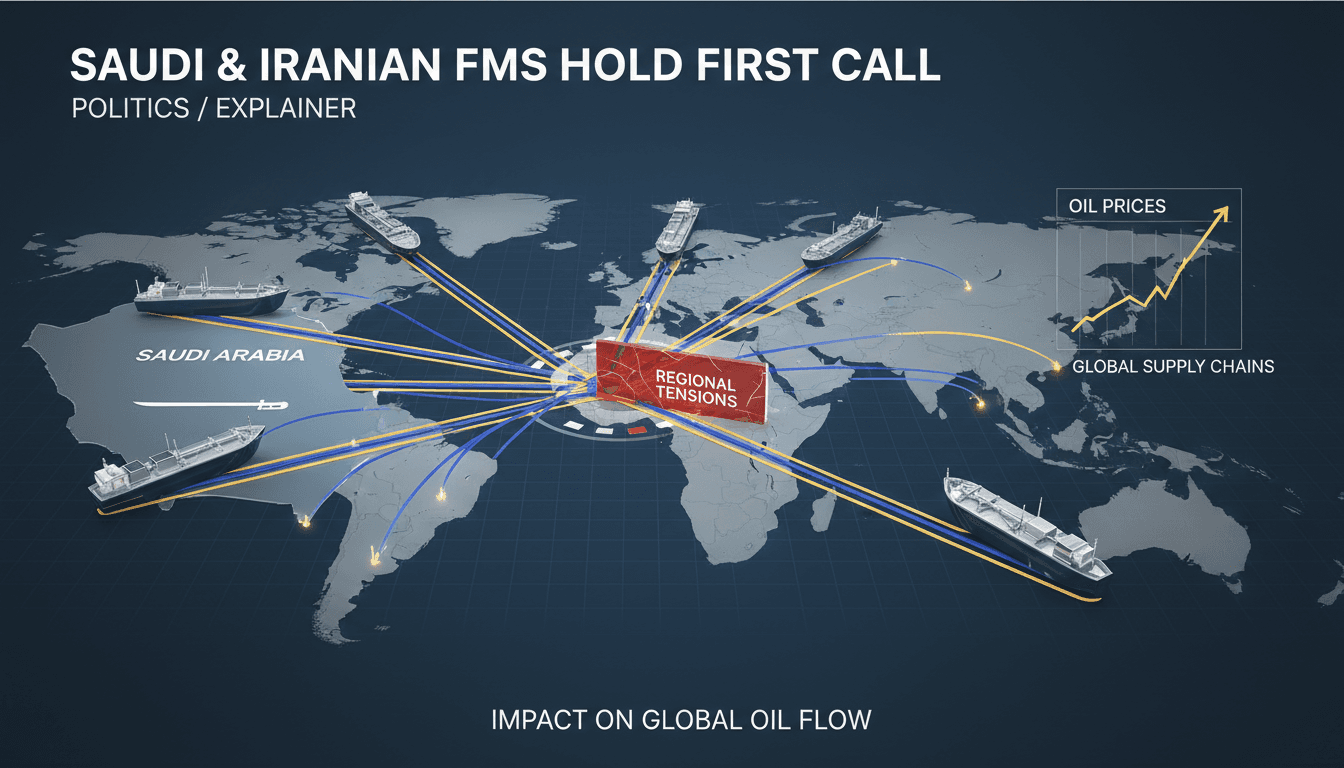
Here's what it means for you.
If you’re in the Gulf or have business interests tied to oil markets, the outcome of these talks could significantly impact your operations and investments.
Why it matters
The ongoing conflict and recent diplomatic engagement directly affect global oil supply and regional security, influencing market volatility and economic stability.
What happened (in 30 seconds)
- Saudi Foreign Minister Prince Faisal bin Farhan and Iranian Foreign Minister Abbas Araghchi held their first official phone call since the 2026 Iran war began.
- The conversation aimed to review regional developments and discuss measures to reduce tensions amid a fragile ceasefire.
- The ministers agreed to meet in person soon to further advance de-escalation efforts.
The context you actually need
- The 2026 Iran war started on February 28, 2026, following US and Israeli strikes on Iranian targets, leading to Iranian retaliatory attacks on Gulf states.
- Saudi Arabia's trust in Iran has been significantly damaged due to attacks on its oil infrastructure, including the East-West pipeline.
- The Strait of Hormuz, a critical chokepoint for global oil supply, has been blocked by Iran, affecting 20% of the world's oil transit.
What's really happening
The recent phone conversation between Saudi and Iranian foreign ministers marks a notable shift in diplomatic relations amid ongoing hostilities. The 2026 Iran war, triggered by US and Israeli military actions, has escalated tensions in the Gulf region, with Iran retaliating against Gulf states, particularly Saudi Arabia. The conflict has severely disrupted oil supplies, as the Strait of Hormuz—through which approximately 20% of global oil supply transits—has been blocked by Iranian forces.
The backdrop of this diplomatic engagement is a fragile ceasefire announced on April 6, 2026, which has not entirely halted hostilities. Despite the ceasefire, missile and drone attacks on Gulf states have continued, highlighting the precarious nature of regional security. Saudi Arabia has been particularly vulnerable, with its oil infrastructure targeted, leading to a declaration that trust with Iran is "completely shattered."
The conversation between the two foreign ministers is part of a broader effort to de-escalate tensions in the region. Pakistan has played a mediating role, facilitating previous talks among regional powers and preparing for upcoming US-Iran discussions in Islamabad. The strategic defense agreement formalized between Saudi Arabia and Pakistan in 2025 underscores the shifting alliances and security dynamics in the Gulf.
In Dubai, heightened security measures have been implemented in response to the increased threat level, including the interception of 17 ballistic missiles and 35 drones on April 8, 2026. The financial markets in Dubai and Abu Dhabi have experienced significant volatility, reflecting investor concerns over regional stability. Expatriate evacuations have also occurred, further complicating the economic landscape.
As the Saudi and Iranian ministers prepare for an in-person meeting, the outcome of these discussions could either pave the way for a more stable regional environment or exacerbate existing tensions. The stakes are high, not only for the Gulf states but also for global oil markets, which are sensitive to any disruptions in supply.
Who feels it first (and how)
- Oil traders: Fluctuations in oil prices due to geopolitical tensions will directly impact trading strategies and profit margins.
- Expatriates in the Gulf: Increased security risks may lead to evacuations or heightened living costs, affecting their quality of life.
- Investors in Dubai: Market volatility can lead to significant financial losses, influencing investment decisions and economic forecasts.
What to watch next
- In-person meeting outcomes: The results of the upcoming face-to-face discussions between Saudi and Iranian officials will be crucial in determining the future of regional stability.
- US-Iran talks in Islamabad: The effectiveness of these negotiations could influence the ceasefire's durability and the broader geopolitical landscape.
- Oil market reactions: Monitor fluctuations in oil prices and supply chain disruptions, as these will signal the market's response to ongoing tensions.
The phone call between Saudi and Iranian foreign ministers has taken place, signaling a potential thaw in relations.
The in-person meeting will lead to further discussions on de-escalation and security measures in the region.
The long-term effectiveness of the ceasefire and its impact on regional stability remains uncertain.
Frequently Asked Questions
- Why it matters?
- The ongoing conflict and recent diplomatic engagement directly affect global oil supply and regional security, influencing market volatility and economic stability.
- What happened (in 30 seconds)?
- Saudi Foreign Minister Prince Faisal bin Farhan and Iranian Foreign Minister Abbas Araghchi held their first official phone call since the 2026 Iran war began. The conversation aimed to review regional developments and discuss measures to reduce tensions amid a fragile ceasefire. The ministers agreed to meet in person soon to further advance de-escalation efforts.
- What's really happening?
- The recent phone conversation between Saudi and Iranian foreign ministers marks a notable shift in diplomatic relations amid ongoing hostilities. The 2026 Iran war, triggered by US and Israeli military actions, has escalated tensions in the Gulf region, with Iran retaliating against Gulf states, particularly Saudi Arabia. The conflict has severely disrupted oil supplies, as the Strait of Hormuz—through which approximately 20% of global oil supply transits—has been blocked by Iranian forces. The
- Who feels it first (and how)?
- Oil traders: Fluctuations in oil prices due to geopolitical tensions will directly impact trading strategies and profit margins. Expatriates in the Gulf: Increased security risks may lead to evacuations or heightened living costs, affecting their quality of life. Investors in Dubai: Market volatility can lead to significant financial losses, influencing investment decisions and economic forecasts.
- What to watch next?
- In-person meeting outcomes: The results of the upcoming face-to-face discussions between Saudi and Iranian officials will be crucial in determining the future of regional stability. US-Iran talks in Islamabad: The effectiveness of these negotiations could influence the ceasefire's durability and the broader geopolitical landscape. Oil market reactions: Monitor fluctuations in oil prices and supply chain disruptions, as these will signal the market's response to ongoing tensions.
UAE-based English-language newspaper covering regional politics, economics, and global affairs.
"The National reflects Emirati policy perspectives while maintaining international editorial standards."
— A47 Editor
Saudi and Iranian foreign ministers hold first publicly announced call since start of Iran war
Saudi Foreign Minister Prince Faisal bin Farhan and Iranian Foreign Minister Abbas Araghchi held their first publicly announced phone call since the onset of the Iran war, focusing on de-escalation efforts amid ongoing regional tensions. This communi...
Regional and international reporting focused on Middle Eastern politics, diplomacy, and economics.
"Asharq Al-Awsat is a Saudi-owned international newspaper reflecting mainstream Gulf political perspectives."
— A47 Editor
Saudi, Iranian FMs Discuss De-escalation Efforts in Phone Call
Saudi Foreign Minister Prince Faisal bin Farhan and Iranian Foreign Minister Abbas Araghchi engaged in a phone call to discuss de-escalation efforts amid ongoing tensions in the region. This dialogue reflects a commitment to diplomatic engagement fol...