
U.S. and Iran Reach Truce to Reopen Strait of Hormuz and Boost Global Markets
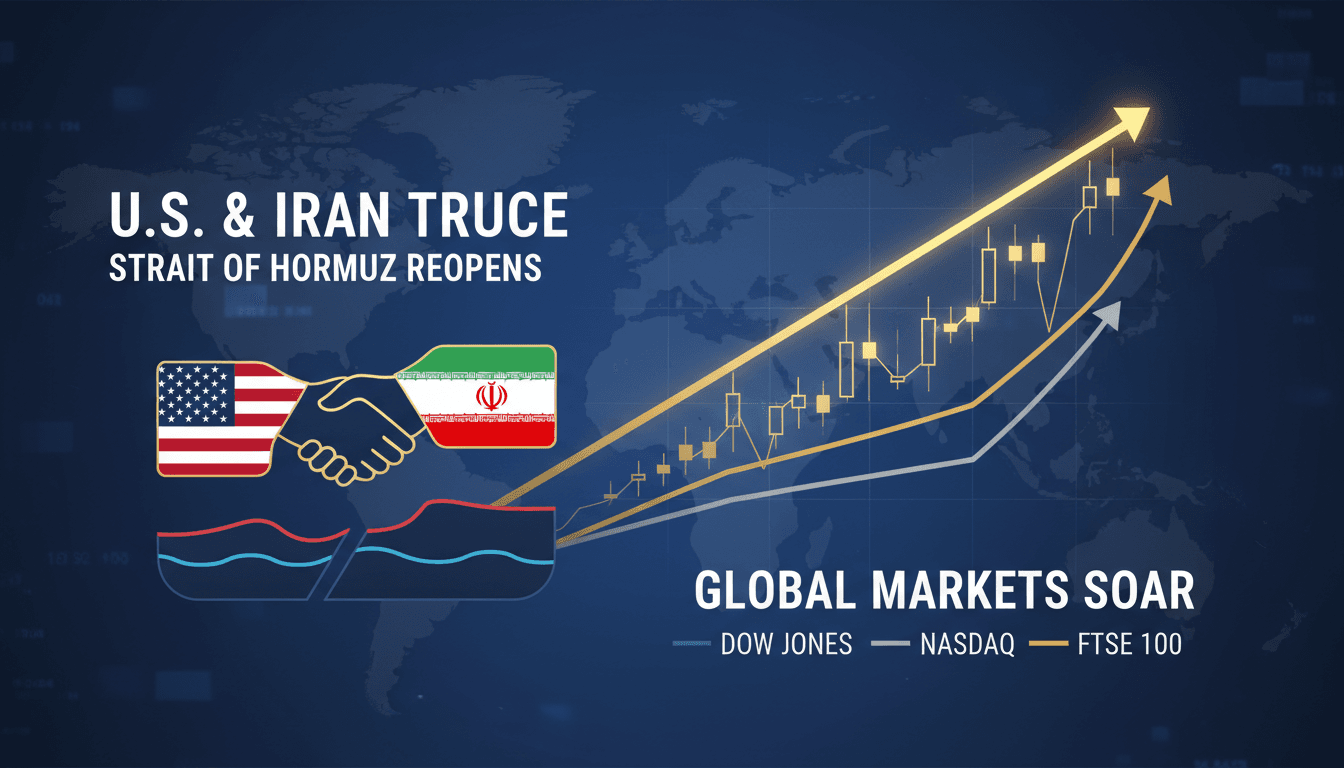
Here's what it means for you.
The recent truce between the U.S. and Iran is set to influence global markets, impacting your investments and economic outlook.
Why it matters
This ceasefire has immediate implications for global oil prices and stock market stability, affecting economies worldwide.
What happened (in 30 seconds)
- The U.S. and Iran finalized a two-week truce on April 7, 2026, suspending U.S. attacks in exchange for Iran reopening the Strait of Hormuz.
- Global stock markets surged on April 8, with Dow futures rising over 2% and Nasdaq 100 contracts advancing more than 3%.
- Oil prices plummeted, with Brent crude dropping to $94.50 per barrel, marking the largest decline for U.S. crude since 2020.
The context you actually need
- Escalating tensions had previously led to missile attacks on Gulf states and a blockade of the Strait of Hormuz, disrupting global oil shipments.
- President Trump's ultimatum on April 7 demanded Iran's compliance by 8:00 PM ET, intensifying the urgency for a resolution.
- Pakistan acted as a mediator, facilitating the truce and subsequent negotiations set to begin on April 11 in Islamabad.
What's really happening
The truce between the U.S. and Iran is a significant geopolitical development, stemming from a series of escalating conflicts that began with U.S. and Israeli strikes on Iranian targets. The blockade of the Strait of Hormuz, a critical chokepoint for global oil shipments, had led to soaring energy prices and heightened market volatility. With President Trump issuing a firm ultimatum, the stakes were high for both nations.
The agreement to suspend U.S. attacks in exchange for Iran's reopening of the Strait is a calculated move by both parties. For the U.S., it alleviates immediate military tensions and stabilizes oil prices, which are crucial for the global economy. For Iran, compliance with the truce allows for the resumption of oil exports, vital for its economy, which has been severely impacted by sanctions and military actions.
The immediate market reaction underscores the interconnectedness of geopolitical events and financial markets. The surge in stock indices, particularly in the U.S. and Asia, reflects investor relief and optimism about reduced conflict risks. Japan's Nikkei 225 index, for instance, surged by 5%, signaling strong market confidence in the wake of the truce. Meanwhile, the decline in oil prices, with Brent crude falling to $94.50 per barrel, indicates a return to a more stable energy market, which is beneficial for consumers and businesses alike.
However, the aftermath of the truce is not without complications. Despite the ceasefire, missile interceptions by Gulf states like the UAE indicate that tensions remain high. Additionally, the ongoing negotiations in Islamabad will be critical in determining the long-term stability of the region and the sustainability of the truce. The potential for renewed hostilities remains, especially if either side perceives the other as failing to uphold their end of the agreement.
In summary, this truce is not just a pause in hostilities; it represents a significant pivot in U.S.-Iran relations and has far-reaching implications for global markets, energy prices, and geopolitical stability.
Who feels it first (and how)
- Investors in global stock markets, particularly in the U.S. and Asia, who will see immediate impacts on their portfolios.
- Energy sector stakeholders, including oil companies and consumers, who will experience fluctuations in oil prices.
- Residents of Gulf states, particularly in the UAE, who may face ongoing security concerns despite the truce.
What to watch next
- Negotiation outcomes in Islamabad: The success or failure of talks will influence market stability and geopolitical relations.
- Oil price trends: Continued monitoring of Brent and U.S. crude prices will indicate market reactions to the truce's effectiveness.
- Military activity in the region: Any resurgence of hostilities could quickly reverse market gains and impact global economic conditions.
The truce has led to immediate stock market rallies and a decline in oil prices.
Ongoing negotiations will shape future U.S.-Iran relations and market stability.
The long-term sustainability of the ceasefire and its impact on regional security dynamics.
Frequently Asked Questions
- Why it matters?
- This ceasefire has immediate implications for global oil prices and stock market stability, affecting economies worldwide.
- What happened (in 30 seconds)?
- The U.S. and Iran finalized a two-week truce on April 7, 2026, suspending U.S. attacks in exchange for Iran reopening the Strait of Hormuz. Global stock markets surged on April 8, with Dow futures rising over 2% and Nasdaq 100 contracts advancing more than 3%. Oil prices plummeted, with Brent crude dropping to $94.50 per barrel, marking the largest decline for U.S. crude since 2020.
- What's really happening?
- The truce between the U.S. and Iran is a significant geopolitical development, stemming from a series of escalating conflicts that began with U.S. and Israeli strikes on Iranian targets. The blockade of the Strait of Hormuz, a critical chokepoint for global oil shipments, had led to soaring energy prices and heightened market volatility. With President Trump issuing a firm ultimatum, the stakes were high for both nations. The agreement to suspend U.S. attacks in exchange for Iran's reopening of
- Who feels it first (and how)?
- Investors in global stock markets, particularly in the U.S. and Asia, who will see immediate impacts on their portfolios. Energy sector stakeholders, including oil companies and consumers, who will experience fluctuations in oil prices. Residents of Gulf states, particularly in the UAE, who may face ongoing security concerns despite the truce.
- What to watch next?
- Negotiation outcomes in Islamabad: The success or failure of talks will influence market stability and geopolitical relations. Oil price trends: Continued monitoring of Brent and U.S. crude prices will indicate market reactions to the truce's effectiveness. Military activity in the region: Any resurgence of hostilities could quickly reverse market gains and impact global economic conditions.
Markets desk coverage, trading insights, and investor updates.
"WSJ’s markets reporting provides in-depth analysis and context for investors."
— A47 Editor
Stock Market Today: Stocks Jump After U.S., Iran Walk Back From the Brink
U.S. stocks experienced a significant surge, with the Dow Jones Industrial Average gaining over 1,300 points, following a two-week ceasefire agreement between the U.S. and Iran. This agreement aims to de-escalate military tensions in the Middle East ...
Macro commentary, policy analysis, growth/inflation themes, and global outlooks.
"Contextual macro coverage that complements day-to-day market headlines."
— A47 Editor
Wall St futures jump on relief of Middle East ceasefire
Wall Street futures surged following the announcement of a ceasefire in the Middle East, alleviating investor concerns over escalating geopolitical tensions, particularly involving Iran. This development has led to a positive shift in market sentimen...