
FAA Orders Flight Schedule Reductions at Chicago O'Hare Airport
Here's what it means for you.
If you travel through Chicago O'Hare, expect fewer flight options and potential changes to your travel plans.
Why it matters
This intervention by the FAA highlights ongoing challenges in managing air traffic capacity amid rising post-pandemic travel demand.
What happened (in 30 seconds)
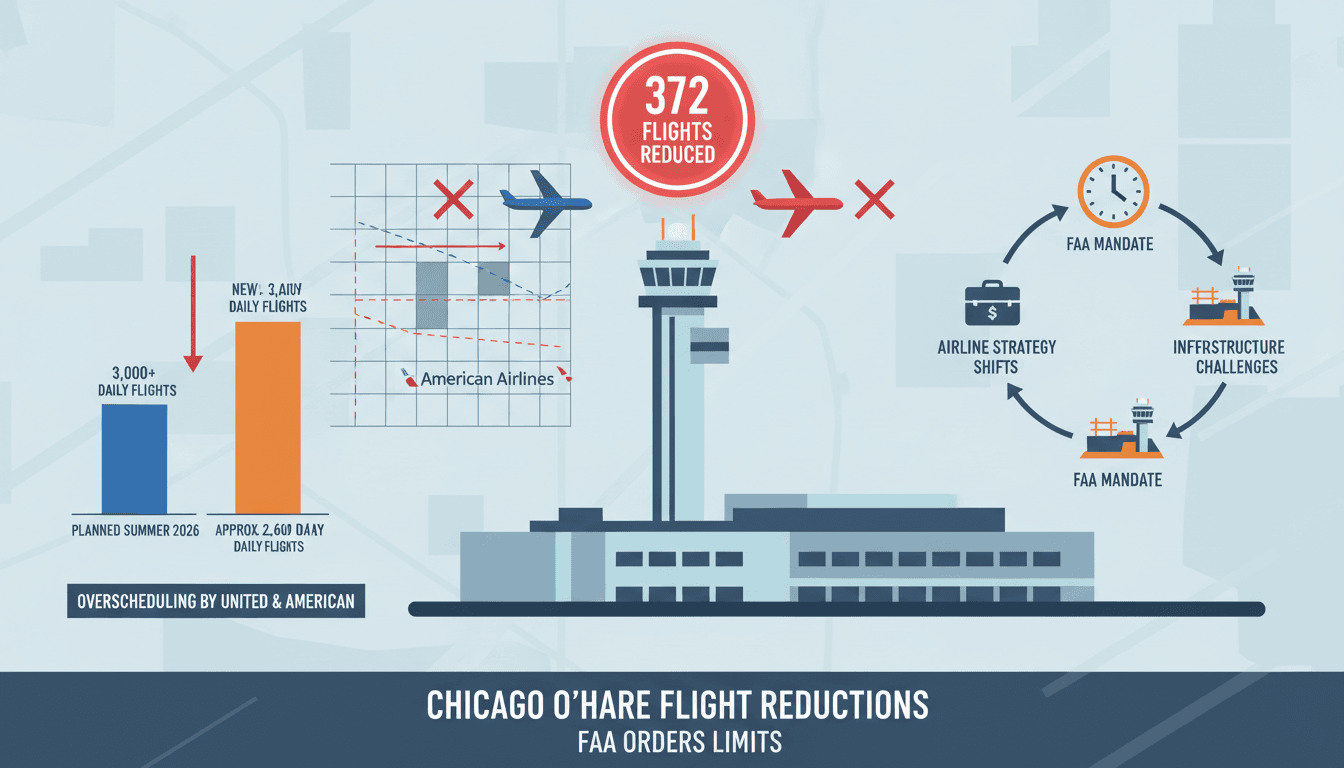
- FAA mandated a reduction of approximately 372 daily flights at Chicago O'Hare starting in April 2026.
- Overscheduling concerns arose from United Airlines and American Airlines planning significant expansions, risking severe congestion.
- Airlines are currently coordinating voluntary cuts with FAA oversight to comply with the new limits.
The context you actually need
- Chronic congestion at Chicago O'Hare has been an issue since the 1960s, leading to multiple FAA interventions over the decades.
- Post-COVID recovery has intensified competition between United and American, with both airlines planning to increase their daily flights significantly.
- FAA's proactive measures aim to prevent operational gridlock during the busy summer travel season, which runs from March 29 to October 25.
What's really happening
The FAA's decision to mandate flight schedule reductions at Chicago O'Hare International Airport stems from a complex interplay of operational challenges and competitive dynamics among major airlines. Historically, O'Hare has struggled with congestion, prompting the FAA to impose slot limits as early as 1969. Despite these measures, the airport has continued to face capacity issues, particularly as travel demand surged post-COVID.
In early 2026, the FAA identified that United Airlines and American Airlines were planning to expand their operations significantly, with United aiming to increase its daily flights to 780 and American to 526. This ambitious growth would push daily operations beyond 3,000 flights, a level deemed unsustainable given the ongoing runway construction and air traffic constraints. The FAA's initial proposal to cap operations at 2,800 flights was met with resistance from the airlines, leading to further discussions and ultimately a more stringent mandate.
The FAA's intervention is not merely a regulatory action; it reflects a broader concern about the operational integrity of one of the busiest airports in the United States. By enforcing a reduction of 372 flights, the FAA aims to alleviate congestion and minimize delays, which have become increasingly problematic during peak travel periods. This decision also underscores the FAA's role in balancing the interests of airlines with the need for efficient air traffic management.
The reactions from the airlines have been mixed. While both United and American publicly supported the FAA's decision, they also engaged in a blame game regarding the overscheduling issue. This dynamic illustrates the competitive pressures within the airline industry, where each carrier is vying for market share while navigating regulatory constraints. The Chicago Department of Aviation has advocated for a minimum cap of 2,800 flights, indicating that there is still contention over the appropriate level of operational capacity.
As airlines adjust to these new limits, they may also reassess their route networks, potentially cutting low-demand flights to align with the reduced capacity. This could lead to a shift in travel options for passengers, particularly those relying on connecting flights through O'Hare.
Who feels it first (and how)
- Travelers: Passengers may face fewer flight options and potential delays as airlines adjust their schedules.
- Airlines: United and American will need to navigate operational changes and potential revenue impacts from reduced flights.
- Airport staff: Employees at O'Hare may experience shifts in workload and operational procedures due to the new flight limits.
What to watch next
- Airline responses: Monitor how United and American adjust their flight schedules and routes in response to the FAA's mandate.
- Passenger feedback: Pay attention to traveler reactions regarding convenience versus congestion relief as the summer travel season approaches.
- Regulatory developments: Watch for any further FAA interventions or adjustments to the flight cap based on operational performance.
The FAA has mandated a reduction of 372 daily flights at O'Hare.
Airlines will cut low-demand routes and adjust their schedules to comply with the new limits.
The long-term impact on passenger travel patterns and airline profitability remains to be seen.
Frequently Asked Questions
- Why it matters?
- This intervention by the FAA highlights ongoing challenges in managing air traffic capacity amid rising post-pandemic travel demand.
- What happened (in 30 seconds)?
- FAA mandated a reduction of approximately 372 daily flights at Chicago O'Hare starting in April 2026. Overscheduling concerns arose from United Airlines and American Airlines planning significant expansions, risking severe congestion. Airlines are currently coordinating voluntary cuts with FAA oversight to comply with the new limits.
- What's really happening?
- The FAA's decision to mandate flight schedule reductions at Chicago O'Hare International Airport stems from a complex interplay of operational challenges and competitive dynamics among major airlines. Historically, O'Hare has struggled with congestion, prompting the FAA to impose slot limits as early as 1969. Despite these measures, the airport has continued to face capacity issues, particularly as travel demand surged post-COVID. In early 2026, the FAA identified that United Airlines and Ameri
- Who feels it first (and how)?
- Travelers: Passengers may face fewer flight options and potential delays as airlines adjust their schedules. Airlines: United and American will need to navigate operational changes and potential revenue impacts from reduced flights. Airport staff: Employees at O'Hare may experience shifts in workload and operational procedures due to the new flight limits.
- What to watch next?
- Airline responses: Monitor how United and American adjust their flight schedules and routes in response to the FAA's mandate. Passenger feedback: Pay attention to traveler reactions regarding convenience versus congestion relief as the summer travel season approaches. Regulatory developments: Watch for any further FAA interventions or adjustments to the flight cap based on operational performance.
U.S. business news, corporate developments, and economy.
"The Wall Street Journal is respected for deep financial and economic reporting with a center-right editorial perspective."
— A47 Editor
FAA Curbs Airlines’ Flight Plans at O’Hare
The Federal Aviation Administration (FAA) has imposed restrictions on flight plans for United and American Airlines at Chicago's O'Hare International Airport, limiting their planned increases in flight operations as they compete for passengers at thi...
Market-moving headlines impacting equities, bonds, and related risk assets.
"Real-time catalysts and volatility drivers across indices and sectors."
— A47 Editor
FAA will cap flights at Chicago O’Hare to curb summer delays
The Federal Aviation Administration (FAA) has announced a cap on flights at Chicago O'Hare International Airport to mitigate delays expected during the summer season. This decision aims to streamline operations and enhance the overall travel experien...