
Ethereum Hyperbridge Exploit Results in 1 Billion Fake DOT Tokens Minted
Here's what it means for you.
If you engage with cross-chain technologies, this incident highlights the vulnerabilities that can impact asset security and market stability.
Why it matters
This exploit underscores the ongoing challenges in cross-chain interoperability, which can affect investor confidence and market dynamics.
What happened (in 30 seconds)
- On April 13, 2026, an attacker exploited a flaw in Hyperbridge's Token Gateway contract on Ethereum, minting 1 billion bridged DOT tokens.
- The attacker gained administrative control over the bridged DOT contract, extracting approximately $237,000 in ETH amid low liquidity.
- Polkadot confirmed isolation of the incident, with no impact on its native ecosystem or parachains.
The context you actually need
- Hyperbridge uses the Interoperable State Machine Protocol (ISMP) for trust-minimized interoperability, relying on cryptographic state proofs instead of multisig validators.
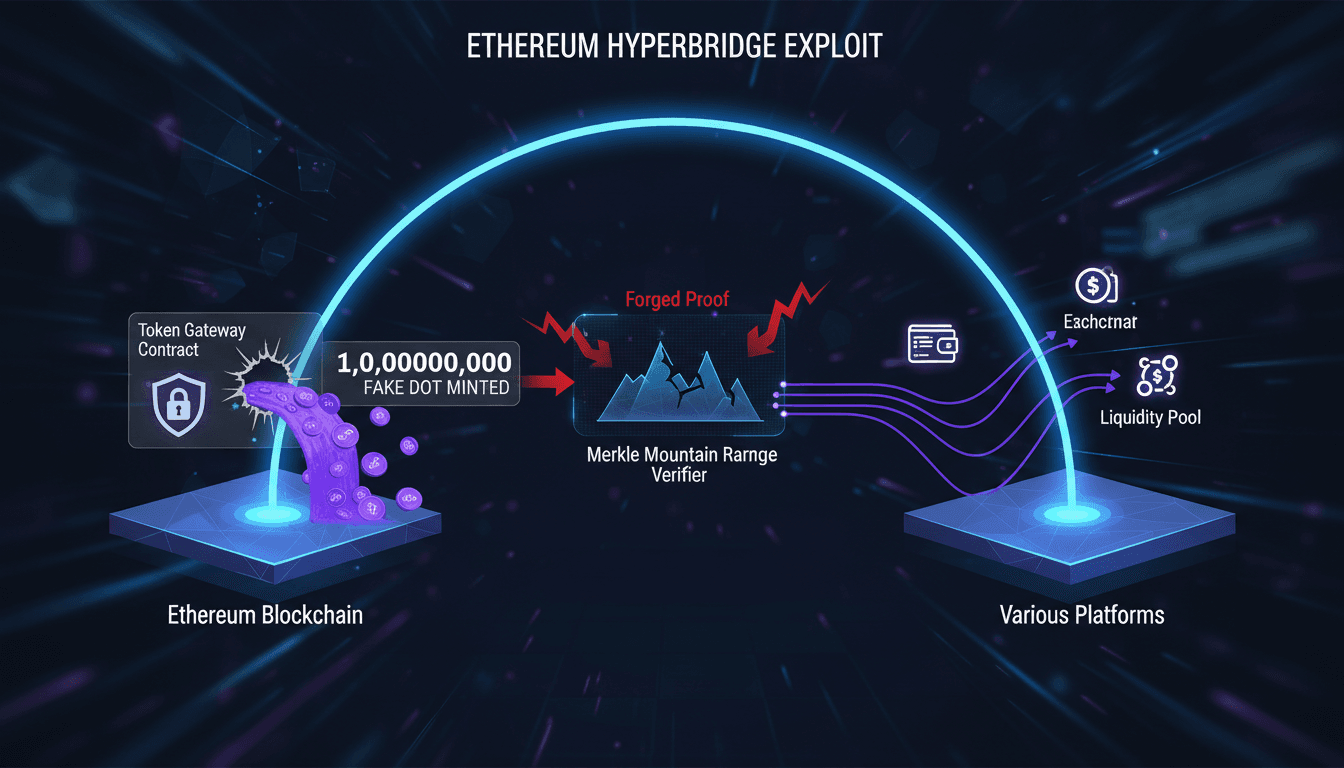
- The vulnerability stemmed from incomplete input validation in the Merkle Mountain Range (MMR) proof verifier, allowing forged proofs to bypass checks.
- This incident is part of a broader trend of cross-chain exploits in 2026, raising concerns about the security of bridge architectures.
What's really happening
On April 13, 2026, the Hyperbridge Ethereum Gateway faced a significant exploit that revealed critical vulnerabilities in cross-chain technology. The attacker took advantage of a verification flaw in the Token Gateway contract, specifically within the Merkle Mountain Range (MMR) proof verifier. This flaw allowed the attacker to submit a forged cross-chain message, effectively bypassing state-proof checks and gaining administrative rights over the bridged DOT token contract.
The exploit involved the submission of an all-zeros commitment through the EthereumHost contract's dispatchIncoming function. This action enabled the attacker to mint 1 billion DOT tokens from a null address, which were then routed through the Odos Router V3 to the Uniswap V4 DOT-ETH pool. The transaction yielded approximately 108.2 ETH, valued at $237,000, which the attacker extracted amid low liquidity conditions.
The incident was isolated to the Hyperbridge-bridged DOT on Ethereum, with Polkadot's native ecosystem and parachains remaining unaffected. However, the implications of this exploit extend beyond immediate financial losses. It raises questions about the robustness of cross-chain interoperability solutions, particularly those relying on cryptographic proofs rather than multisig validators. The incident has amplified scrutiny on bridge architectures, as it highlights the potential for similar exploits in other systems.
In response to the exploit, Hyperbridge paused all bridging operations and began implementing safeguards to prevent future incidents. The company is collaborating with security partners, including CertiK and BlockSec Phalcon, to track the stolen funds and conduct audits. The community's reaction has been one of concern, particularly given previous claims of unhackability that were made in jest during April Fools' Day.
As the market digests the implications of this exploit, it is essential to recognize that the security of cross-chain technologies is paramount for maintaining investor confidence and market stability. The incident serves as a reminder that while interoperability can enhance the functionality of blockchain ecosystems, it also introduces new risks that must be carefully managed.
Who feels it first (and how)
- Investors in cross-chain assets: Increased scrutiny may lead to reduced confidence and market volatility.
- Developers of cross-chain protocols: Heightened pressure to enhance security measures and address vulnerabilities.
- Exchanges and liquidity providers: Potential disruptions in trading and liquidity provision due to increased risk assessments.
What to watch next
- Security audits: Monitor the outcomes of ongoing audits by Hyperbridge and its partners, as they may reveal further vulnerabilities or improvements.
- Market reactions: Watch for fluctuations in the price of DOT and other cross-chain assets as investor sentiment adjusts to the exploit's implications.
- Regulatory responses: Keep an eye on any potential regulatory actions or guidelines that may emerge in response to the incident, particularly concerning cross-chain technologies.
The exploit was isolated to Hyperbridge-bridged DOT on Ethereum, with no impact on Polkadot's native ecosystem.
Increased scrutiny on cross-chain interoperability solutions will lead to enhanced security measures across the industry.
The long-term effects on investor confidence and market dynamics remain uncertain as the community assesses the implications of the exploit.
Frequently Asked Questions
- Why it matters?
- This exploit underscores the ongoing challenges in cross-chain interoperability, which can affect investor confidence and market dynamics.
- What happened (in 30 seconds)?
- On April 13, 2026, an attacker exploited a flaw in Hyperbridge's Token Gateway contract on Ethereum, minting 1 billion bridged DOT tokens. The attacker gained administrative control over the bridged DOT contract, extracting approximately $237,000 in ETH amid low liquidity. Polkadot confirmed isolation of the incident, with no impact on its native ecosystem or parachains.
- What's really happening?
- On April 13, 2026, the Hyperbridge Ethereum Gateway faced a significant exploit that revealed critical vulnerabilities in cross-chain technology. The attacker took advantage of a verification flaw in the Token Gateway contract, specifically within the Merkle Mountain Range (MMR) proof verifier. This flaw allowed the attacker to submit a forged cross-chain message, effectively bypassing state-proof checks and gaining administrative rights over the bridged DOT token contract. The exploit involved
- Who feels it first (and how)?
- Investors in cross-chain assets: Increased scrutiny may lead to reduced confidence and market volatility. Developers of cross-chain protocols: Heightened pressure to enhance security measures and address vulnerabilities. Exchanges and liquidity providers: Potential disruptions in trading and liquidity provision due to increased risk assessments.
- What to watch next?
- Security audits: Monitor the outcomes of ongoing audits by Hyperbridge and its partners, as they may reveal further vulnerabilities or improvements. Market reactions: Watch for fluctuations in the price of DOT and other cross-chain assets as investor sentiment adjusts to the exploit's implications. Regulatory responses: Keep an eye on any potential regulatory actions or guidelines that may emerge in response to the incident, particularly concerning cross-chain technologies.
Real-time updates, analysis, and reports on the blockchain and cryptocurrency sectors.
"Crypto News delivers real-time updates, analysis, and reports on the blockchain and cryptocurrency sectors."
— A47 Editor
Hyperbridge exploit mints 1 billion fake DOT on Ethereum, nets just $237K
An attacker exploited the Hyperbridge cross-chain gateway connecting Polkadot to Ethereum, minting 1 billion fake DOT tokens and gaining administrative control, which allowed for a market dump that netted approximately $237,000. This incident highlig...
Covers blockchain, cryptocurrency news, project analysis, and market insights.
"Cointelegraph is a leading crypto-focused media outlet known for timely news, analysis, and educational content related to blockchain and digital assets."
— A47 Editor
Hyperbridge attacker mints 1B bridged Polkadot tokens in $237K exploit
An attacker exploited the Hyperbridge, a cross-chain gateway connecting Polkadot to Ethereum, allowing them to mint 1 billion bridged Polkadot tokens and cash out approximately $237,000. This incident has raised significant concerns regarding the sec...
Covers blockchain, cryptocurrency news, project analysis, and market insights.
"CoinDesk is a well-established cryptocurrency and blockchain news provider, offering comprehensive insights, market data, and industry research."
— A47 Editor
Attacker mints $1 billion Polkadot tokens on Ethereum, ends up stealing just $250,000
An attacker exploited a vulnerability in the Polkadot bridge on Ethereum, allowing them to mint 1 billion DOT tokens through a forged cross-chain message. This breach enabled the attacker to gain admin control and subsequently dump the minted tokens,...